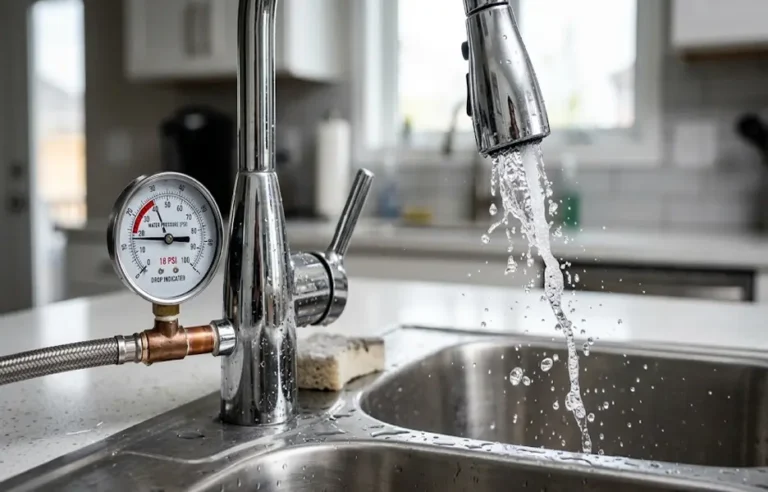
When the Arizona summer hits its peak and temperatures soar past 115°F, your home’s cooling systems aren’t the only things working overtime. Your plumbing network faces an unprecedented level of stress. One of the most common reasons homeowners in Phoenix, Scottsdale, and Mesa call for emergency plumbing services in July and August isn’t a catastrophic burst—it’s a sudden, frustrating drop in water pressure.
Showering feels like a drizzle, the washing machine takes hours to fill, and your irrigation system barely reaches your lawn. At APS Plumbing, we treat sudden pressure drops as a top priority. Understanding why this happens can help you determine whether you need a quick municipal check or an immediate emergency repair.
1. The Peak Demand Surge (The Neighborhood Effect)
The most common cause of a temporary water pressure drop during a Valley heatwave is simple math: high demand.
- The Summer Squeeze: During extreme heat, every household in your neighborhood is consuming water simultaneously. Pools are auto-filling, misters are running, landscaping drip systems are active, and families are taking more frequent showers.
- The Peak Hours: If you notice your pressure drops significantly between 5:00 AM – 8:00 AM or 5:00 PM – 9:00 PM, it is likely due to municipal supply lines being stretched to their absolute limits.
- The Emergency Verdict: If the pressure returns to normal during late-night hours, it is a city-wide demand issue. However, if your home remains a trickle while your neighbors have full pressure, the issue is isolated to your property.
2. Failing Pressure Reducing Valves (PRV)
Your home’s Pressure Reducing Valve (PRV) is a bell-shaped brass component typically located near your main water shut-off valve. Its job is to slow down the high-pressure municipal water to a safe level (usually between 50 and 75 PSI) before it enters your home.
- The Summer Heat Impact: Extreme desert heat bakes the ground and warms the incoming city water. This temperature increase, combined with fluctuating municipal pressures as cities try to pump more water through the grid, forces the PRV to adjust constantly.
- The Failure Point: The internal rubber diaphragms and springs inside older PRVs can degrade rapidly under thermal stress. When a PRV fails in summer, it often gets “stuck” in a restricted position, cutting your home’s water pressure in half.
- The Solution: Replacing a failed PRV requires an emergency plumber to cut out the old valve and calibrate a new one to safe operating levels.
A failed PRV can also swing the opposite way and cause a dangerous pressure spike. Learn how this triggers sudden pipe failures in our guide:Preparing for the Arizona Summer Heat: Preventing Pipe Leaks.
3. Acceleration of Mineral Scale Buildup
Arizona has some of the hardest water in the United States, loaded with calcium and magnesium ions.
- The Heat Catalyst: Chemical reactions accelerate with heat. When municipal water sits in shallow, sun-baked underground lines or passes through hot attics, the minerals drop out of the solution and crystallize into “limescale” much faster.
- The Chokehold: This scale attaches to the inside of your galvanized or copper pipes, narrowing the internal diameter over time. When summer demand requires maximum flow, the narrowed pipes simply cannot deliver enough volume, resulting in a severe drop in dynamic pressure.
| Pipe Material | Hard Water Risk Factor | Summer Heat Impact |
| Galvanized Steel | High (Severe Rust & Scale) | Extreme restriction of flow |
| Copper | Medium (Pinhole leaks) | Scale buildup at joints and elbows |
| PEX | Low (Scale-Resistant) | Expands smoothly under thermal stress |
Protect your appliances from mineral choking. Read our comprehensiveUltimate Water Softener Buying Guide for Large Families in Phoenix.
4. Hidden Underground Summer Leaks (Slab Leaks)
As discussed in our seasonal maintenance guides, extreme summer dryness causes Arizona’s expansive clay soil to shrink and pull away from foundations.
- The Sudden Leak: This shifting ground can snap or crack the main water line buried beneath your yard or concrete slab.
- The Pressure Drain: If a pipe develops a major fracture underground, thousands of gallons of water escape into the desert soil. Because the water has an alternative path of least resistance, the pressure inside your home drops instantly.
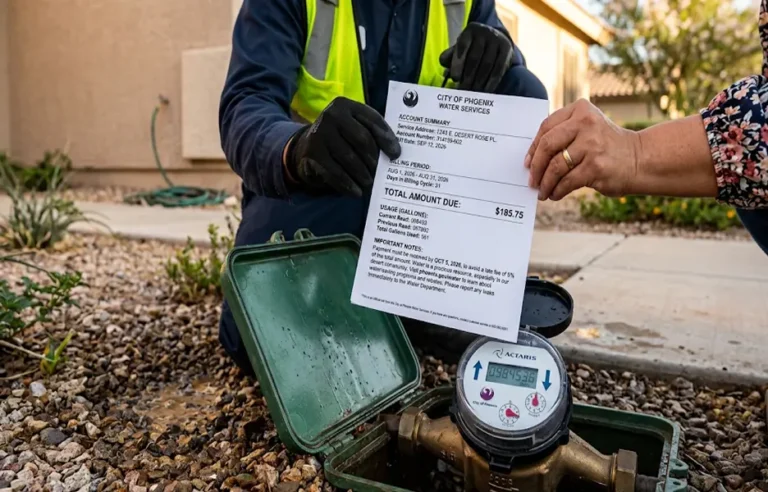
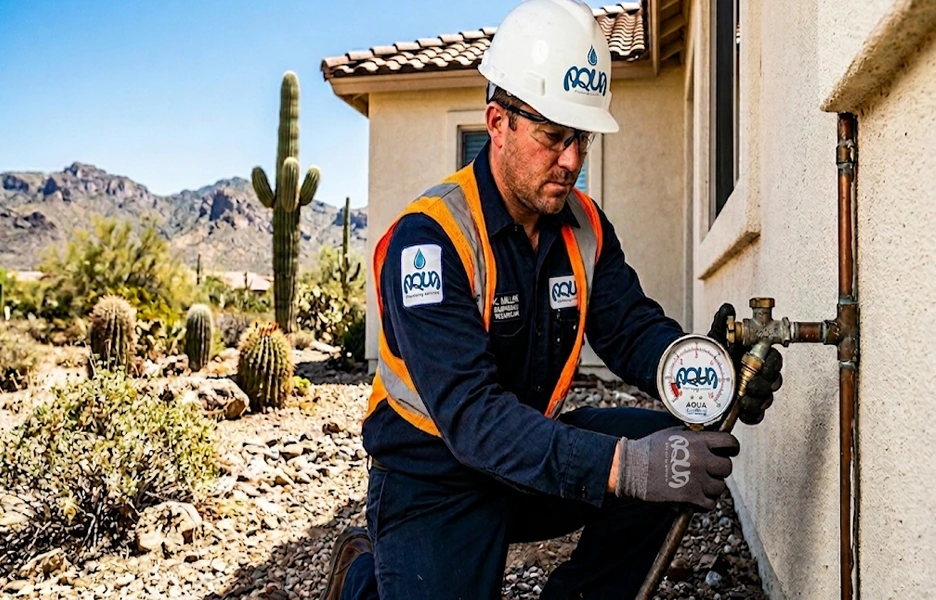
- Warning Signs: If your water pressure drops suddenly, check your water meter. If the low-flow indicator dial is spinning rapidly while all indoor faucets are off, you have an active, emergency-level underground leak.
5. Thermal Expansion and Hot Water Tank Failures
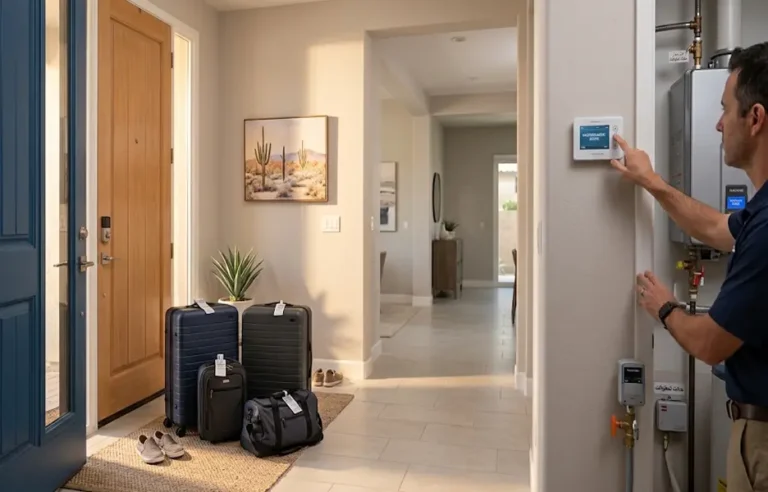
Traditional tank water heaters face massive internal pressures during hot summers. As the ambient temperature rises, water expands. If your water heater’s thermal expansion tank is broken or missing, this expansion creates backpressure that fights against the incoming cold water supply, noticeably stalling the flow through your hot water taps.
Tired of water heater pressures and scale issues? Consider upgrading to a modern system:Best Tankless Water Heaters for Arizona: Fighting the Hard Water Scale.
When Does Low Water Pressure Become a Plumbing Emergency?
While a minor drop during peak evening hours is normal in Maricopa County, you should call an emergency plumber immediately if:
- The Drop is Absolute: You suddenly have zero water or a tiny trickle across all fixtures.
- Sputtering Taps: Air sputtering out of your faucets indicates a major breach in your main water line.
- Unexplained Puddles: Soggy spots in your dry desert landscaping or warm spots on your tile flooring point directly to a ruptured pipe draining your pressure.
Get Your Flow Back with APS Plumbing
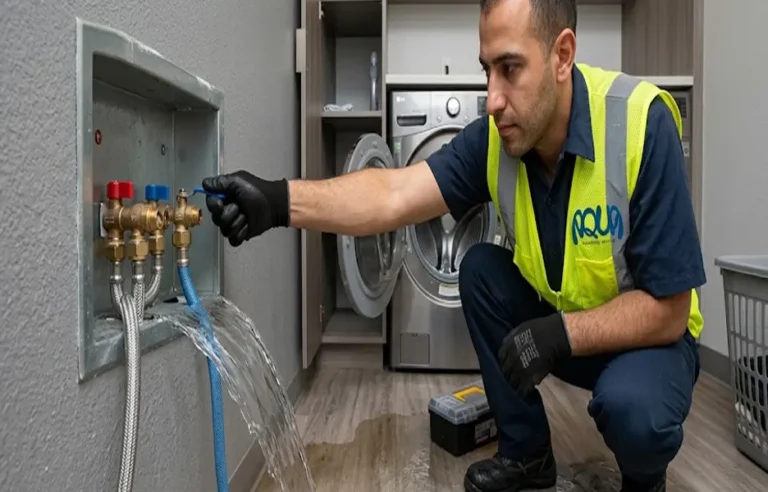
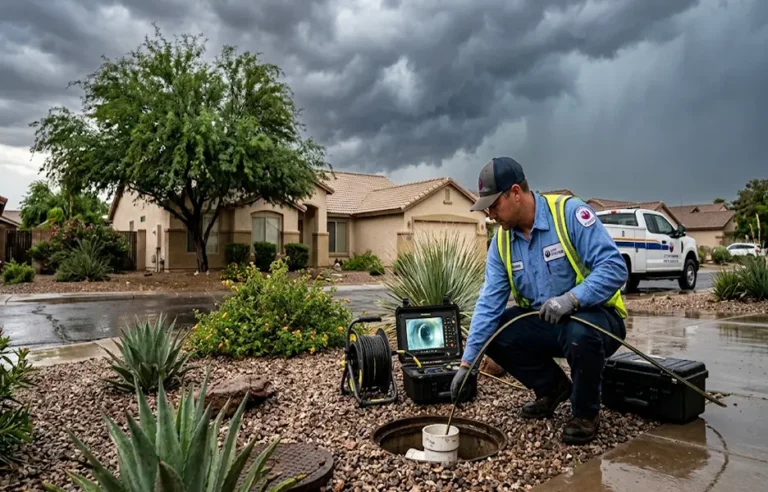
Don’t suffer through a blistering Arizona summer with weak water flow. Our emergency response teams are available across the Greater Phoenix Area to diagnose your pressure issues, replace failed PRVs, and locate hidden leaks using advanced diagnostic equipment.
Water pressure drops in the Arizona summer are primarily caused by peak municipal demand surges, failed Pressure Reducing Valves (PRV) due to thermal stress, or hidden underground slab leaks triggered by dry soil shifting. In cities like Phoenix and Scottsdale, extreme heat also accelerates mineral scale buildup from hard water, narrowing pipes. Sudden drops accompanied by a spinning water meter constitute a plumbing emergency requiring immediate professional mitigation.
FAQ
- Q: Why did my water pressure suddenly drop in my Phoenix home?
- A: If it happened suddenly, it is likely a ruptured main line (slab leak) or a failed Pressure Reducing Valve (PRV). Check your water meter to see if it is registering continuous usage.
- Q: Can extreme heat affect my home’s water pressure valve (PRV)?
- A: Yes. Extreme summer temperatures and fluctuating city water pressures put immense mechanical strain on the PRV’s internal rubber parts, causing it to fail and restrict water flow.