Quick answer: Choose a spot repair if the home’s copper is relatively young, this is the first leak and the floor above is easy to open. Choose a reroute if the leak is under expensive flooring or the line has already leaked, because the new pipe runs through walls or the attic instead of the slab. Choose a whole-home repipe if the copper is old, several leaks have happened, or water quality and pressure are also poor. Ask your plumber for the pipe’s condition, the leak history and a written comparison of all three options.
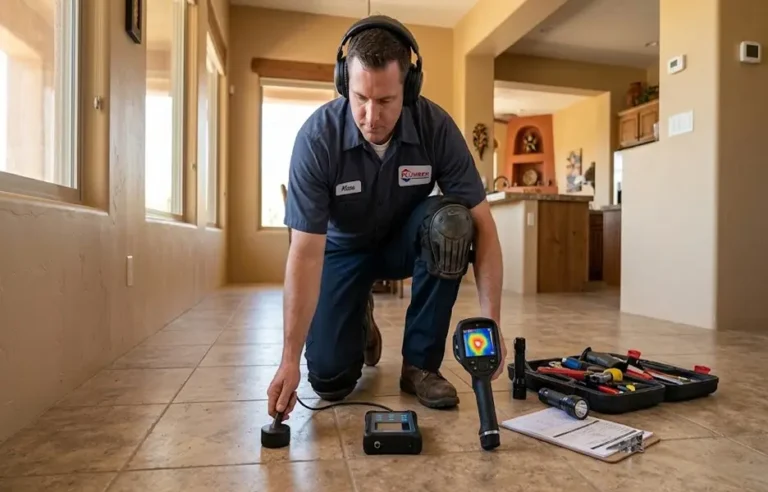
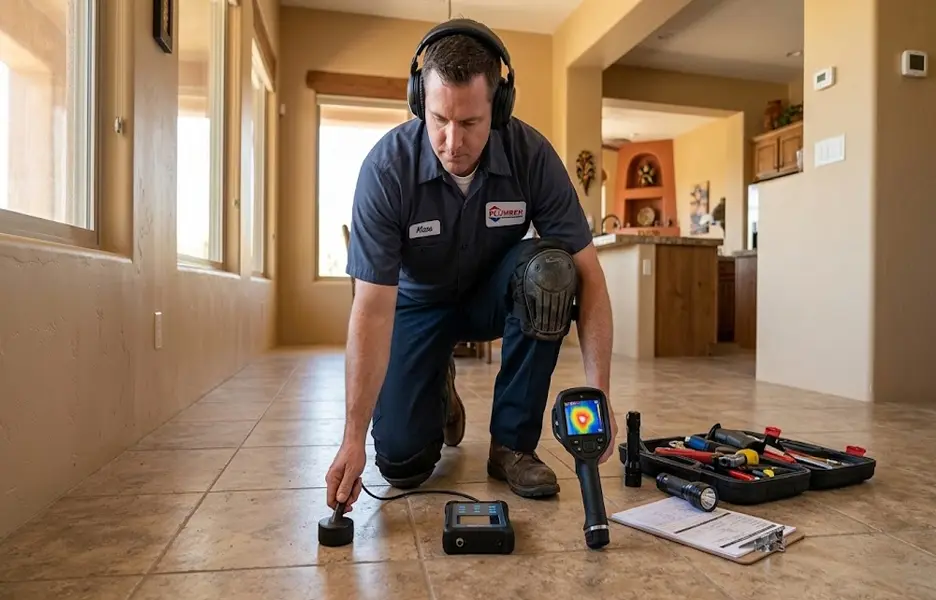
This guide picks up where detection ends. If you are not sure you have a slab leak yet, start with our slab leak warning signs and how slab leaks are located. Once the leak is found, you face a decision that affects cost, disruption and whether it happens again.
The three options
| Spot repair | Reroute | Whole-home repipe | |
|---|---|---|---|
| What happens | Concrete is opened above the leak; damaged section replaced | Leaking line abandoned; new PEX run through walls/attic | All supply lines replaced, usually overhead in PEX |
| Disruption | Floor cut and patched in one spot | Small drywall openings | More drywall openings over a few days |
| Fixes future slab leaks? | Only this spot | For that line | Yes, for supply lines |
| Best when | First leak, younger pipe, easy flooring | Expensive flooring, or a line that already leaked | Older copper, repeated leaks, poor pressure |
Five questions that decide it
- How old is the plumbing? Copper that has spent decades in hard Valley water is more likely to leak again elsewhere.
- Is this the first leak? A second slab leak is a strong signal to reroute or repipe.
- What is on the floor? Breaking through stone or hardwood can cost more than rerouting through a wall.
- Hot or cold line? Hot-water lines expand and contract and tend to fail more often.
- What does insurance cover? Many policies pay for access and water damage but not the pipe itself. Keep the detection report; see our leak insurance checklist.
Why copper slab leaks are common in Arizona
- Hard water and disinfectants slowly thin pipe walls from the inside.
- Expansive desert soil moves the slab between dry summers and monsoon moisture.
- High street pressure stresses joints when the pressure reducing valve is worn.
- Pipes rubbing against concrete or gravel wear through over time.
What to ask your plumber
- A written price for each option, not just one.
- Photos or video of the damaged pipe and its overall condition.
- Where openings will be made for a reroute.
- Whether a permit is required (repiping generally is; see permit rules).
APS Plumbing provides slab leak detection and repair, reroutes and whole-home repiping across Scottsdale, Phoenix and the East Valley.
Frequently Asked Questions
Is it better to repair or reroute a slab leak?
Repair suits a first leak in younger pipe under easy flooring. Rerouting is often better when the line has leaked before or the floor is expensive to open.
When should I repipe instead of fixing a slab leak?
When the copper is old, there have been several leaks, or you also have low pressure or discolored water.
Does insurance pay for slab leak repair in Arizona?
Many policies cover access and resulting water damage but not always the pipe repair. Check your policy and keep the detection report.
Why do copper pipes leak under slabs in Arizona?
Hard water corrosion, shifting expansive soil, high water pressure and abrasion against concrete all contribute.
Need a plumber in Scottsdale or Phoenix?
APS Plumbing (Aqua Plumbing Services LLC) answers 24/7 across Scottsdale, Phoenix, Paradise Valley, Tempe, Mesa, Chandler, Gilbert and Glendale. 10% off for military personnel and 12 months no-interest financing available.