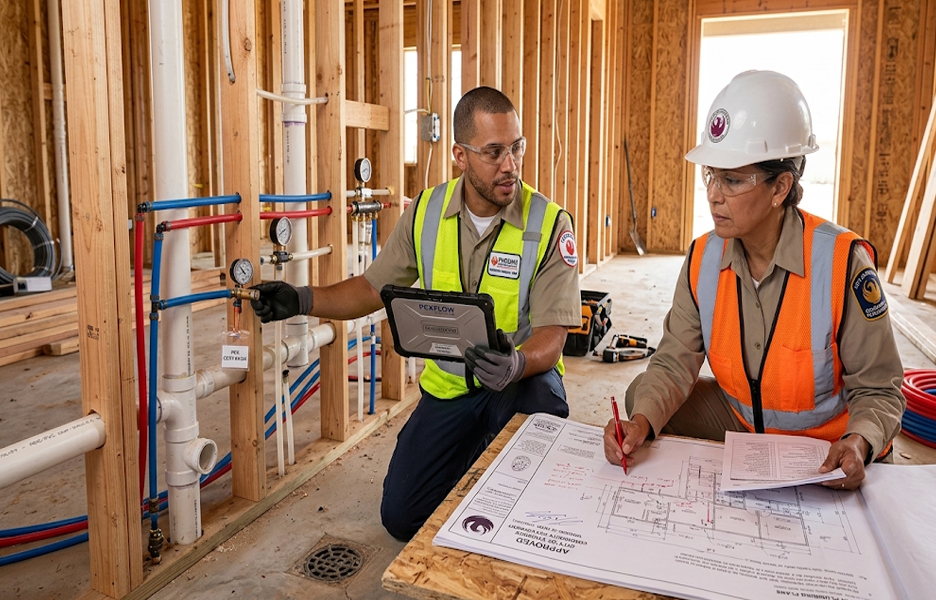
Navigating residential construction and mechanical upgrades across Maricopa County—including the City of Phoenix, Scottsdale, Mesa, Chandler, Gilbert, and unincorporated county jurisdictions—requires adhering to rigorous municipal safety codes. In the desert Southwest, building codes are not bureaucratic formalities; they represent engineered lifelines designed to protect structural foundations from aggressive soil shifting, prevent potable water back-siphonage, and guard against high-pressure gas combustions.
For property owners planning home modernizations, slab repairs, or equipment replacements, understanding when a municipal plumbing permit is legally required is essential. Executing unpermitted plumbing work can result in municipal stop-work orders, steep retroactive penalty fees, compromised home insurance coverage, and severe complications during future property sales.
Below is the definitive legal, technical, and practical guide to navigating plumbing permits, ROC licensing mandates, and inspection workflows across Maricopa County.
1. When Is a Plumbing Permit Legally Required in Maricopa County?
Under the International Plumbing Code (IPC) and Uniform Plumbing Code (UPC) as amended by Maricopa County and local municipalities (such as Phoenix Municipal Code Section 39-5), permits are required for any mechanical modification altering structural lines, water supplies, sewer networks, or fuel gas piping.
| Project Category | Permit Legally Required? | Typical Scope Examples |
| Water Heater Replacement | YES (Standard Municipal) / Exempt under specific like-for-like contractor rules in select zones. | Converting tank to tankless, relocating heaters, modifying gas venting or electrical amp feeds. |
| Whole-Home Repiping | YES | Abandoning compromised in-slab copper lines and installing continuous overhead PEX-A loops. |
| Bathroom / Kitchen Remodeling | YES | Relocating wet walls, adding secondary sinks, converting tub-to-shower drains, modifying vent stacks. |
| Sewer Line Repair / Replacement | YES | Excavating collapsed clay/cast iron laterals, installing trenchless CIPP liners, adding backwater valves. |
| Main Water Line & PRV Upgrades | YES | Replacing the main exterior yard service line between municipal water meters and home risers. |
| Gas Line Installations & Relocations | YES (Mandatory Life-Safety) | Running new natural gas feeds for pool heaters, outdoor kitchens, patio fire pits, or tankless units. |
| Minor Fixture Replacements | NO (Exempt) | Swapping faucet trim kits, replacing shower heads, changing toilet fill valves/flappers in identical locations. |
If you are planning to cut concrete slabs or reconfigure wet walls for structural kitchen additions, review certified rough-in codes in our guide to renovation plumbing in Arizona:
https://apsplumbingaz.com/renovation-plumbing-arizona/
2. Who Can Legally Pull a Plumbing Permit in Arizona?
Arizona takes building safety and consumer protection seriously through strict statutory enforcement overseen by the Arizona Registrar of Contractors (ROC) under Arizona Revised Statutes (A.R.S. Title 32, Chapter 10):
Licensed Plumbing Contractors (ROC C-37 / C-37R / CR-37)
For projects exceeding $1,000 in combined labor and materials (or any project involving fuel gas lines), Arizona law mandates that the permit be pulled by a properly licensed, bonded, and insured contractor. ROC-licensed plumbers carry verified commercial liability insurance and surety bonds that indemnify property owners against structural negligence.
The Homeowner Exemption (Owner-Builder Exemption)
Under A.R.S. § 32-1121(A)(5), property owners can pull permits as an “Owner-Builder” if they personally perform the labor on their primary single-family residence. However, strict legal caveats apply:
The property cannot be built or remodeled with the intent to sell or lease within one year of completion.
The owner-builder assumes 100% personal legal liability for all code compliance, inspections, and structural failures.
Owner-builders must still submit code-compliant engineering isometric drawings and pass identical third-party municipal inspections.
To ensure whole-home piping conversions comply fully with local building codes, explore our certified home repiping services in Arizona:
https://apsplumbingaz.com/home-repiping-arizona/
3. The Multi-Phase Inspection Process in Arizona Municipalities
Once an electronic permit is issued via municipal portals (such as the City of Phoenix SHAPE system or Maricopa County Permit Center), work progresses through distinct milestone inspections:
Phase 1: Underground / Pre-Pour Foundation Inspection
Conducted before concrete is poured. Inspectors verify pipe bedding material (shading), ensure drain-waste-vent (DWV) slope gradients maintain at least 1/4-inch per foot fall, verify minimum cover depth, and inspect pneumatic air or water head-pressure decay tests on sub-slab piping.
If foundation lines fail beneath existing slabs, discover how non-destructive diagnostics eliminate exploratory concrete demolition in our breakdown of acoustic leak detection vs thermal imaging:
https://apsplumbingaz.com/acoustic-leak-detection-vs-thermal-imaging/
For full diagnostic specifications regarding foundation testing, read our engineering guide on slab leak detection of concrete slabs:
https://apsplumbingaz.com/leak-detection-of-concrete-slabs/
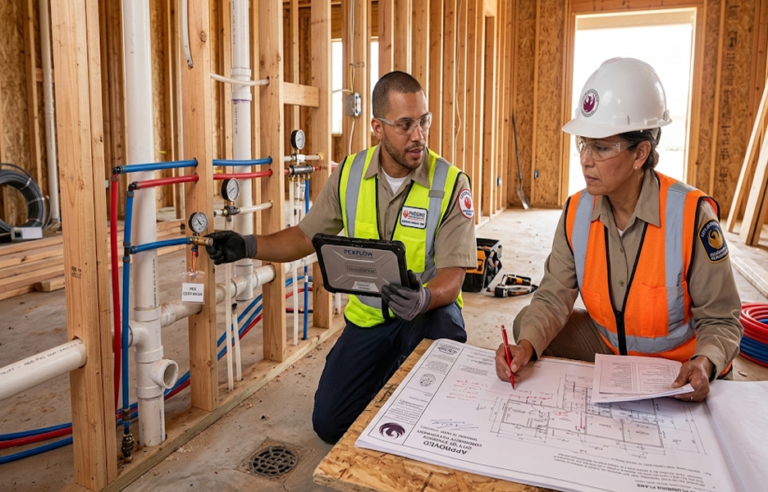
Phase 2: Rough-In Plumbing Inspection (Pre-Drywall)
Conducted while wall stud cavities and attic spaces remain open. The inspector audits pipe support strap spacing, nail plate shields across wood studs, thermal expansion loop engineering, dielectric unions between dissimilar metals, and attic insulation clearances.
Phase 3: Final Mechanical Inspection
Conducted after cabinetry, fixtures, and appliances are fully set. Inspectors verify:
Proper air gaps and backflow prevention on dishwashers and water treatment systems.
Vacuum breakers on all exterior hose bibs.
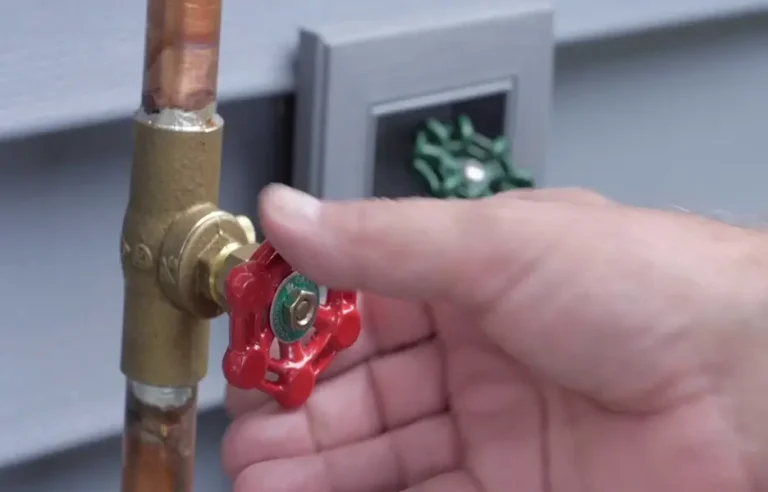
Operational emergency shut-off valves for domestic water and gas lines.
Safe combustion venting and temperature-pressure relief (TPR) discharge line pitch on water heaters.
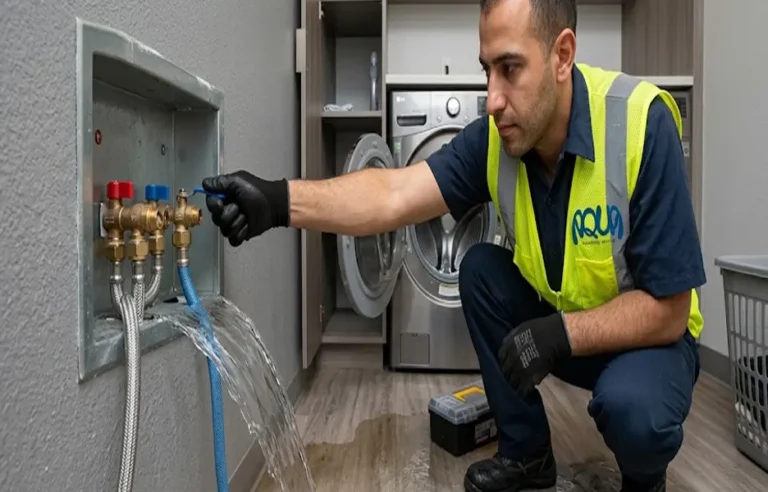
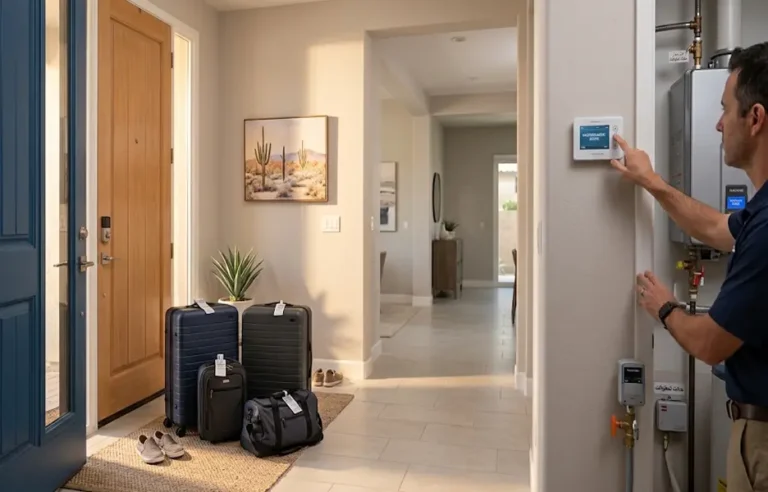
In an active crisis where pressurized water is causing structural damage, stabilizing the failure takes immediate precedence. Review our emergency roadmap on how to locate your main water shut-off valve in Phoenix:
https://apsplumbingaz.com/how-to-locate-main-water-shut-off-valve-phoenix/
4. The Hidden Risks of Unpermitted Plumbing Work
Homeowners are often tempted by unlicensed handymen offering cash discounts to bypass municipal permits. The downstream financial and legal consequences, however, far outweigh initial savings:
Real Estate Transaction Failures: When listing an Arizona property, the standard Arizona Association of Realtors (AAR) Residential Resale Real Estate Purchase Contract mandates full seller disclosure. Savvy buyers and home inspectors routinely pull historical municipal permit logs. Discovering unpermitted bathroom additions, rerouted gas lines, or replaced water heaters can halt escrow, trigger demands for substantial price concessions, or require opening finished drywall for retroactive inspections.
Insurance Claim Denials: If an unpermitted plumbing modification fails—such as an improperly installed water heater or an unpermitted supply line that bursts—homeowners insurance underwriters can deny water damage claims, citing non-compliance with building codes and unapproved alterations. Review our insurer claim roadmap:
https://apsplumbingaz.com/arizona-pipe-leak-insurance-claim-guide/
Municipal Red Tags and Fines: Code enforcement officers discovering unpermitted mechanical work issue immediate Stop-Work Orders (“Red Tags”). Fines are levied, and permit fees are frequently doubled or quadrupled as punitive penalties.
Life-Safety Gas Hazards: Unpermitted gas piping work risks carbon monoxide accumulation or gas line leaks that endanger household occupants.
5. Water Pressure & Backflow Compliance in Local Codes
Local plumbing codes across Maricopa County reflect the harsh reality of desert municipal water systems:
Code Mandate: Maximum 80 PSI Static Pressure
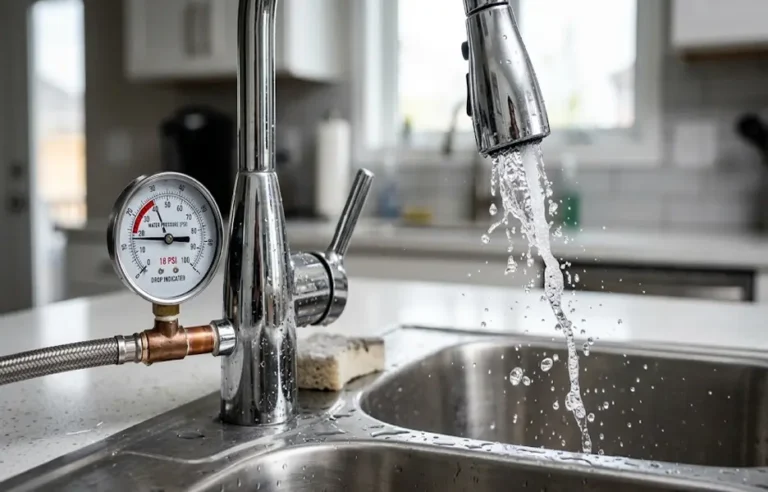
Under IPC Section 604.8, when incoming municipal water pressure exceeds 80 PSI, a certified Pressure Reducing Valve (PRV) must be installed immediately downstream of the building shut-off valve. Water utilities in Phoenix and Mesa frequently pump water at 90 to 115+ PSI; homes lacking a calibrated PRV fail municipal inspection and face accelerated appliance line failures.
To evaluate hydraulic surges and regulator calibration, read our engineering diagnostic on residential water pressure issues:
https://apsplumbingaz.com/why-arizona-homes-struggle-with-water-pressure-issues/
Code Mandate: Backflow Prevention Assemblies
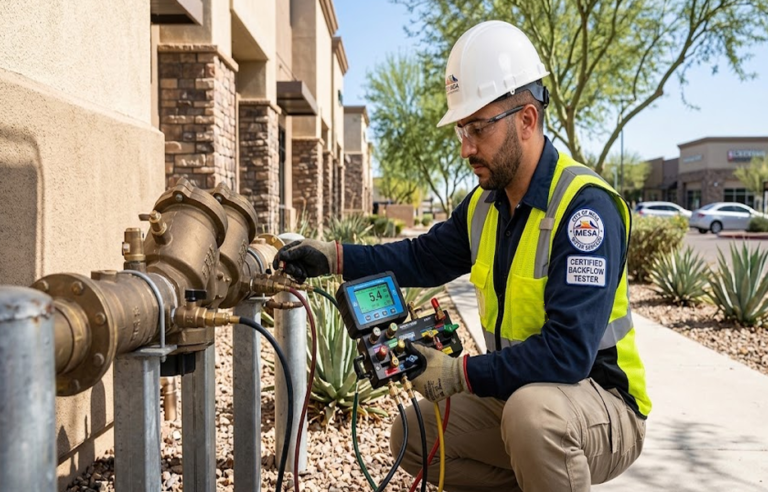
Irrigation systems connecting to potable domestic water mains must feature certified backflow preventers (such as a Pressure Vacuum Breaker or Reduced Pressure Zone assembly) installed at least 12 inches above the highest downstream sprinkler head to prevent chemical cross-contamination.
To isolate exterior irrigation fractures and protect backflow assemblies, consult our guide on how to identify an underground yard leak and irrigation breaks:
https://apsplumbingaz.com/how-to-identify-yard-leak-underground-irrigation/
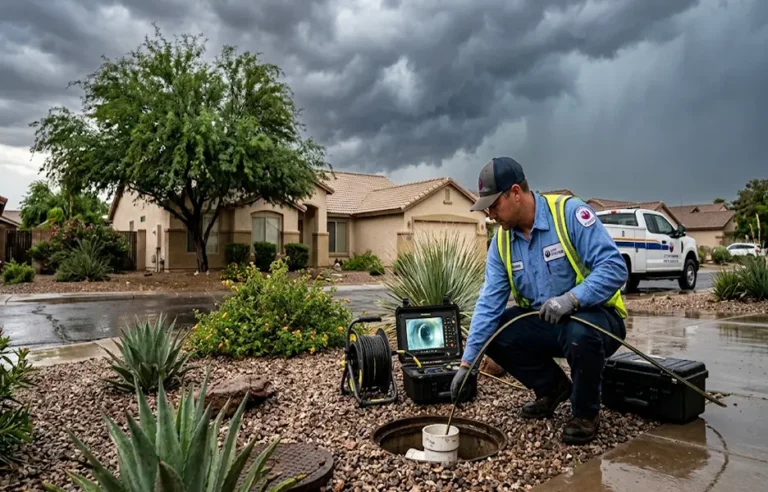
During seasonal summer storms, civil sewer mains also experience extreme hydraulic surcharges. Learn how code-compliant backwater valves protect drains in our analysis on sewer line backups during Arizona monsoon storms:
https://apsplumbingaz.com/sewer-line-backup-arizona-monsoon-storms/
For sudden plumbing failures requiring immediate containment before permit scheduling, access our rapid dispatch team for emergency pipe repairs in Arizona:
https://apsplumbingaz.com/emergency-pipe-repairs-arizona/
Frequently Asked Questions: Maricopa County Plumbing Permits
Q: Do I need a permit to replace an existing water heater in Phoenix?
A: Yes. The City of Phoenix and surrounding Maricopa County municipalities require a permit and subsequent safety inspection for water heater replacements. This ensures proper thermal expansion tank sizing, compliant TPR relief discharge routing, seismic strapping (where required), and safe flue-gas exhaust venting.
Q: How much does a residential plumbing permit cost in Maricopa County?
A: Permit fees vary by municipality and project valuation. Simple single-item permits (such as a water heater replacement or gas line test) typically range between $75 and $175, while major whole-home repiping or comprehensive bathroom remodel permits generally cost between $250 and $600.
Q: Can an unpermitted plumbing project be permitted after the work is finished?
A: Yes, through a process known as a Retroactive Permit (or As-Built Permit). However, the city will assess late penalty fees, and the building inspector may require sections of finished drywall, stucco, or concrete to be cut open to verify pipe materials, connections, and slope gradients.
Q: How long does it take for a plumbing permit to get approved?
A: Standard residential permits with simple plan scopes (repiping, sewer replacements, fixture relocations) are typically issued through municipal online portals within 1 to 5 business days. Complex architectural structural remodels requiring full plan engineering reviews can take 2 to 4 weeks.
Code-Compliant Plumbing Peace of Mind with APS Plumbing
Don’t risk your home’s safety, insurance protections, or market resale value with unpermitted plumbing modifications. Contact the licensed, bonded, and certified master contractors at Aqua Plumbing Services (APS Plumbing) for 100% code-compliant repiping, sewer lateral replacements, water heater installations, and permit management across Phoenix, Scottsdale, Mesa, Chandler, and Gilbert.
Schedule your code-compliant project consultation today: