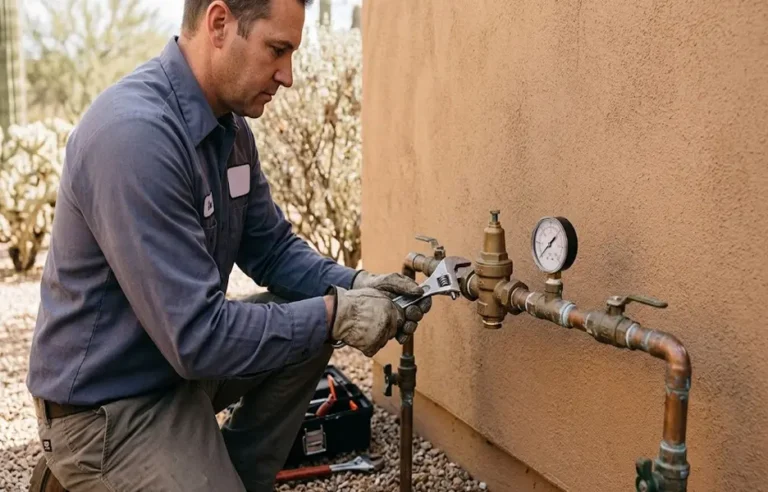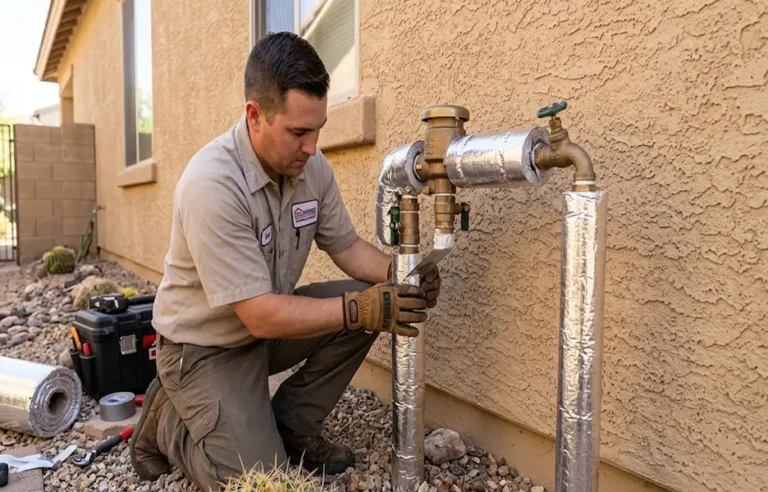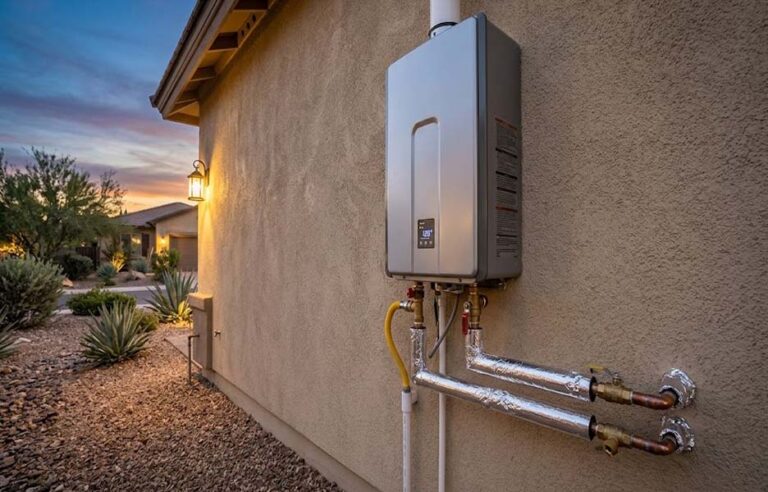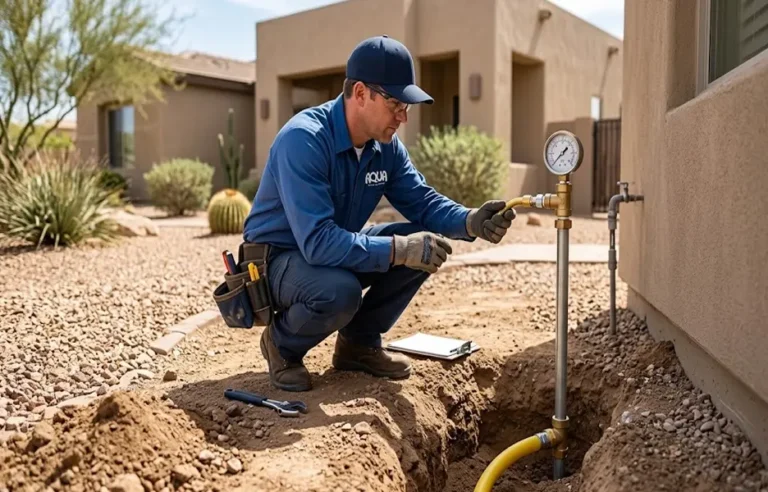
While most homeowners assume that strong water pressure is a luxury, excessively high water pressure is one of the most destructive forces inside an Arizona plumbing system. Across Scottsdale, Paradise Valley, and Greater Phoenix, municipal water main lines frequently deliver water at aggressive pressures ranging between 90 and 150 pounds per square inch (PSI) to overcome elevation changes and supply hydrants. To protect your home’s pipes, appliances, and fixtures, a Pressure Reducing Valve (PRV) is installed where the main water line enters your property.
Under the Uniform Plumbing Code, residential water pressure must never exceed 80 PSI. When your PRV wears out or fails, unchecked municipal pressure surges into your home, blowing out washing machine hoses, ruining water heater tanks, and creating chronic toilet fill valve leaks. Below is a comprehensive diagnostic guide on how PRVs function, common failure symptoms, and replacement standards in Maricopa County.
1. What Does a Pressure Reducing Valve Do?
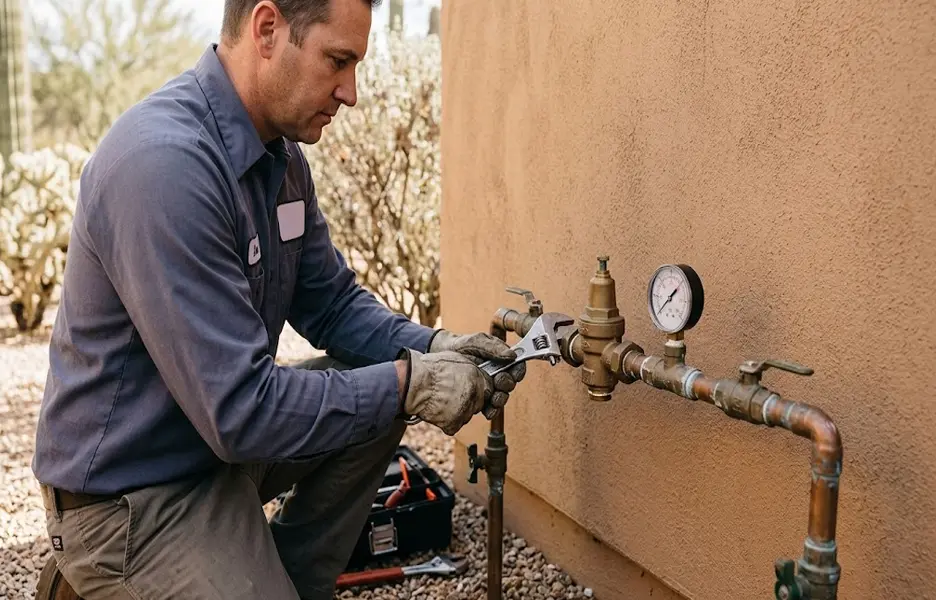
A Pressure Reducing Valve is a bell-shaped brass device typically mounted near your exterior main shutoff valve or garage water riser. It contains a spring-loaded diaphragm mechanism:
- Pressure Stepping: As water enters the valve from the city main at high velocity, it pushes against an internal spring-loaded diaphragm. The valve mechanically restricts flow to maintain a steady, safe operating pressure—typically factory-set between 55 and 65 PSI.
- Shock Absorption: A functioning PRV dampens municipal pressure fluctuations that occur when city water pumps cycle on and off throughout the day and night.
2. Telltale Signs Your PRV Has Failed or Is Failing
Because PRVs operate continuously behind the scenes, failure often manifests across multiple fixtures at once. Look for these four critical warning indicators:
- Violent Water Hammer & Banging Pipes: When high-pressure water stops abruptly (such as when a washing machine solenoid clicks shut or a toilet completes its flush), shockwaves reverberate through the walls. This creates a loud metallic banging noise known as water hammer.
- Initial Blast of Water from Faucets: If opening a sink faucet produces an explosive burst of aerated water that abruptly settles down to normal flow a few seconds later, static pressure is building up behind the failed valve while fixtures are idle.
- Constant Toilet Fill Valve Hissing & Running: High water pressure overpowers internal toilet float seals, forcing water over the overflow tube into the bowl and causing phantom flushes.
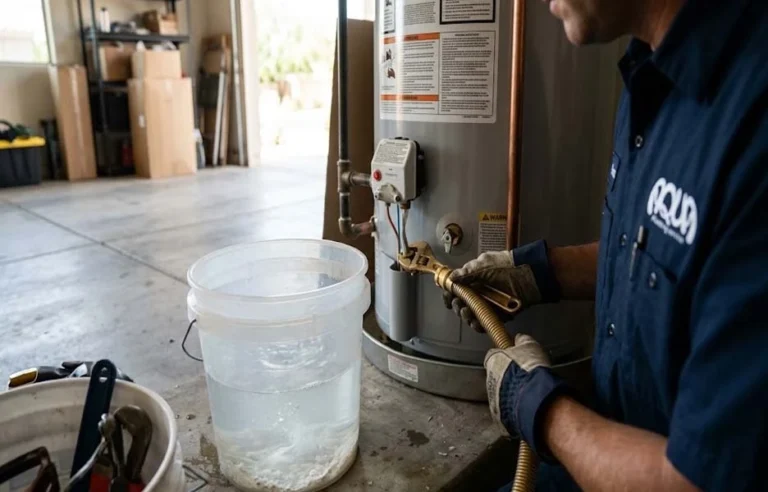
- Dripping Water Heater Relief Valve (T&P): When high street pressure enters an enclosed water heater without room to expand, the Temperature & Pressure Relief valve on the side of the tank discharges water onto the floor to prevent tank rupture.
3. Why Scottsdale Water Conditions Shorten PRV Lifespans
In many parts of the country, a brass PRV can last 15 to 20 years. However, several environmental factors in Scottsdale and Phoenix degrade these units prematurely:
- Extreme Water Hardness (15–25 GPG): Dissolved calcium carbonate and lime crystallize inside the PRV’s internal chamber. This mineral crust binds the stainless steel tension spring and lacerates the flexible rubber diaphragm.
- Above-Ground Solar Exposure: In older Arizona subdivisions, PRVs are installed completely above ground on exterior walls. Decades of intense summer sun and 115°F ambient heat harden internal elastomers, causing rubber gaskets to lose elasticity and crack.
- Municipal Demand Fluctuations: Desert golf course irrigation schedules and residential pool filling routines cause significant pressure drops and surges in local water mains, subjecting the PRV spring to heavy mechanical fatigue.
If testing your exterior hose bibb with an inexpensive screw-on pressure gauge reveals readings above 75–80 PSI, having a certified professional address your water pressure issues and PRV replacement in Arizona will protect your appliances from irreversible high-pressure blowouts.
Frequently Asked Questions: Scottsdale Water Pressure & PRVs
Q: What is the safe water pressure range for homes in Scottsdale?
A: The Uniform Plumbing Code mandates residential water pressure between 45 and 80 PSI. Ideal home pressure is typically calibrated between 55 and 65 PSI. Pressure exceeding 80 PSI damages appliances and voids manufacturer warranties.
Q: How long does a PRV typically last in Arizona?
A: Because of harsh desert mineral scale and intense seasonal temperature shifts, a PRV in Phoenix or Scottsdale typically lasts between 7 and 12 years before internal rubber diaphragms stiffen or springs corrode.
Q: Can a failing PRV cause low water pressure instead of high pressure?
A: Yes. While PRVs frequently fail in the open position (causing sudden high pressure spikes), internal mineral blockages or a jammed spring mechanism can also lock the valve partially shut, severely restricting household flow.
4. Precision Pressure Calibration with APS Plumbing AZ
Whether you are experiencing vibrating pipes, leaking water heaters, or sudden drops in shower flow, APS Plumbing (Aqua Plumbing Services LLC) provides professional static pressure testing, lead-free PRV replacements, and thermal expansion tank balancing across Scottsdale, Phoenix, Paradise Valley, Mesa, Chandler, Gilbert, and Tempe.