Whether you are adding an outdoor fire pit for crisp desert autumn nights, upgrading to a high-capacity Navien tankless water heater, or installing a commercial-grade kitchen range, gas line installation in Scottsdale requires strict adherence to local building codes, proper pipe sizing, and certified safety inspections. Working with natural gas involves significant safety liabilities; an undersized line can starve appliances of fuel, while a compromised joint can lead to hazardous gas accumulation.
The City of Scottsdale operates under the International Fuel Gas Code (IFGC) alongside specific Maricopa County amendments. Below is a comprehensive technical overview of what Scottsdale homeowners and property managers must know about permits, pipe materials, BTU load calculations, and code-compliant installations.
1. City of Scottsdale Permitting and Inspection Requirements
In Scottsdale, running new fuel piping or significantly extending existing gas lines is not a DIY task; it is legally regulated by municipal safety statutes:
- Permit Trigger Points: Any new exterior trenching for pool heaters, outdoor kitchens, patio heaters, or whole-house generator connections requires a plumbing/mechanical permit from the City of Scottsdale Planning & Development Department.
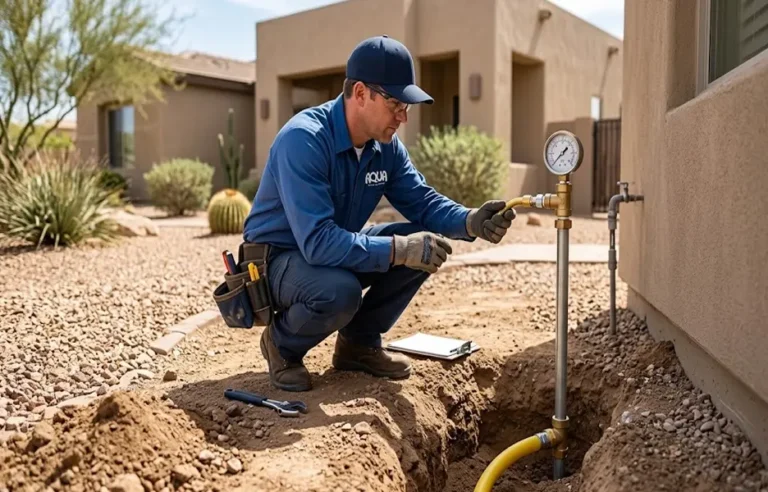
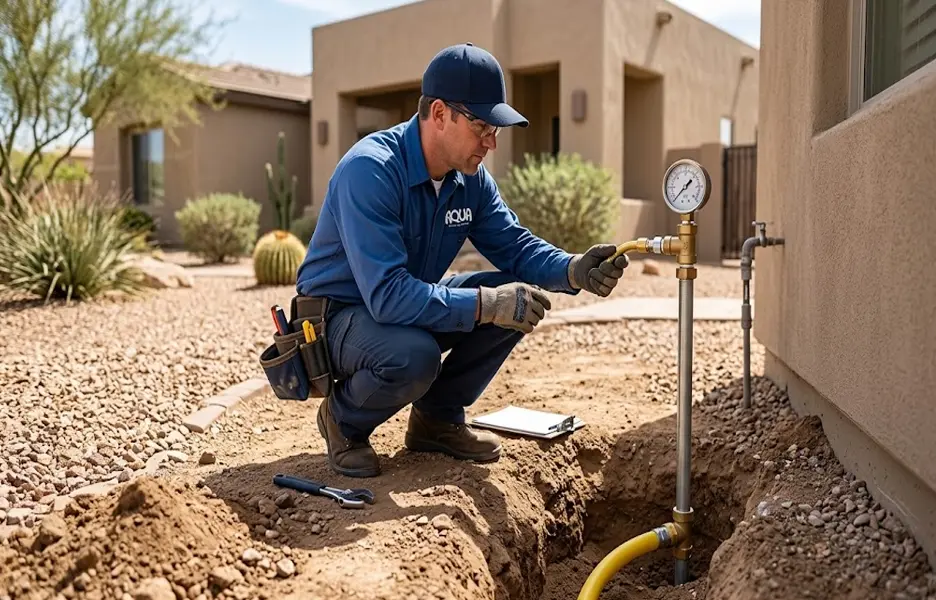
- Pressure Testing Mandate: Before any gas line can be covered in a trench or connected to the Southwest Gas meter, it must pass a formal pressure test. Plumbers connect an air gauge to test the line at a minimum of 10 to 15 PSI for a designated duration (typically 15 minutes) with zero needle drop, witnessed by a city building inspector.
- Southwest Gas Meter Clearance: If your total appliance load exceeds your existing residential meter capacity (standard residential meters typically handle 250 to 400 CFH), your utility meter must be upgraded by Southwest Gas prior to final approval.
2. Pipe Sizing and Total BTU Load Calculation
The most common mistake made during unpermitted installations is choosing a pipe diameter based on guesswork. Natural gas piping must be engineered using standard demand tables based on two factors: total BTU demand and longest equivalent run from the meter.
- Calculating Total Appliance Demand: A standard gas furnace might pull 80,000 BTUs, a tankless water heater up to 199,000 BTUs, an outdoor fire pit 65,000 BTUs, and a pool heater 250,000 to 400,000 BTUs. The main trunk line leaving your meter must be sized to supply all connected appliances running simultaneously.
- Friction Loss Over Distance: The longer the pipe distance from the meter to the appliance, the greater the pressure drop. A 1/2-inch line might support a gas range at 20 feet, but the same diameter at 80 feet will cause low gas pressure, causing burners to sputter or safety valves to lock out.
3. Approved Gas Piping Materials in Desert Climates
Arizona’s hard rocky caliche soil and extreme solar exposure dictate which materials can be legally installed above and below ground:
- Black Iron Pipe (Schedule 40): The gold standard for interior walls, attics, and exposed indoor mechanical rooms. It provides high rigidity and resistance to physical impact.
- Polyethylene (PE) Pipe for Underground Runs: Metallic pipes corrode quickly when buried directly in desert soil. Yellow high-density polyethylene (HDPE) gas tubing is exclusively used for underground trenches. It requires an insulated copper tracer wire laid directly beside it so future excavators can locate the pipe.
- Anodeless Risers: Where underground plastic PE pipe rises above ground to connect to an outdoor grill or pool heater, a factory-sealed steel anodeless riser must be used to protect the transition from UV radiation and physical damage.
- Corrugated Stainless Steel Tubing (CSST): Flexible and excellent for retrofitting inside existing wall cavities. CSST requires specialized bonding to the home’s electrical grounding system to prevent lightning-induced pinhole arcs.
For comprehensive line extensions or gas appliance retrofits, working with certified technicians who handle professional gas line installation and pipe replacement in Arizona guarantees complete compliance with all regional safety mandates.
Frequently Asked Questions: Scottsdale Gas Plumbing
Q: Do I need a city permit for gas line installation in Scottsdale?
A: Yes. The City of Scottsdale Building and Development Services requires a plumbing/mechanical permit for any new gas line run, major modification, or additional fixture line (such as an outdoor fire pit or tankless water heater).
Q: Can I use CSST (Corrugated Stainless Steel Tubing) outdoors in Arizona?
A: CSST must be properly coated against UV and soil moisture if run outdoors, and underground runs must be sleeved or transitioned to polyethylene (PE) gas pipe with tracer wire according to local municipal codes.
Q: What pipe size is needed for an outdoor gas fire pit in Scottsdale?
A: Pipe sizing depends on total distance from the gas meter and the BTU rating of the burner. A standard 60,000–100,000 BTU fire pit located 50 feet from the meter typically requires at least a 3/4-inch to 1-inch line to prevent gas starvation.
4. Certified Fuel Gas Engineering with APS Plumbing AZ
From pressure testing and city inspection sign-offs to complete trenching and HDPE outdoor line installation, APS Plumbing (Aqua Plumbing Services LLC) provides ROC-licensed, code-compliant gas piping solutions across Scottsdale, Phoenix, Paradise Valley, Mesa, Chandler, and surrounding areas.