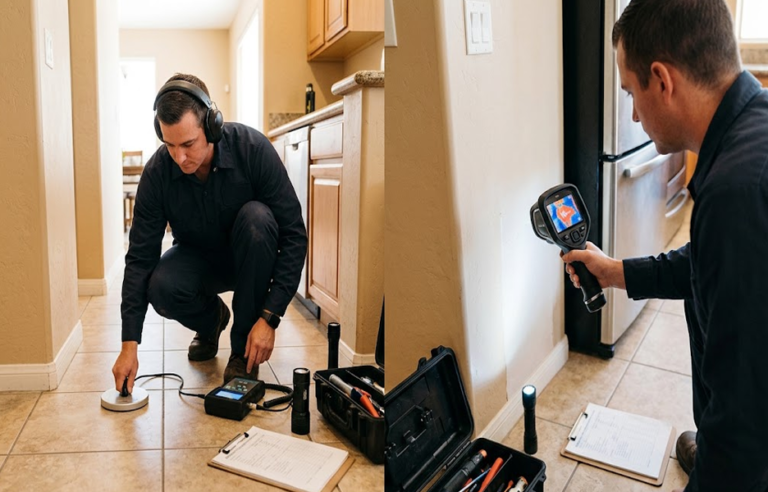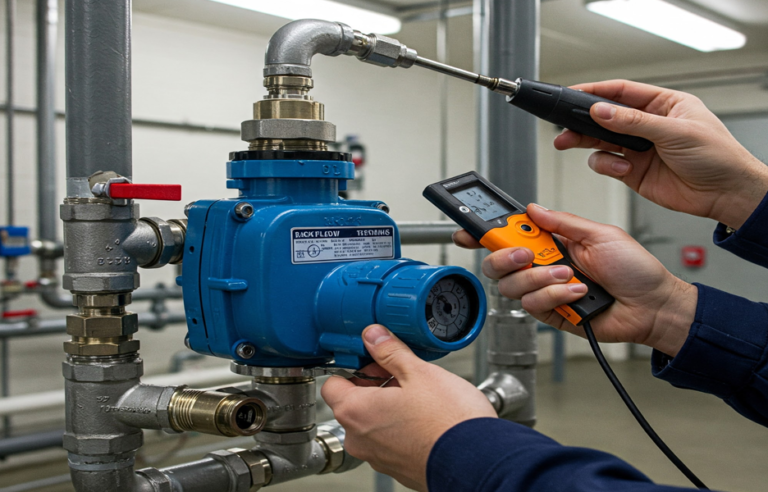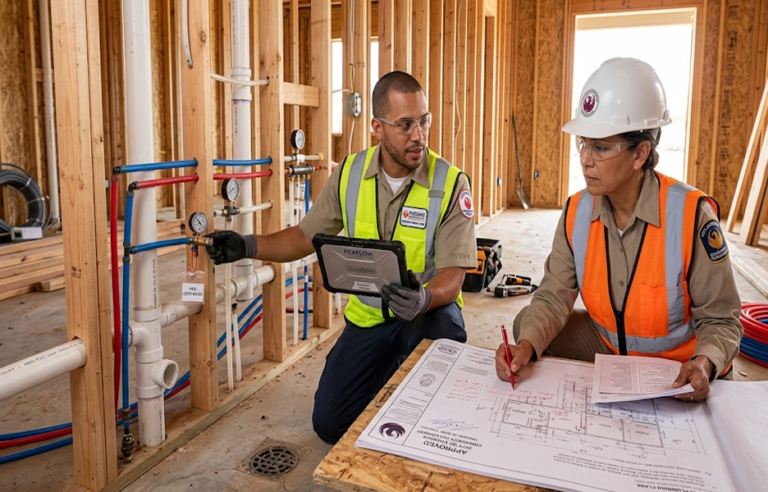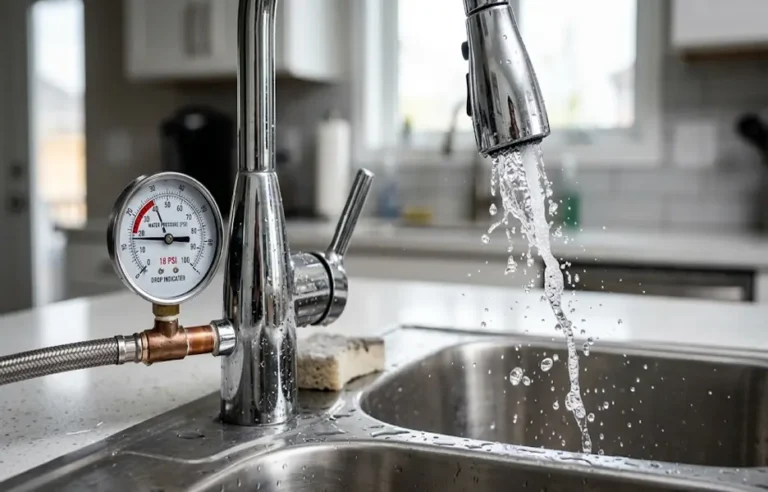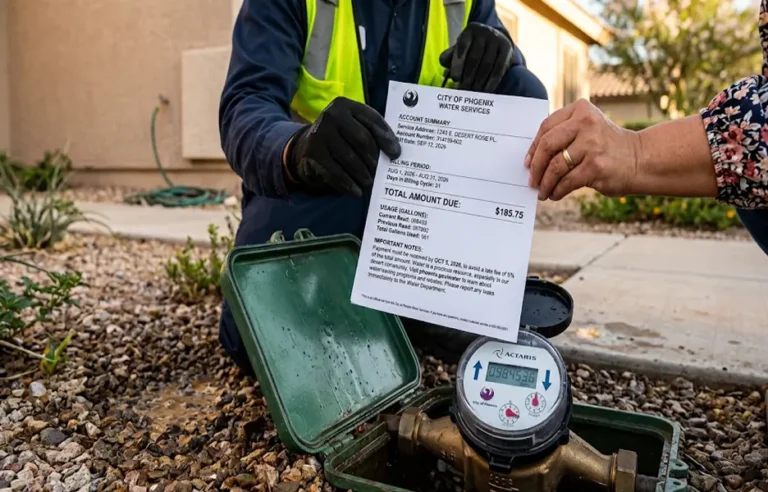
When an unexpected spike appears on your monthly water bill or your curb meter dial spins continuously while all faucets are shut, a concealed pipe breach is actively discharging water into your property. In Phoenix, Scottsdale, Paradise Valley, and the East Valley, where residential construction relies predominantly on monolithic concrete slabs and post-tension foundations, water lines do not run through open basements or accessible crawlspaces. Instead, pressurized copper and PEX lines are encased beneath reinforced concrete or concealed behind thick lath-and-plaster and drywall partitions. In past eras, plumbers resorted to exploratory jackhammering and tearing down drywall based on guesswork. Modern non-invasive diagnostics rely on two primary technologies: electro-acoustic listening sensors and high-resolution thermal imaging.
While both non-destructive methods eliminate invasive demolition, they capture fundamentally different physical phenomena. Understanding the difference between acoustic leak detection in Phoenix and infrared thermal imaging ensures you know which diagnostic protocol will successfully locate your hidden leak—whether it is an active hot water sub-slab line or a cold-water wall cavity pinhole.
1. How Acoustic Leak Detection Works (The Sound of Pressure)
Acoustic leak detection relies on geophones, ground microphones, and digital frequency analyzers. It identifies pressurized water escaping through a mechanical fissure:
- The Physics of Escaping Hydrostatic Pressure: When water under 50 to 75 PSI escapes through a microscopic pinhole or cracked fitting, it creates high-frequency kinetic vibrations. The escaping fluid causes two distinct sound profiles: the internal orifice hiss (typically 200 Hz to 2,000 Hz) and the physical impact sound of water striking surrounding soil, gravel aggregate, or concrete.
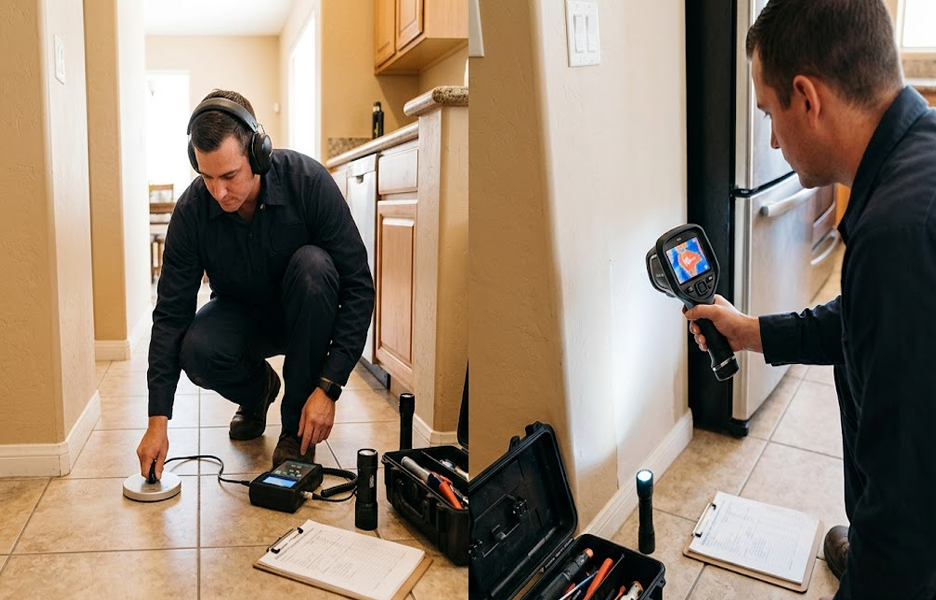
- Ground Microphones & Surface Contact Sensors: Technicians place highly sensitive acoustic listening discs directly on flooring surfaces (tile, engineered hardwood, or carpet). Digital sound processors filter out ambient background interference (such as wind, air conditioning units, or street traffic), allowing the operator to follow the audio gain curve to the exact decibel peak directly above the leak.
- Pipe Tracing with Nitrogen Gas Charging: For low-pressure lines or very small pinhole leaks where water escapes silently into sandy desert backfill, technicians can isolate the line and pressurize it with a non-toxic nitrogen-air mixture. The gas escapes with an audible bubbling hiss that acoustic sensors detect cleanly through thick concrete.
2. How Infrared Thermal Imaging Works (The Heat Signature)
Thermal imaging utilizes infrared (IR) cameras to detect subtle differences in surface temperature radiated by structural materials:
- Visualizing Thermal Conductance: Infrared lenses do not “see through” walls or concrete slabs. Instead, they read thermal radiation on the visible surface. When hot water from a sub-slab line ruptures, heat conducts upward through concrete and flooring, displaying an unmistakable orange, yellow, and red thermal bloom on the camera screen.
- Evaporative Cooling Signatures for Cold Leaks: For cold water leaks inside drywall partitions or ceilings, thermal imaging detects the evaporative cooling effect. Damp drywall is cooler than surrounding dry materials due to evaporation, showing up as distinct purple and dark blue cold patterns.
- Mapping Moisture Migration Paths: Thermal cameras excel at revealing how far water has traveled behind baseboards and under floating floors, identifying areas prone to hidden mold development before physical drywall discoloration appears.
3. Direct Comparison: Acoustic Sensors vs. Thermal Imaging
| Diagnostic Attribute | Electro-Acoustic Detection | Infrared Thermal Imaging |
|---|---|---|
| Primary Detection Method | Audio frequency & mechanical vibration | Surface thermal radiation differentials |
| Hot Water Slab Leaks | Excellent (pinpoints exact breach location) | Exceptional (instant visual thermal plume) |
| Cold Water Slab Leaks | Superior (not affected by temperature match) | Limited (cold water matches ground temperature) |
| Wall & Ceiling Cavity Leaks | Effective, but sound can echo in studs | Superior (maps moisture migration across framing) |
| Pinpoint Positional Accuracy | Extremely precise (within a 6-inch radius) | General footprint (heat diffuses outward) |
4. Why the Combined Multi-Tool Approach Is the Industry Standard
In Arizona’s complex plumbing environments, relying exclusively on a single diagnostic device can produce misleading results:
- The “Thermal Bloom” Trap: Water leaking beneath a slab takes the path of least resistance through gravel backfill. A hot water leak may travel 6 to 10 feet along a foundational footing before pooling and heating the concrete surface. If a plumber digs solely based on the thermal image hotspot, they risk opening the floor several feet away from the actual pipe break.
- Verification Through Acoustic Triangulation: Thermal cameras provide rapid preliminary localization to narrow down the general zone. The technician then deploys high-gain acoustic ground microphones over that perimeter to identify the exact origin point where pressurized sound peaks.
- Non-Destructive Confirmation: By combining thermal imaging, acoustic listening, and digital moisture meters, licensed technicians verify the exact leak coordinates before a single tile is removed or an overhead PEX bypass is routed.
If your water meter continues spinning or you suspect an active foundation leak, scheduling professional leak detection of concrete slabs in Arizona ensures non-invasive pinpointing that preserves your flooring and foundation.
Frequently Asked Questions: Non-Invasive Leak Detection
Q: Can thermal imaging cameras see cold water leaks under concrete slabs?
A: Thermal cameras detect surface temperature differentials, making them exceptional for hot water slab leaks. However, cold water leaks under thick Arizona concrete slabs often equalize with soil temperatures, requiring acoustic ground microphones to isolate the pressurized escaping sound.
Q: How accurate is acoustic leak detection on residential plumbing?
A: When operated by a certified technician, electro-acoustic listening discs and correlation sensors can pinpoint a pressurized copper or PEX pipe leak beneath 4 to 6 inches of concrete to within a 6-inch radius, eliminating exploratory demolition.
Q: Do plumbers combine acoustic detection and thermal imaging during an inspection?
A: Yes. Professional leak detection protocols use thermal imaging as a rapid visual scanning tool to identify broad thermal plumes behind drywall or beneath flooring, followed by acoustic listening tools to pinpoint the exact breach coordinates.
5. Precision Non-Invasive Leak Detection with APS Plumbing AZ
Don’t let hidden plumbing leaks destabilize your foundation or damage flooring. APS Plumbing (Aqua Plumbing Services LLC) provides non-destructive electro-acoustic listening, FLIR thermal imaging inspections, line tracing, and overhead PEX reroute solutions across Phoenix, Scottsdale, Paradise Valley, Mesa, Chandler, Gilbert, and Tempe.