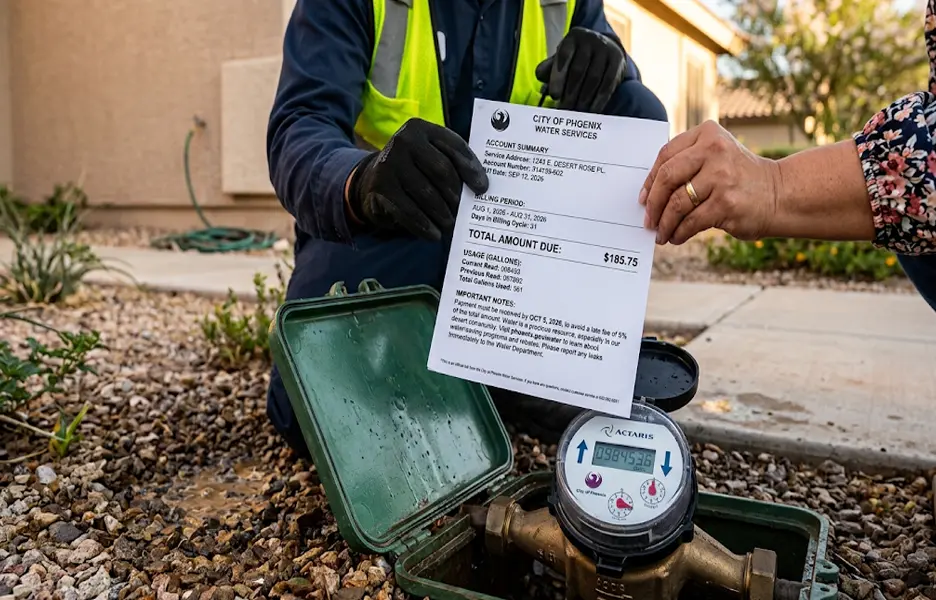
When summer temperatures across the Greater Phoenix metropolitan area, Scottsdale, Mesa, Chandler, and Gilbert climb beyond 110°F, residential utility expenses inevitably rise. While increased cooling costs from air conditioning are expected, homeowners are frequently stunned by an astronomical spike in their monthly municipal water bills.
In Central Arizona, separating legitimate seasonal consumption—such as pool evaporation and extended landscape watering schedules—from an active subterranean plumbing leak is essential. Because desert homes are constructed on monolithic concrete slabs and utilize extensive underground drip systems, thousands of gallons of pressurized water can vanish into sandy, caliche subsoil each week without pooling visibly on the surface.
Below is an engineering guide to understanding the root causes of summer water spikes, calculating your baseline consumption, and systematically hunting down hidden plumbing leaks before structural damage occurs.
1. Seasonal Use vs. Hidden Leaks: Setting Your Summer Baseline
Before suspecting a mechanical failure, calculate your anticipated seasonal volume:
Swimming Pool Surface Evaporation: Under extreme Sonoran Desert heat and low ambient humidity, a typical uncovered residential swimming pool loses between 1.5 to 2.5 inches of water per week through evaporation alone. For a standard 15,000-gallon pool, automatic autofill float valves can consume an extra 1,500 to 3,000 gallons per month simply maintaining water levels.
Automated Landscape Irrigation: Transitioning turf and desert plants from mild spring watering to deep summer saturation often doubles exterior consumption. Running a multi-zone drip system three days a week can easily consume 4,000 to 8,000 gallons monthly.
The Diagnostic Threshold: If your summer water bill spikes by 30% to 50% above your spring baseline, that often reflects seasonal watering adjustments. However, if your bill doubles, triples, or shows continuous consumption exceeding 15,000 to 30,000 gallons without lifestyle changes, a continuous structural breach is almost certainly present.
If your municipal pressure regulator is failing and forcing high volume through valves, review our technical diagnostic on pressure surges:
https://apsplumbingaz.com/why-arizona-homes-struggle-with-water-pressure-issues/
2. The 30-Minute Water Meter Leak Isolation Procedure
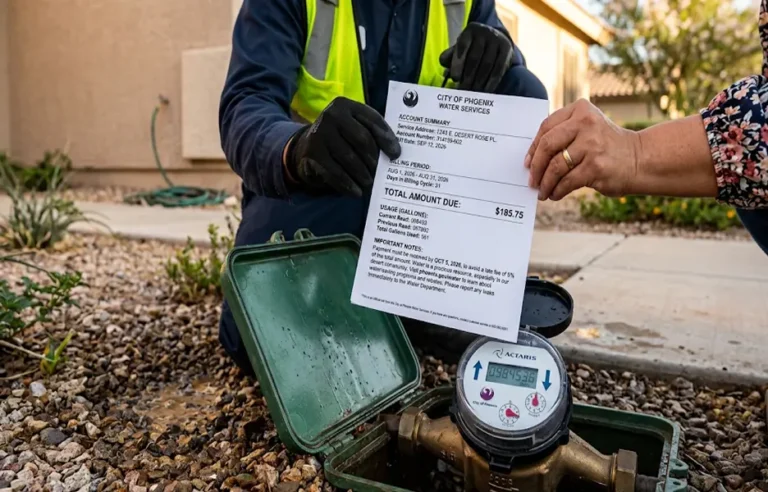
Your municipal water meter is the ultimate forensic diagnostic tool. Located near the front curb in a ground-level rectangular box, it measures every gallon entering your property. Follow this isolation process:
Step 1: Secure All Household Plumbing
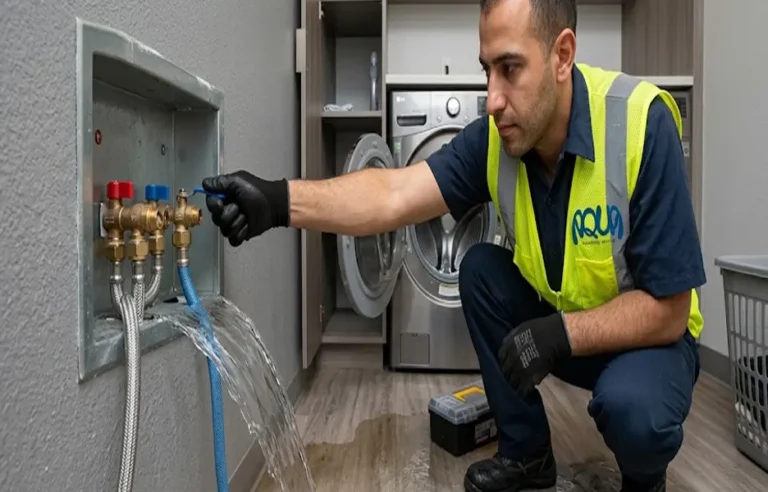
Shut off all indoor water-using appliances. Verify that washing machines, dishwashers, reverse osmosis systems, and ice makers are dormant. Inform household members not to flush toilets during the test.
Step 2: Temporarily Lock Out Exterior Systems
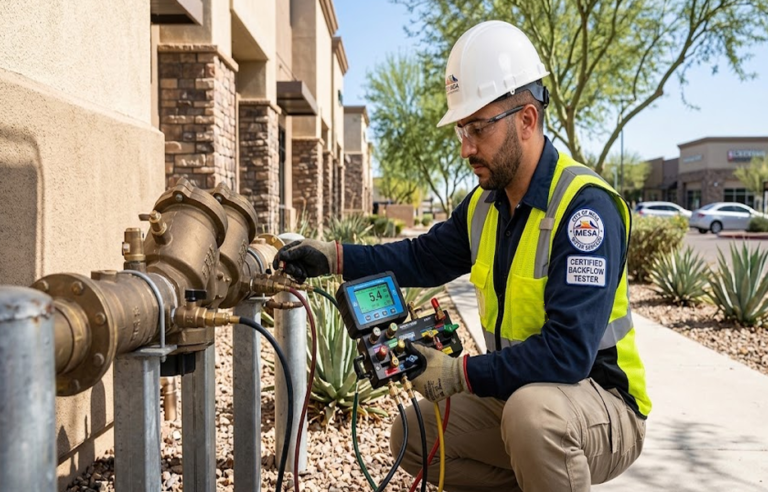
Turn off your automated landscape irrigation controller (or shut the isolation valves on your exterior backflow preventer). Turn off the manual water valve supplying your pool autofill assembly.
Step 3: Check the Flow Indicator
Clean away sand and inspect the meter face:
Analog Dials: Look at the small red, white, or silver triangular wheel (low-flow indicator). If it rotates continuously, pressurized water is escaping somewhere on your property.
Digital LCD Screens: Modern smart meters display actual Gallons Per Minute (GPM). If the screen reads an active decimal (e.g., 0.15 GPM) or flashes a dripping faucet icon, an active leak is occurring.
Step 4: Perform the House-Side Cutoff Test
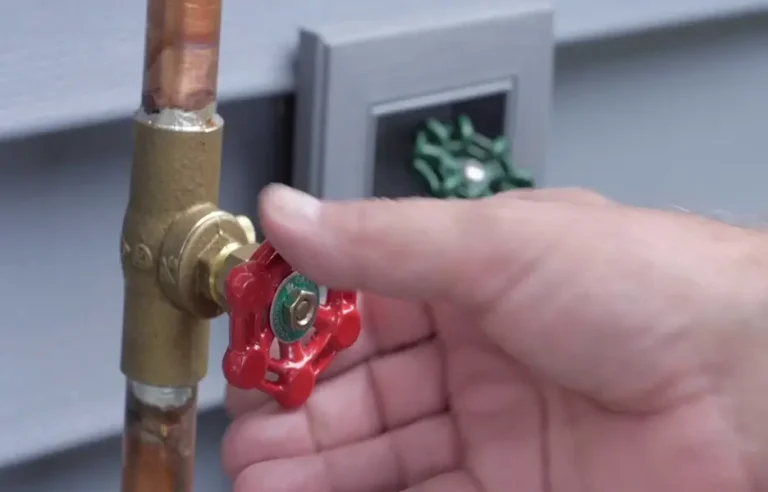
Close your main domestic water shut-off valve located on the exterior house wall.
If the meter stops moving: The leak is inside the home framing or beneath the concrete floor.
If the meter continues moving: The leak is buried outdoors along the underground service line or irrigation main.
For emergency instructions on finding and operating these valves, follow our guide on how to locate your main water shut-off valve in Phoenix:
https://apsplumbingaz.com/how-to-locate-main-water-shut-off-valve-phoenix/
3. The Three Most Common Culprits Behind High Arizona Water Bills
Diagnostic telemetry reveals that sudden water waste generally originates in one of three areas:
| Leak Category | Typical Volume Loss | Physical Warning Signs | Diagnostic Solution |
| Sub-Slab Copper Pinhole | 5,000 – 25,000+ Gal/Month | Warm floor tiles, faint hissing sound in walls, hot water running out quickly. | Acoustic frequency listening & radiometric thermal imaging. |
| Silent Toilet Flapper Leak | 3,000 – 10,000 Gal/Month | Intermittent phantom flushing, faint rippling in the bowl. | Food coloring dye test in tank; replace flapper/fill valve. |
| Subterranean Irrigation Line Break | 10,000 – 40,000+ Gal/Month | Spongy yard mud, sunken gravel, low sprinkler pop-up pressure. | Pressure vacuum breaker isolation & zone line tracing. |
1. Sub-Slab Foundation Leaks
Because desert foundations sit on monolithic concrete pads, pressurized hot and cold copper lines run through the gravel base beneath your flooring. High soil mineral content, thermal expansion, and abrasive caliche clay friction wear microscopic pinholes in copper tubing.
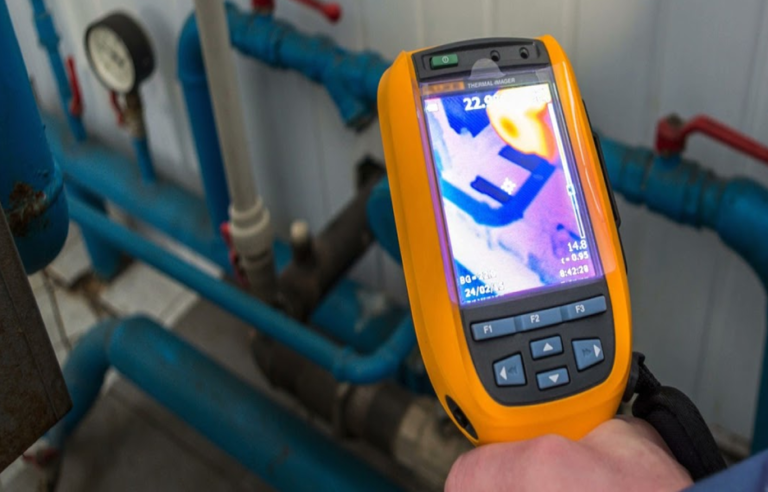
A pinhole leak as small as 1/16th of an inch running continuously at 70 PSI wastes over 25,000 gallons of potable water in a single billing cycle. To understand how technicians pinpoint these underground leaks without tearing up floors, read our comparison of acoustic leak detection vs thermal imaging:
https://apsplumbingaz.com/acoustic-leak-detection-vs-thermal-imaging/
For full-detail foundation line forensics, consult our engineering guide on slab leak detection of concrete slabs:
https://apsplumbingaz.com/leak-detection-of-concrete-slabs/
2. Silent Interior Toilet Leaks
A degraded rubber toilet flapper or a misaligned fill valve float allows water to trickle continuously down the overflow tube into the sewer lateral.
The Simple Dye Test: Place 5 to 6 drops of dark food coloring into the toilet tank. Do not flush for 20 minutes. If colored water seeps into the bowl, the internal rubber flapper has degraded from municipal chlorine and must be replaced.
3. Underground Yard and Irrigation Breaks
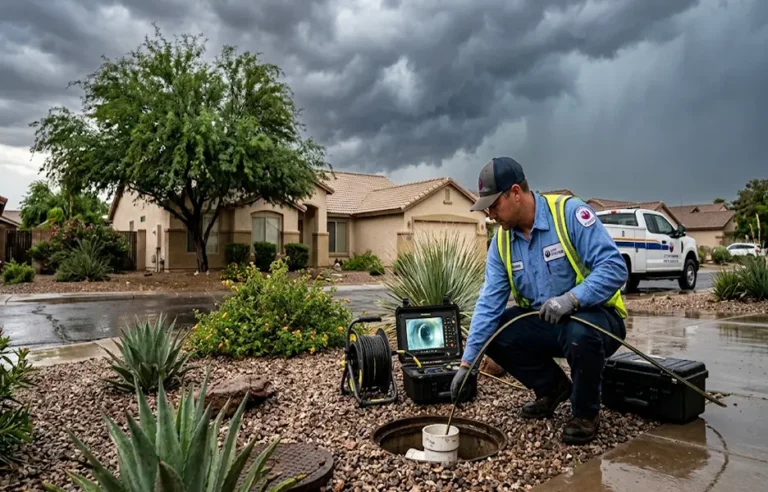
Summer heat bakes shallow-buried PVC lines, while aggressive root systems from desert shade trees compress and fracture pipe collars. Main irrigation lines operate under full municipal pressure 24 hours a day; a cracked fitting or sheared riser hidden under desert rock landscaping will silently pump thousands of gallons into deep caliche trenches.
Discover step-by-step methods for locating exterior breaks in our guide on how to identify an underground yard leak and irrigation breaks:
https://apsplumbingaz.com/how-to-identify-yard-leak-underground-irrigation/
4. Financial Recovery: Applying for Municipal Leak Adjustments
Most municipal water utilities across Maricopa County—including the City of Phoenix, City of Scottsdale, City of Mesa, and Chandler Municipal Utilities—offer formal Leak Adjustment Credits to property owners who experience a hidden pipe failure.
Eligibility Criteria: The leak must be subterranean or concealed inside structural walls (not a dripping sink faucet or running garden hose).
Forensic Invoicing: Utilities require a detailed repair invoice from a licensed plumbing contractor documenting the exact mechanical cause, date of repair, and verification that water consumption returned to baseline.
Adjusted Billing: If approved, the city recalculates your bill based on your historical seasonal average, crediting back hundreds of dollars in excess volumetric water and sewer surcharge fees.
Review the necessary documentation roadmap in our Arizona pipe leak insurance claim guide:
https://apsplumbingaz.com/arizona-pipe-leak-insurance-claim-guide/
5. Long-Term Prevention and Modernization
Repeated water bill surges usually signal that aging infrastructure is reaching mechanical exhaustion:
Whole-Home PEX Repiping: If aging copper lines below your foundation are failing repeatedly, ongoing spot repairs become financially unsustainable. Abandoning underground lines and rerouting flexible PEX-A through attic spaces provides a permanent solution. Explore our certified home repiping services in Arizona:
Smart Water Shut-Off Monitors: Installing smart flow meters (such as Flo by Moen or Phyn) directly behind your main shut-off valve allows real-time ultrasonic monitoring. These devices detect microscopic leaks, alert your smartphone, and automatically close the main valve before water bills spike.
Emergency Pipe Containment: If a pipe has ruptured and is actively flooding your living areas or landscape, contact our rapid dispatch team for emergency pipe repairs in Arizona:
Renovation Rough-Ins: When upgrading bathrooms or reconfiguring kitchen layouts, ensure all supply lines are installed to modern pressure-tested standards via our renovation plumbing in Arizona:
Frequently Asked Questions: Arizona Summer Water Spikes
Q: Why is my sewer bill higher when my water usage spikes?
A: In many Arizona municipalities, residential sewer charges are calculated based on your winter average water consumption or direct volumetric water intake. An unmitigated water leak can inflate both your potable water consumption tier and your municipal sewer surcharge.
Q: Can hard water cause high water bills?
A: Yes, indirectly. Extreme desert mineral hardness (calcium and magnesium) forms crusts inside toilet fill valves, pressure regulators, and water heater temperature-pressure relief (TPR) valves, causing them to stick open and discharge water continuously into drains.
Q: How much water does an automatic pool autofill use?
A: During the summer, an autofill float valve will supply 1,500 to 3,000 gallons per month to counter evaporative loss. However, if the brass float stick or internal diaphragm fails, it can run non-stop, draining excess water out through the pool’s overflow pipe into the street.
Q: Will a small pinhole leak heal or seal itself with mineral scale?
A: Never. Although hard water leaves scale deposits, the high velocity of pressurized domestic water (60–80+ PSI) continuously erodes copper and polymer walls, causing a microscopic pinhole to rapidly expand into a catastrophic rupture.
Stop High Summer Water Bills with APS Plumbing
Don’t let hidden plumbing leaks drain your household budget. Contact the non-destructive diagnostic specialists at Aqua Plumbing Services (APS Plumbing) for precision acoustic leak detection, thermal slab evaluations, and irrigation pressure testing across Phoenix, Scottsdale, Mesa, Chandler, and Gilbert.
Schedule your comprehensive water loss audit today: