In dense multi-family residential communities across Tempe—from high-rise student housing near Arizona State University (ASU) to luxury apartment complexes along Tempe Town Lake and South Tempe—a ruptured washing machine supply hose is one of the most catastrophic mechanical emergencies that can occur.
Unlike a standalone single-family home where water pools across a ground-floor slab, an apartment laundry failure introduces multi-story gravity physics. A standard rubber washing machine hose operates under constant municipal line pressure (often between 60 and 85+ PSI in Maricopa County). When a pressurized hose ruptures, it discharges 6 to 12 gallons of water per minute. Within twenty minutes, over 200 gallons of pressurized water will breach utility closets, saturate common subflooring, seep through fire-rated drywall, and rain down through light fixtures and ceilings into the tenant units below.
Whether you are a tenant, property manager, or landlord in Tempe, immediate containment and methodical legal and insurance documentation dictate whether damages remain under a few hundred dollars or explode into tens of thousands in liability. Below is the field-tested emergency protocol for handling a burst washing machine hose in a Tempe apartment complex.
1. Immediate Emergency Containment: The First 180 Seconds
When water is actively jetting from behind your laundry appliance, every second counts. Execute these emergency containment steps immediately:
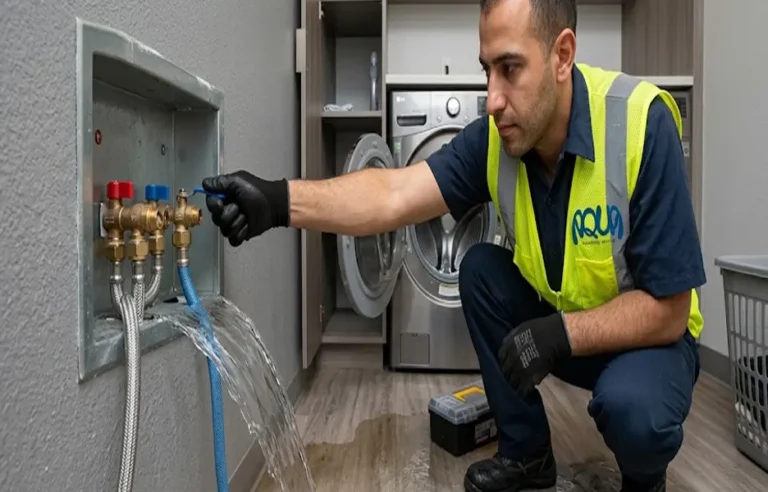
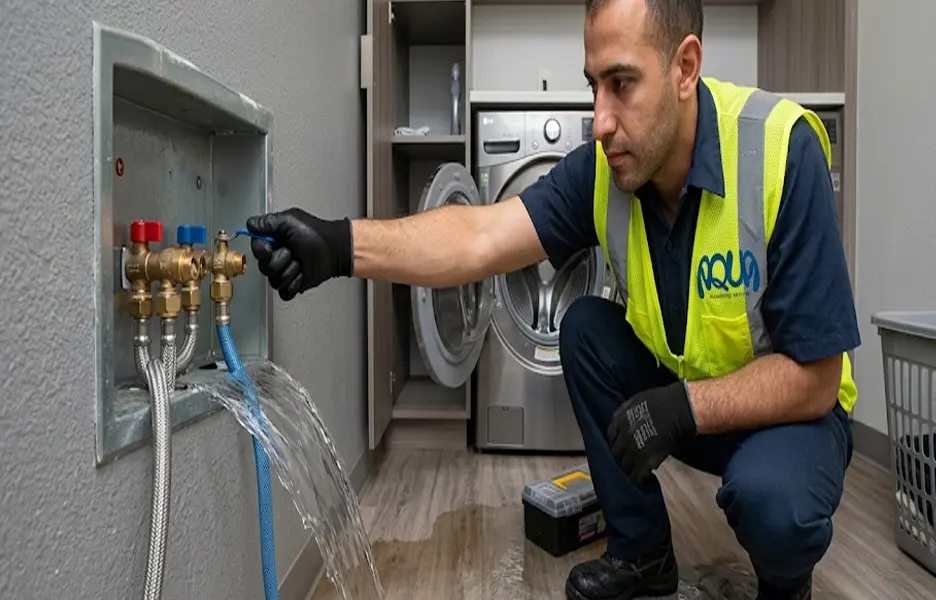
Step 1: Shut Off the Dedicated Laundry Valves
Directly behind or above your washing machine, locate the recessed plastic or metal laundry wall box. Inside sit the hot and cold water shut-off valves:
Single-Lever Ball Valves (Modern Units): Pull or flip the red/blue lever firmly to the opposite side (usually from vertical to horizontal). This cuts both hot and cold feeds simultaneously.
Dual Quarter-Turn Ball Valves: Rotate both individual brass lever handles 90 degrees perpendicular to the water lines.
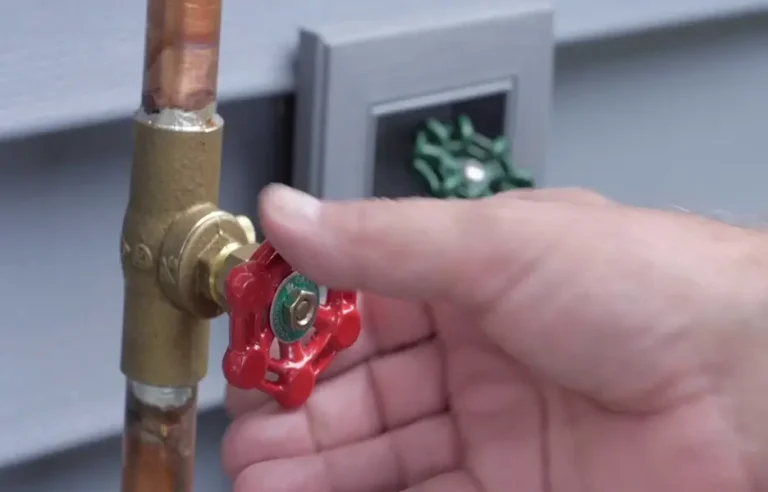
Legacy Gate Valve Knobs: Turn both round handles clockwise (“Righty-Tighty”) until fully seated.
Step 2: Kill the Main Apartment Cutoff (If Laundry Valves Seize)
Older apartment valves encrusted with Arizona hard water scale frequently seize or snap when forced. If the laundry valves refuse to turn, immediately shut down the unit’s main domestic isolation valve—typically located in an exterior water heater utility closet on your patio, inside the bathroom vanity cabinet, or adjacent to the kitchen entry.
For a full breakdown on finding interior and exterior isolation valves, follow our emergency guide on how to locate your main water shut-off valve in Phoenix and the East Valley:
https://apsplumbingaz.com/how-to-locate-main-water-shut-off-valve-phoenix/
Step 3: Cut Electrical Power to the Laundry Circuit
Water and 120V/240V laundry appliances present an immediate electrocution hazard. Do not stand in standing water to unplug the machine. Instead, proceed to your apartment’s electrical subpanel (usually behind a metal door in a bedroom or hallway) and flip the circuit breakers marked “Washer,” “Dryer,” and “Laundry” to the OFF position.
Step 4: Alert Downstairs Neighbors and Emergency Maintenance
Immediately run downstairs and notify the tenants directly beneath your unit so they can move electronics, furniture, and valuables away from ceiling fixtures. Simultaneously, dial your property management’s 24/7 emergency dispatch line to alert building engineers.
If unmitigated high water pressure from municipal feeds caused the sudden rupture, review our engineering diagnostic on residential pressure surges:
https://apsplumbingaz.com/why-arizona-homes-struggle-with-water-pressure-issues/
2. Why Washing Machine Hoses Burst in Central Arizona
Laundry hose failures are rarely spontaneous accidents; they are the mechanical culmination of distinct environmental forces:
| Failure Factor | Mechanical Mechanism | Arizona Risk Level | Prevention Protocol |
| Municipal Pressure Surges | Utility pumping stations deliver water exceeding 85–100 PSI, over-pressurizing flexible lines. | Very High in East Valley | Install & calibrate residential Pressure Reducing Valves (PRVs). |
| Extreme Water Hardness | 15 to 25+ GPG calcium minerals degrade internal EPDM rubber liners and seize valve stems. | High across Tempe | Upgrade to brass quarter-turn valves and whole-home water conditioning. |
| Hydraulic Water Hammer | Fast-closing internal washing machine solenoid valves generate intense pressure shockwaves. | High on all modern washers | Install inline mini water hammer arrestors directly behind the washer box. |
| Aged Reinforced Rubber Hoses | Standard unreinforced black rubber dry-rots, swells, and delaminates within 3 to 5 years. | Critical | Mandate braided 304 stainless steel polymer hoses replaced every 5 years. |
3. Water Extraction, Structural Drying & Mold Defense
Stopping the water flow is only the initial battle. In multi-family housing, trapped moisture poses immediate structural and biological threats:
Slab and Subfloor Moisture Migration: Water seeps through grout lines and laminate flooring joints, pooling between concrete slabs and baseplate framing.
Ceiling Cavity Collapse: Water accumulating above downstairs drywall ceilings softens gypsum board rapidly. Once soaked, ceiling drywall will collapse under its own wet weight.
Toxic Mold Incubation: The Environmental Protection Agency (EPA) warns that mold spores begin colonizing cellulose materials (drywall paper and carpet padding) within 24 to 48 hours—a timeframe accelerated by warm Arizona ambient temperatures.
To safeguard your living space and prevent toxic biological outbreaks, follow our clinical protocol on how to prevent toxic mold growth after plumbing leaks:
https://apsplumbingaz.com/prevent-mold-growth-arizona-pipes/
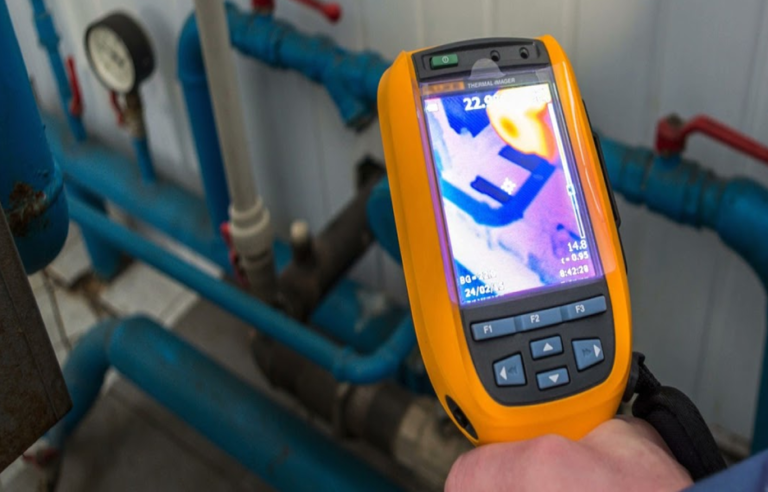
If water has escaped beneath concrete slabs or into subterranean building foundations, explore how technicians map structural moisture using acoustic leak detection vs thermal imaging:
https://apsplumbingaz.com/acoustic-leak-detection-vs-thermal-imaging/
4. Tenant vs. Landlord Liability: Who Pays for the Damage?
In an Arizona apartment flood, financial liability is governed by the lease agreement, negligence statutes, and the Arizona Residential Landlord and Tenant Act (A.R.S. Title 33):
When the Tenant Is Typically Liable:
Failure to Report Known Leaks: If a tenant noticed a dripping valve, blistering hose, or bulging fitting and failed to notify property management in writing.
Tenant-Supplied Appliances: If the tenant brought their own washing machine and used sub-standard, aged, or improperly installed rubber hoses.
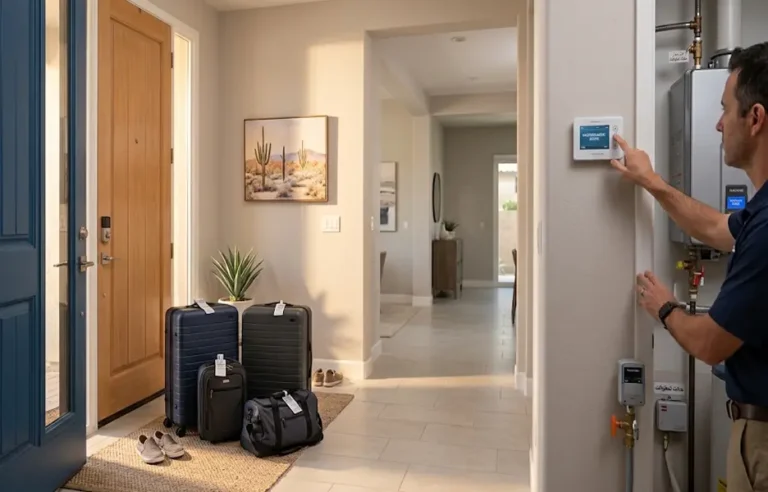
Negligent Operation: Running laundry while absent from the property if the lease explicitly prohibits unattended appliances.
When the Landlord / Property Management Is Typically Liable:
Complex-Provided Appliances: If the washer and hoses were provided by the apartment complex as part of the leased inventory.
Failure to Perform Preventative Maintenance: If management ignored written maintenance tickets requesting hose replacement or failed to replace unreinforced lines on aging complexes.
Building-Wide Pressure Surges: If the complex’s master pressure regulator failed, subjecting all units to excessive municipal PSI spikes.
The Role of Renters Insurance:
Every tenant in Tempe should carry a personal Renters Insurance Policy (HO-4) with a minimum of $100,000 to $300,000 in personal liability coverage. If you are deemed legally liable for a hose rupture, your liability policy covers structural repairs to the building and personal property restoration for downstairs neighbors.
For step-by-step guidance on communicating with adjusters and securing tear-out allowances, consult our Arizona pipe leak insurance claim guide:
https://apsplumbingaz.com/arizona-pipe-leak-insurance-claim-guide/
5. Proactive Upgrades: How Apartment Communities Prevent Ruptures
Forward-thinking Tempe property managers and homeowners implement three engineered preventative upgrades:
1. Mandating Braided Stainless Steel Hoses
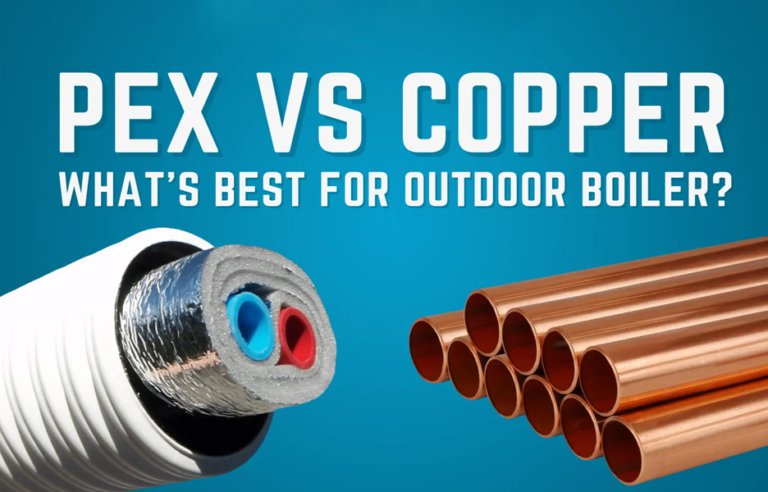
Replace all black unreinforced rubber hoses with commercial-grade braided stainless steel supply lines complying with ASME A112.18.6. The stainless steel exterior mesh prevents the internal Santoprene or EPDM core from expanding into bubbles and bursting under pressure spikes.
2. Installing Inline Water Hammer Arrestors
Modern energy-efficient washing machines utilize high-speed solenoid valves that snap shut in milliseconds. This sudden mechanical deceleration sends hydraulic shockwaves traveling backward at supersonic speed through supply pipes. Threading mini-water hammer arrestors directly between the washing machine inlet and the supply hose absorbs these kinetic spikes safely.
3. Smart Automatic Shut-Off Leak Sensors
Installing an automated laundry shut-off system (such as Watts FloodSafe or TimeSafe electronic valves) provides 100% fail-safe protection. These devices utilize flat moisture sensor pucks placed on the floor beneath the washing machine. If a single drop of water contacts the sensor, the unit electronically trips a magnetic solenoid, cutting incoming water in less than one second.
For properties with aging building risers requiring whole-complex modernizations, explore certified home repiping services in Arizona:
For active pipe bursts requiring immediate emergency extraction and line reconstruction, contact our 24/7 crew for emergency pipe repairs in Arizona:
If you are remodeling multi-family utility closets or upgrading drainage stacks, review certified rough-in codes at renovation plumbing in Arizona:
Frequently Asked Questions: Apartment Washing Machine Floods
Q: How often should washing machine hoses be replaced in Arizona?
A: In Arizona, standard braided stainless steel washing machine hoses should be proactively replaced every 3 to 5 years. High municipal water temperatures, chemical chloramines, and extreme water hardness accelerate the hardening and micro-cracking of internal rubber seals.
Q: What should I do if the laundry shut-off valve is stuck open?
A: Never use excessive force or a cheater bar on an old gate valve; you risk snapping the stem and creating a secondary high-pressure flood. Immediately proceed to your unit’s main domestic shut-off valve or contact building maintenance to shut down the vertical riser branch.
Q: Can a burst washing machine hose damage fire sprinkler systems or electrical grids?
A: Yes. Multi-family floor cavities house electrical conduit, data cables, and fire alarm wiring. Subfloor saturation can short electrical circuits, trip building fire panel alarms, and compromise ceiling gypsum fire-barrier assemblies between tenant floors.
Q: Does property management have to clean up water inside my apartment?
A: The landlord or management company is legally responsible for extracting water from the building structure (concrete floors, framing, and drywall) to prevent structural rot and mold. However, damage to your personal belongings (furniture, clothing, computers) is strictly covered by your personal renters insurance policy, not building insurance.
Rapid Commercial and Residential Containment with APS Plumbing
Don’t let a sudden appliance hose rupture turn into a multi-unit liability disaster. Contact the licensed emergency specialists at Aqua Plumbing Services (APS Plumbing) for rapid water extraction, laundry valve replacements, pressure regulator calibrations, and line repairs across Tempe, Phoenix, Scottsdale, Mesa, and Chandler.
Schedule your emergency inspection or preventative plumbing audit today: