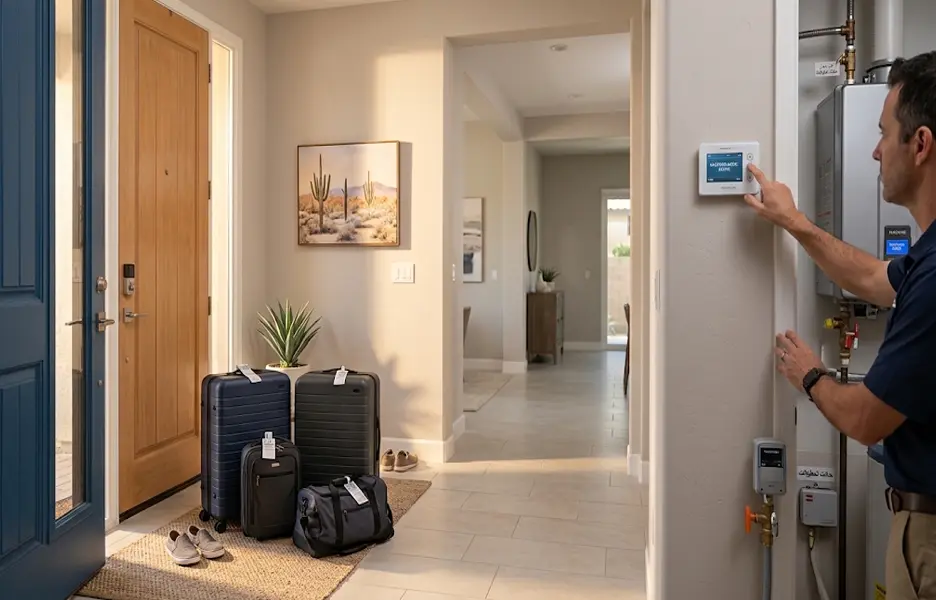
Leaving the Greater Phoenix metropolitan area—including Scottsdale, Mesa, Chandler, and Gilbert—during the peak summer heat is a cherished ritual for thousands of Southwestern residents. Escaping consecutive weeks of 115°F temperatures provides welcome relief, but leaving a residential property unoccupied during an Arizona summer introduces unique structural risks.
When an indoor or outdoor plumbing breach occurs in an occupied residence, homeowners catch it within minutes or hours. In an unoccupied home, however, an undetected supply line failure under high municipal pressure can discharge thousands of gallons of water for days or weeks. Furthermore, extreme interior ambient heat accelerates water evaporation, drying out drainage traps and allowing toxic sewer gasses to permeate living spaces.
Before packing your vehicle or boarding your flight, execute this engineering-approved plumbing checklist designed specifically for desert homes.
1. The Main Water Isolation Protocol
The single most effective defense against catastrophic vacation water damage is eliminating pressurized water inside interior supply lines.
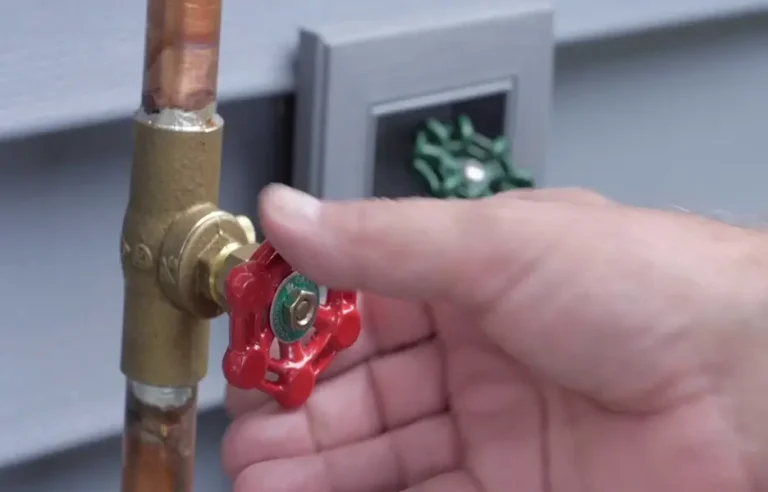
Full-System Shut-Off (Preferred): If your exterior landscaping irrigation is connected on a separate line ahead of your house cutoff, shut off the main domestic isolation valve located on your exterior stucco wall or inside the garage.
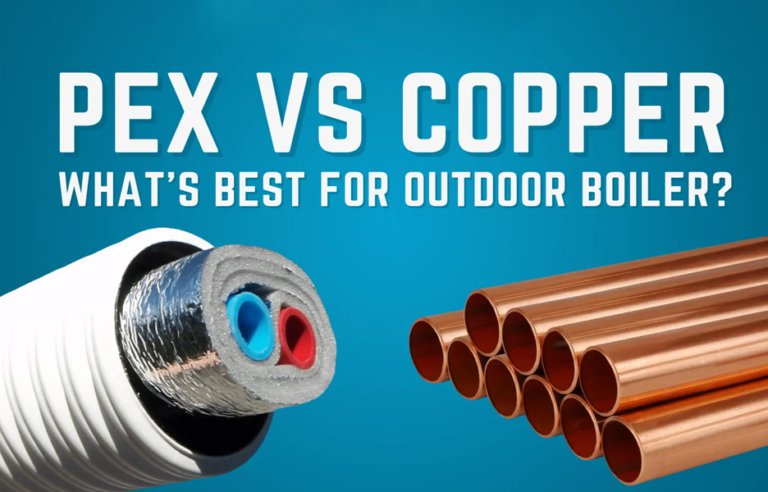
Depressurize the System: After turning off the main valve, open the lowest indoor faucet and an outdoor hose bib to drain residual pressurized water trapped within copper or PEX supply lines.
Dedicated Fixture Cutoffs (Alternative): If whole-home shut-off is impractical (e.g., due to an integrated water softener loop), turn off the individual quarter-turn angle stops beneath every toilet, bathroom sink, kitchen sink, and washing machine supply box.
For step-by-step instructions on locating and operating your isolation controls, follow our guide on how to locate your main water shut-off valve in Phoenix:
https://apsplumbingaz.com/how-to-locate-main-water-shut-off-valve-phoenix/
2. Water Heater Protection: Preventing Dry-Fire and Energy Waste
Leaving your water heater fully active while the domestic water supply is shut off can destroy heating elements or trigger thermal pressure blowouts:
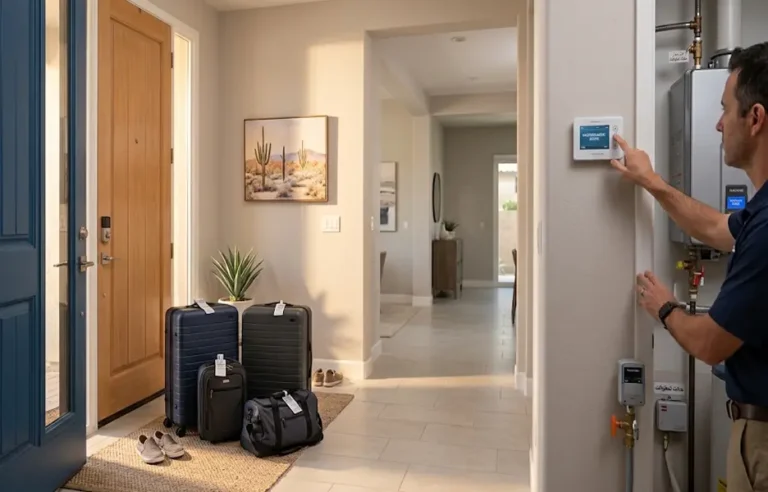
Tankless Water Heaters: Power down the digital control panel or flip the dedicated electrical breaker. This eliminates phantom electrical draw and protects sensitive electronic flow sensors.
Electric Tank Water Heaters: Always switch off the circuit breaker at your electrical subpanel. If water drains out of a closed tank while the breaker remains on, the upper and lower electric heating elements will dry-fire and melt within minutes.
Natural Gas Tank Water Heaters: Rotate the lower mechanical gas control valve dial from its operating temperature down to the “VACATION” or “PILOT” setting. This maintains a small pilot flame to prevent tank condensation while stopping the burner from constantly heating 50 gallons of unused water in an unconditioned garage.
For an engineering analysis of how desert heat and mineral scale impact water heating equipment, review our diagnostic guide comparing traditional vs tankless water heaters in Arizona:
https://apsplumbingaz.com/comparing-traditional-vs-tankless-water-heaters-in-arizona/
3. Appliance Supply Line Defense
Flexible appliance connectors represent the most frequent point of sudden structural flooding:
| Appliance | Vacation Risk | Pre-Departure Action |
| Washing Machine | Aged rubber lines swell and burst under continuous static pressure. | Shut off the laundry wall box valves; disconnect electrical plug. |
| Refrigerator / Ice Maker | Plastic 1/4-inch poly tubing cracks behind warm compressor coils. | Shut the inline needle/ball valve behind the fridge; lift ice arm to OFF. |
| Reverse Osmosis (RO) | Storage tank bladder failure or membrane housing split under pressure. | Turn the blue quarter-turn valve on top of the RO storage tank to OFF. |
| Dishwasher | Solenoid valve stuck open or braided stainless line failure. | Close the dedicated hot water angle stop beneath the kitchen sink. |
To understand how flexible laundry lines fail in multi-family and residential structures, review our operational protocol on handling a burst washing machine hose:
https://apsplumbingaz.com/burst-washing-machine-hose-tempe-apartment/
4. Preventing Dry P-Traps and Sewer Gas Infiltration
In dry desert environments where interior relative humidity often drops below 15%, the water seals inside your plumbing drainage traps evaporate at an alarming rate.
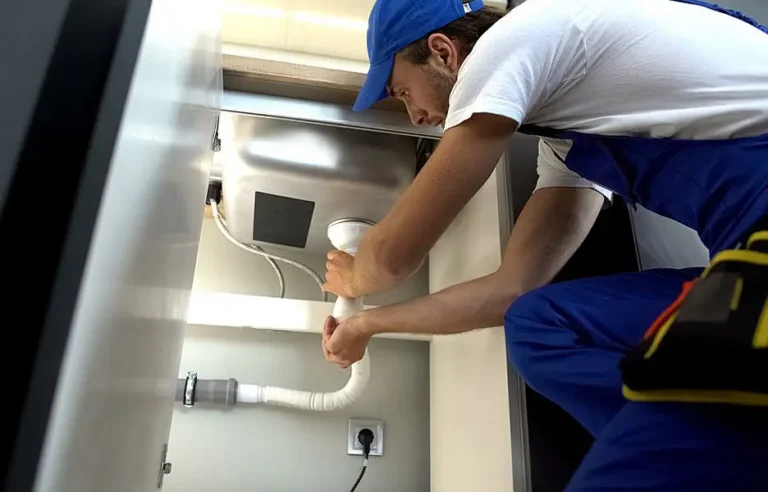
The Function of the P-Trap: Every sink, shower, bathtub, and floor drain features a curved pipe (P-trap) that holds a standing pool of water. This liquid barrier prevents toxic, combustible sewer gases (methane and hydrogen sulfide) from venting into your home.
Rapid Vacation Evaporation: In an unoccupied home with the thermostat set to 85°F or higher, shower and guest sink P-traps can dry out completely within 10 to 14 days.
The Mineral Oil Protocol: To prevent evaporation without risking drain damage, pour 2 to 3 tablespoons of food-grade pure mineral oil into rarely used sink drains, guest shower pans, and floor drains. The oil floats on top of the standing water barrier, creating an airtight seal that completely blocks evaporation.
Cover Toilet Bowls: Close toilet lids and stretch plastic cling wrap across the porcelain rim beneath the seat to prevent water in the toilet bowl from evaporating and breaking the internal trap seal.
5. Outdoor Landscape Irrigation & Pool Management
Desert vegetation cannot survive without automated hydration during summer heatwaves. Maintain exterior reliability while preventing line breaks:
Replace Timer Backup Batteries: Summer monsoons frequently trigger regional power outages. Install fresh 9-volt alkaline backup batteries in your automated irrigation controller so your programming is preserved.
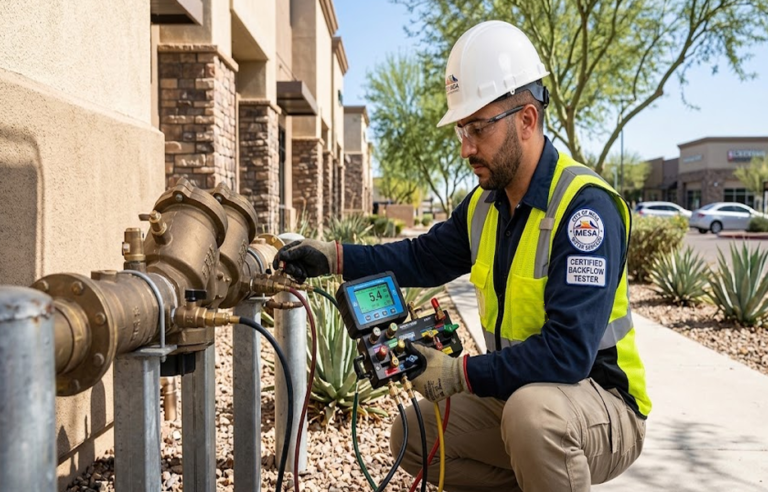
Inspect the Backflow Assembly (PVB): Check your above-ground Pressure Vacuum Breaker for hairline fractures or dripping canopies. Shutting off the downstream isolation handle while testing ensures no hidden line breaks exist.
Verify Pool Autofill Functionality: Ensure your pool’s automatic water leveling valve is balanced correctly and not stuck in a continuous fill cycle that overflows into the street.
To learn how to isolate buried exterior line fractures from interior domestic supply leaks, explore our field guide on how to identify an underground yard leak and irrigation breaks:
https://apsplumbingaz.com/how-to-identify-yard-leak-underground-irrigation/
If extreme municipal pressure is straining your irrigation valves and exterior risers, review our technical diagnostic on residential water pressure issues:
https://apsplumbingaz.com/why-arizona-homes-struggle-with-water-pressure-issues/
6. Summer Monsoon Storm Preparation for Drainage Lines
Arizona monsoon storms between July and September produce microburst downpours that can overload municipal sanitary collectors and residential laterals:
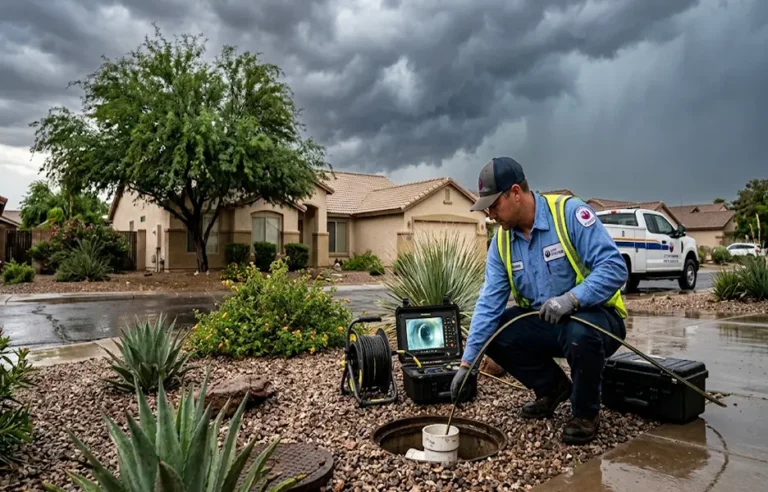
Inspect Yard Sewer Cleanouts: Walk your perimeter gravel beds to verify that your threaded sewer cleanout caps are intact and screwed down tightly. Missing or cracked caps allow rushing storm runoff and debris to flood directly into your sewer lateral.
Clear Roof Drains and Parapets: On flat southwestern rooflines, clean scuppers and downspouts of dried desert dust and tree twigs to prevent standing pond water from finding structural roof penetrations.
Learn how summer microbursts and flash floods overwhelm private drain lines in our technical analysis:
https://apsplumbingaz.com/sewer-line-backup-arizona-monsoon-storms/
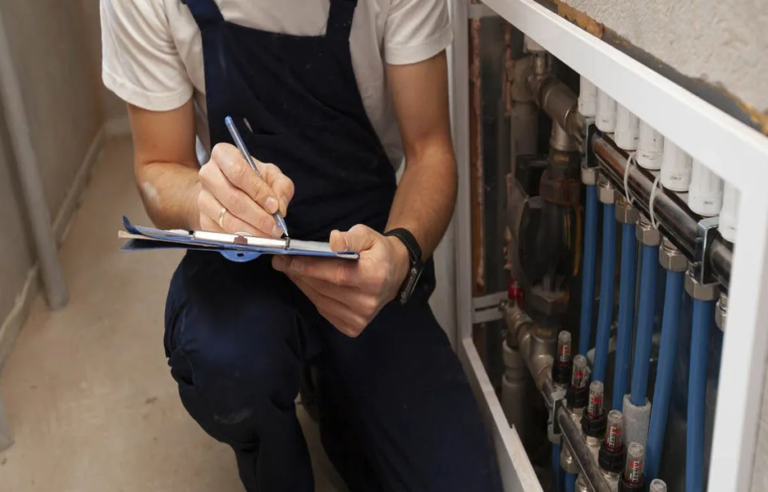
7. The Final Pre-Departure Walkthrough (Printable Checklist)
Before locking your doors, run through this 5-minute physical inspection:
[ ] Main Water Valve: Shut off at house perimeter (or isolate individual interior fixtures).
[ ] Water Lines Depressurized: Open one indoor faucet and an outdoor hose bib to relieve static pressure.
[ ] Water Heater Set: Electric breaker switched OFF; gas control turned to “VACATION” or “PILOT”.
[ ] Washing Machine Valves: Closed completely in the laundry wall box.
[ ] Ice Maker Deactivated: Wire arm raised to OFF; under-sink supply line shut down.
[ ] P-Traps Sealed: Mineral oil applied to guest showers and sinks; toilet lids closed.
[ ] Irrigation Timer Verified: Fresh backup batteries installed; run times calibrated for summer.
[ ] Sewer Cleanouts Secured: Threaded caps inspected and tightened against storm runoff.
[ ] Trusted Contact Informed: Provide a neighbor or local property caretaker with the location of your main water shut-off valve.
If you return home to find unexplained spikes in consumption, consult our diagnostic roadmap on managing high summer water bills and hidden plumbing leaks in Arizona:
https://apsplumbingaz.com/managing-high-summer-water-bills-arizona/
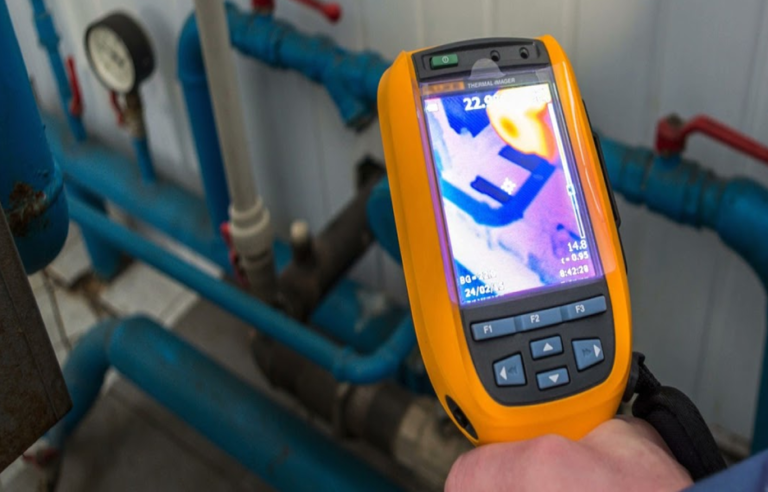
If you suspect an in-slab copper line failure occurred while you were away, discover how our technicians pinpoint subterranean breaches using acoustic leak detection vs thermal imaging:
https://apsplumbingaz.com/acoustic-leak-detection-vs-thermal-imaging/
For unexpected pipe ruptures requiring immediate 24/7 containment upon your return, contact our dispatch team for emergency pipe repairs in Arizona:
Frequently Asked Questions: Arizona Vacation Plumbing
Q: Should I shut off my water main if someone is watering my indoor plants?
A: If a house sitter is visiting periodically, consider leaving the main water valve on but shutting off the individual high-risk supply lines (washing machine, ice maker, and toilet angle stops). Alternatively, instruct the caretaker on how to open the main valve upon arrival and shut it off prior to leaving.
Q: Will closing the main water valve harm my whole-home water softener?
A: No, but you should place the water softener into “Bypass” mode using the bypass valve assembly on the rear of the unit. This prevents the unit from attempting an automated regeneration cycle without incoming municipal water pressure.
Q: What temperature should I set my thermostat to while away in summer?
A: Do not turn your air conditioner completely off. Set your thermostat between 82°F and 85°F. Maintaining moderate indoor airflow and temperatures prevents plastic plumbing parts from warping, protects cabinet adhesives, and slows down P-trap water evaporation.
Q: Why do my faucets cough or sputter air when I turn the water back on after vacation?
A: Sputtering is normal when re-pressurizing a drained system. To safely purge air, remove aerator screens from faucets, turn the main valve on slowly, and open all cold and hot taps until water flows smoothly without spitting.
Schedule a Pre-Vacation Plumbing Audit with APS Plumbing
Enjoy your summer vacation with complete peace of mind. Contact the certified specialists at Aqua Plumbing Services (APS Plumbing) for comprehensive pre-vacation plumbing audits, main shut-off valve replacements, pressure regulator testing, and backflow evaluations across Phoenix, Scottsdale, Mesa, Chandler, and Gilbert.
Schedule your residential plumbing inspection today: