Multi-Unit Repiping in Mesa: A Strategic Budgeting & Planning Guide for Property Managers
For multi-family property managers, HOA boards, and real estate asset portfolios across Mesa, Tempe, Chandler, and the East Valley, managing aging residential plumbing infrastructure has transitioned from routine operational maintenance into a critical capital expenditure (CapEx) priority. A substantial portion of Mesa’s rental housing inventory—encompassing garden-style apartments, fourplex clusters, and condominium communities constructed between 1970 and 1998—features original subterranean copper or deteriorating polybutylene piping embedded directly inside concrete slab foundations.
In Central Arizona, where municipal water hardness routinely exceeds 15 to 25 Grains per Gallon (GPG) and seasonal ground movement is severe, subterranean copper piping reaches the end of its engineered lifespan within 25 to 35 years. Once a multi-family asset begins experiencing recurring slab leaks across separate buildings, continuing to approve reactive spot repairs drains operating budgets without addressing the underlying systemic failure.
This strategic guide explores the primary variables that dictate multi-family repiping investments, material performance comparisons, phased installation workflows, tenant retention protocols, and municipal code compliance across Mesa.
1. Key Budgeting Drivers in Multi-Unit Repiping Projects
Rather than relying on generic estimates, commercial repiping investments are governed by the physical architecture of the property and the mechanical layout of each unit. Understanding these cost drivers allows property managers to forecast capital reserves accurately:
Unit Footprint & Wet Wall Density
1-Bed / 1-Bath Configurations: These units typically feature stacked or back-to-back plumbing layouts where the bathroom and kitchen share a central mechanical wall. These streamlined layouts require minimal drywall penetration and fewer linear feet of pipe.
Multi-Bath & Multi-Story Layouts: 2-bedroom and 3-bedroom townhomes feature distributed wet walls, dedicated laundry closets, and inter-floor ceiling cavities. Routing supply lines between floors requires navigating fire-rated draft stops and complex joist bays, which influences labor scheduling.
Foundation Design & Subfloor Access
Properties built on monolithic concrete slabs present the greatest financial vulnerability to unmitigated leaks. Repiping involves abandoning failed subterranean piping entirely and establishing an overhead delivery network routed through attic trusses, drop-ceilings, or vertical mechanical chases.
Drywall Restoration & Texture Standards
A comprehensive commercial repiping scope must account for architectural restoration. Turnkey proposals should encompass surgical access cutting, professional drywall patching, orange-peel or knockdown texture matching, and primer application to return units to move-in condition immediately.
If municipal water pressure spikes are contributing to premature line failures across your community, review our diagnostic on residential pressure surges:
https://apsplumbingaz.com/why-arizona-homes-struggle-with-water-pressure-issues/
2. Material Engineering: PEX-A vs. Commercial Rigid Copper
Selecting the appropriate pipe material establishes both initial installation efficiency and long-term operating expense (OpEx) for the asset:
| Evaluation Metric | Cross-Linked Polyethylene (PEX-A) | Type-L Rigid Copper |
| Material Flexibility | Extreme; bends around framing without mechanical elbows. | Rigid; requires cut-and-solder elbows at every directional change. |
| Mineral Hardness Resistance | Immune: Smooth polymer walls resist calcium scaling and chloramines. | Vulnerable: Subject to internal pitting and velocity erosion over time. |
| Acoustic Performance | Absorbs dynamic pressure spikes, dampening pipe chatter through shared walls. | Transmits metallic vibration and water hammer noise between tenant units. |
| Installation Efficiency | Continuous runs significantly reduce labor hours and wall opening size. | High labor intensity requiring open-flame torches inside existing wall cavities. |
| Engineered Lifespan | 50+ years under standard operating pressures and temperatures. | 20 to 30 years in aggressive, high-TDS Arizona groundwater. |
For the vast majority of multi-family properties in Mesa, PEX-A (manufactured via the Engel method) represents the commercial standard for interior domestic retrofits, while rigid copper is reserved for exposed mechanical boiler rooms and outdoor equipment connections.
To learn more about whole-building piping transitions from legacy copper to continuous polymers, explore our certified home repiping services in Arizona:
https://apsplumbingaz.com/home-repiping-arizona/
3. The Financial Equation: The “Spot Repair Trap” vs. Comprehensive Repiping
Property managers operating older communities frequently fall into the Spot Repair Trap—authorizing continuous emergency patches to defer capital expenditure. In multi-family environments, the indirect costs of repeated failures quickly outpace the cost of planned repiping:
Escalating Secondary Damages: A single subterranean copper pinhole often damages tenant floor coverings, baseboards, cabinetry, and structural drywall.
Commercial Insurance Premium Surges: Insurance carriers penalize properties with frequent water loss claims by raising property deductibles from standard levels to high-risk thresholds, or threatening non-renewal.
Tenant Rent Abatements & Turnover: Unscheduled water shut-offs and disruptive emergency remediation frustrate tenants, increasing vacancy rates and turnover expenses.
Planning a systematic, building-by-building repipe permanently eliminates subterranean pipe liability, preserves tenant satisfaction, and enhances net operating income (NOI), directly increasing the overall capitalized valuation of the property.
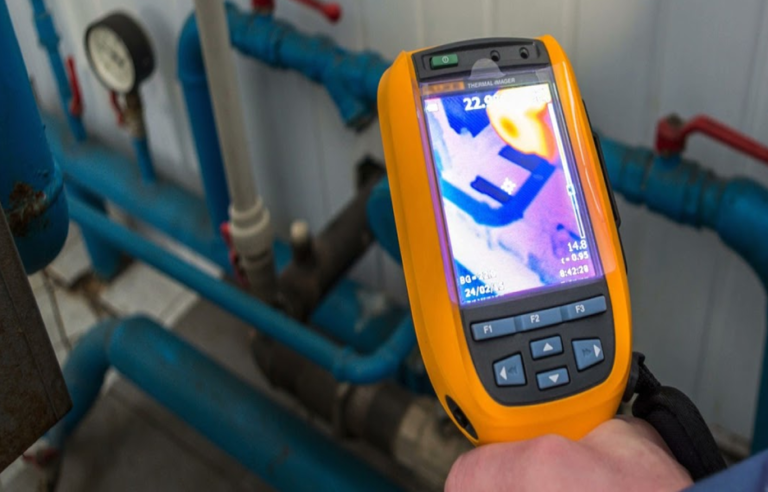
To understand how subterranean copper leaks are confirmed prior to authorizing major line modernizations, read our comparative technical analysis on acoustic leak detection vs thermal imaging:
https://apsplumbingaz.com/acoustic-leak-detection-vs-thermal-imaging/
For full diagnostic specifications on in-slab foundation testing, review our engineering guide on slab leak detection of concrete slabs:
https://apsplumbingaz.com/leak-detection-of-concrete-slabs/
4. Phased Execution Protocols: Minimizing Tenant Friction
One of the primary concerns for property managers is avoiding tenant displacement. Professional commercial repiping contractors execute projects using a Rolling Phased Workflow designed to keep residents in their homes throughout the process:
Overhead Trunk Installation: Crews route primary trunk lines through attic spaces, common hallways, or utility chases while the existing plumbing remains fully operational.
Surgical Wall Access: Small, clean access openings are cut behind vanity bases, toilets, and laundry enclosures.
The Same-Day Water Tie-In: Water service is isolated only during standard daytime working hours (typically 8:30 AM to 4:30 PM). The old lines are decommissioned, the new PEX network is tied in, and full domestic service is restored before residents return home in the evening.
Restoration & Inspection: Municipal inspections are completed, followed by professional drywall patching, texturing, and clean-up within 24 to 48 hours.
If laundry room supply lines have ruptured during tenant occupancy in your building, follow our immediate containment checklist on how to handle a burst washing machine hose in apartment complexes:
https://apsplumbingaz.com/burst-washing-machine-hose-tempe-apartment/
5. Permitting & Code Compliance in Mesa and Maricopa County
Executing a multi-family repipe without municipal permits introduces severe legal and financial risks for property owners. Under the City of Mesa Development Services Building Safety Division:
Commercial Plumbing Permits Are Mandatory: Whole-building water distribution replacements require formal plan submittals and permit issuance prior to beginning work.
Pressure Testing Inspections: City inspectors must witness an air-pressure decay test (typically 60 to 100 PSI holding steady for a mandated duration) on the newly installed system before walls can be closed.
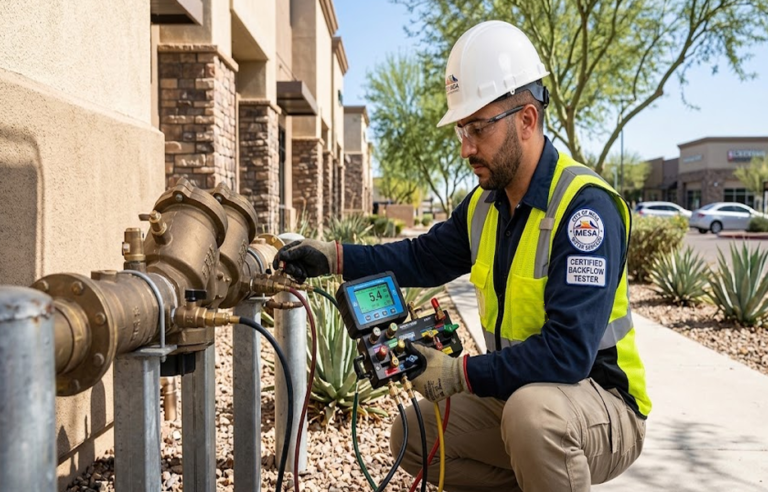
Backflow Compliance: The installation must include approved backflow prevention assemblies to protect domestic drinking water from cross-connections.
Learn more about contractor licensing rules and county inspection milestones in our guide to plumbing permits in Maricopa County:
https://apsplumbingaz.com/plumbing-permits-maricopa-county-legal-safety-guide/
To isolate subterranean yard main breaks from interior risers during complex-wide property audits, review our guide on how to identify an underground yard leak and irrigation breaks:
https://apsplumbingaz.com/how-to-identify-yard-leak-underground-irrigation/
6. Protecting Multi-Family Assets from Summer Storm Surges
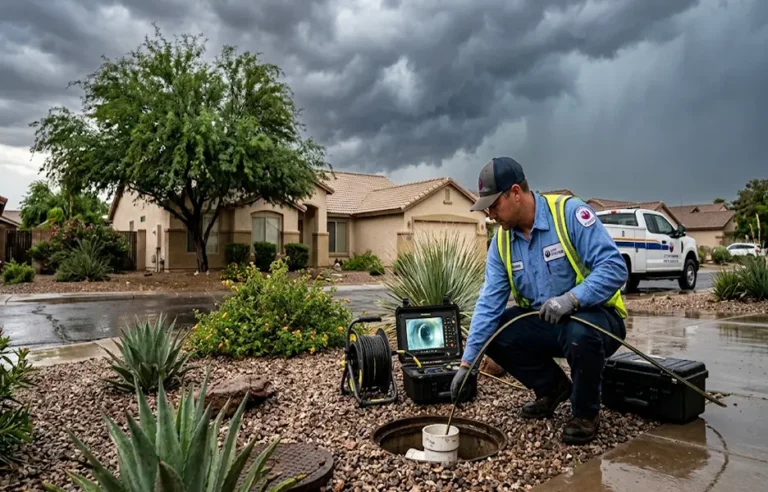
In addition to domestic supply line integrity, property managers must safeguard multi-family drainage networks from seasonal weather events. During the summer monsoon season, sudden desert cloudbursts can surcharge city mains, forcing municipal wastewater back into ground-floor units.
Installing commercial backwater prevention valves and conducting annual sewer camera diagnostics protects ground-floor rental units from biohazardous flooding. Learn how storm runoff impacts local drainage systems in our analysis on sewer line backups during Arizona monsoon storms:
https://apsplumbingaz.com/sewer-line-backup-arizona-monsoon-storms/
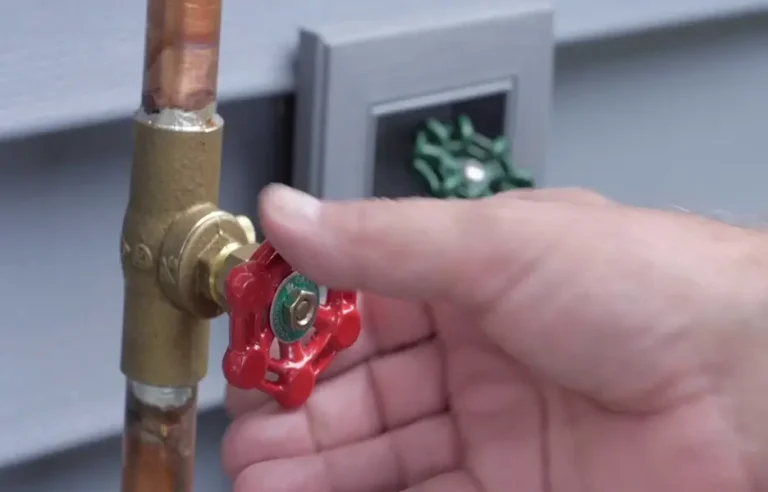
For active pipe emergencies requiring immediate commercial water isolation, contact our rapid dispatch team for emergency pipe repairs in Arizona:
To document plumbing failures for commercial insurance adjusters, consult our Arizona pipe leak insurance claim guide:
https://apsplumbingaz.com/arizona-pipe-leak-insurance-claim-guide/
When renovating vacant apartment units between leases, ensure supply and drainage systems meet modern standards via our renovation plumbing in Arizona:
Frequently Asked Questions: Multi-Unit Repiping in Mesa
Q: Do tenants need to be relocated to hotels during a repiping project?
A: No. In a professionally managed repiping project, tenants remain in their units. Water service is isolated only during standard daytime hours and is restored every evening, ensuring toilets, showers, and kitchens are fully functional overnight.
Q: How long does an entire multi-family building repipe typically take?
A: While timelines depend on building size and unit count, a typical two-story garden-style apartment building (8 to 16 units) generally takes between 2 to 3 weeks from initial overhead rough-in to final drywall painting, with individual tenant units impacted for only 2 to 3 days.
Q: Why shouldn’t a property repipe one problem unit at a time?
A: Repiping units individually in a shared-wall building is highly inefficient. Permitting, mobilization, and drywall repair costs are substantially higher on a per-unit basis. Furthermore, restoring high flow to a single unit often diverts hydraulic pressure to adjacent aging copper runs, triggering leaks next door within months.
Q: How is a formal multi-family repiping proposal prepared?
A: A comprehensive commercial proposal requires an on-site property walkthrough. Engineers review mechanical access points, riser configurations, water heater integration, and building blue prints to provide a guaranteed, fixed-scope budget plan.
Schedule a Commercial Property Walkthrough with APS Plumbing
Eliminate recurring slab leak liabilities and protect your multi-family capital investment. Contact the commercial repiping specialists at Aqua Plumbing Services (APS Plumbing) for detailed engineering walkthroughs, phased project proposals, and turnkey PEX-A installations across Mesa, Phoenix, Scottsdale, Tempe, and Chandler.
Schedule your on-site multi-unit property assessment today: