After enduring another grueling Arizona summer with outdoor temperatures exceeding 115°F, your plumbing system has undergone immense mechanical stress. While homeowners routinely service their air conditioners each autumn, one hardworking appliance is dangerously overlooked: the water heater. Throughout the scorching desert summer, continuous heating cycles paired with Maricopa County’s mineral-laden groundwater cause massive amounts of dissolved calcium and magnesium to bake onto the tank floor. Performing a post-summer sediment flush is the single most effective maintenance step to avoid sudden tank failure before winter.
Tap water across Phoenix, Scottsdale, Mesa, and the East Valley averages 15 to 25 grains per gallon (GPG) of hardness. When this hard water is heated repeatedly inside your water heater, minerals precipitate out of the liquid and solidify into a dense, stony layer of scale. If left untreated, this sediment barrier destroys energy efficiency and eventually cracks the glass lining of your tank.
1. The Devastating Impact of Summer Heat on Arizona Water Heaters
Arizona summers accelerate sediment formation much faster than in cooler northern climates. Here is what happens inside your tank between May and September:
- Attic & Garage Ambient Temperatures: A significant portion of water heaters in Phoenix and Scottsdale are installed inside unconditioned garages or attics, where ambient air temperatures often exceed 130°F. This constant environmental heat keeps incoming ground water hotter, speeding up the chemical precipitation of calcium carbonate.
- Rapid Heating Element Wear: In electric units, sediment buries the lower heating element beneath inches of mineral gravel. The element overheats because heat cannot transfer directly into the water, causing it to burn out prematurely.
- Tank Floor Hot Spots in Gas Units: In natural gas water heaters, the burner fires directly beneath the tank bottom. When a thick layer of calcified sludge insulates the tank base, the steel bottom overheats, weakens, and eventually develops pinhole leaks.
2. Telltale Signs Your Tank Is Choked with Mineral Sediment
How do you know if your water heater requires an immediate professional flush? Look for these four critical red flags:
- Popping, Rumbling, or Kettle Sounds: If you hear a popping or crackling noise while the water heater is firing, that is water boiling beneath a hardened layer of calcium scale. Steam bubbles violently rupture through the sediment crust, sounding like microwave popcorn.
- Lukewarm Water or Faster Depletion: Sediment displaces gallons of usable hot water capacity. A 50-gallon tank buried under 10 gallons of compacted mineral sediment functions like a 40-gallon unit, running cold much earlier during morning showers.
- Cloudy or Rust-Tinged Hot Water: If your hot water runs discolored while cold tap water remains crystal clear, internal mineral sludge is breaking loose and circulating into your bathroom and kitchen fixtures.
- Spike in Gas or Electric Utility Bills: Every fraction of an inch of scale buildup creates a thermal insulator, requiring your burner or elements to run significantly longer to deliver the same water temperature.
3. Step-by-Step Overview: How a Licensed Plumber Flushes a Water Heater
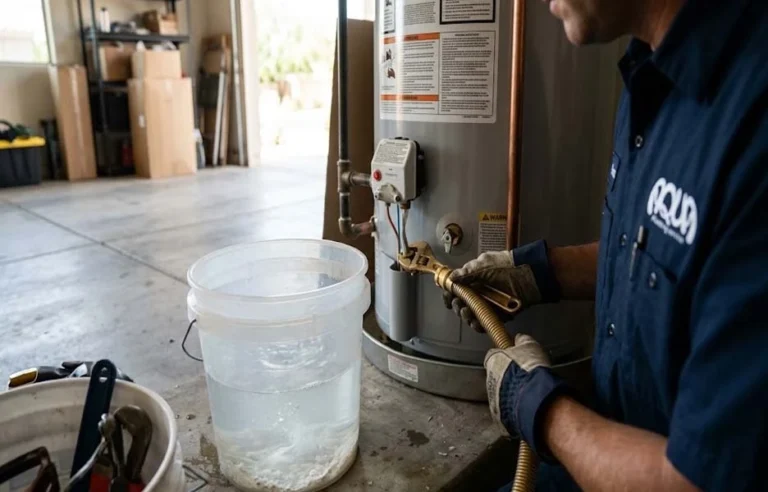
Flushing a water heater in Arizona requires more care than a standard DIY drain because hardened calcified chunks often clog plastic factory drain valves. Here is how our ROC-licensed technicians conduct a thorough system flush:
- Power & Fuel Shutdown: The gas control knob is turned to Pilot or Vacation mode, or the dedicated electrical circuit breaker is turned off to prevent dry-firing the heating elements.
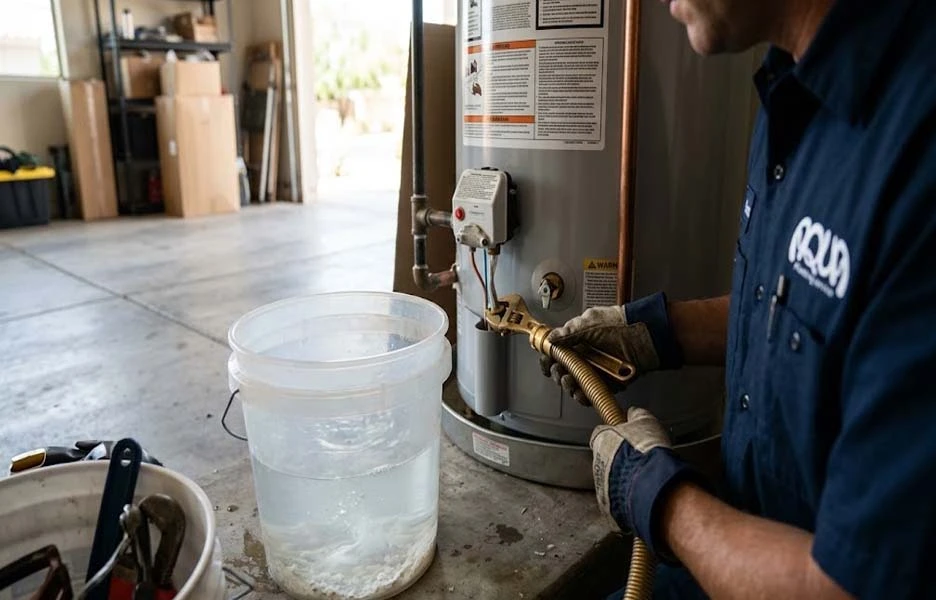
- High-Temperature Hose Attachment: A heavy-duty, commercial-grade drain hose is connected to the lower brass drain valve, discharging directly to an exterior drainage basin or driveway away from desert plants.
- Full Tank Depressurization & Drain: The cold water inlet valve is closed and the Temperature & Pressure Relief (T&P) valve or a top hot water fixture is opened to release negative pressure, allowing the tank to drain completely.
- High-Pressure Turbulence Flush: Once empty, the cold water supply valve is opened in short, rapid bursts. This blast of water agitates the bottom of the tank, breaking loose heavy calcified stones that settled on the floor.
- Sacrificial Anode Rod Inspection: In high-mineral regions like Maricopa County, the sacrificial anode rod often dissolves within 2 to 3 years. Inspecting and replacing a depleted rod prevents corrosive desert water from eating the steel tank shell.
If your water heater is over 8 years old and has never been flushed, forced agitation can occasionally disturb existing rust seals. In such cases, having a licensed professional evaluate your water heater tank flushing and sediment removal options is the safest preventative measure.
Frequently Asked Questions: Arizona Water Heater Maintenance
Q: How often should I flush my water heater in Phoenix and Scottsdale?
A: Because of the exceptionally high water hardness in the Valley (15–25 GPG), water heaters should be flushed at least once a year. If you do not have a whole-home water softener installed, flushing every 6 months is strongly recommended.
Q: Can sediment buildup cause my water heater tank to burst or leak?
A: Yes. Compacted sediment traps heat directly against the bottom steel surface of gas heaters, causing localized thermal stress that cracks the inner protective glass lining and triggers irreversible bottom leaks.
Q: Does installing a water softener eliminate the need for sediment flushes?
A: A whole-home ion-exchange water softener significantly reduces new calcium scale accumulation, but minor sediment from municipal water lines still collects. An annual inspection and quick drain ensure peak operating performance.
4. Comprehensive Water Heater Care with APS Plumbing AZ
Whether your water heater has started making popping noises, runs out of hot water too fast, or simply needs an annual post-summer health checkup, APS Plumbing (Aqua Plumbing Services LLC) provides professional diagnostic flushes, element replacements, and anode rod maintenance across Phoenix, Scottsdale, Mesa, Chandler, Gilbert, and Tempe.