While the Sonoran Desert is famous for blistering summer heat, winter nights in Maricopa County bring a hidden hazard that catches thousands of Arizona homeowners unprepared: sudden overnight freezes. Temperatures in Phoenix, Scottsdale, Mesa, and the surrounding East Valley frequently drop into the upper 20s and low 30s between November and February. Unlike homes in colder northern states where plumbing is deeply insulated within heated basements, Arizona homes feature outdoor water lines, uninsulated garage piping, and exterior backflow assemblies directly exposed to the desert elements.
When standing water inside an exposed pipe freezes, it expands by roughly 9%. That expansion generates thousands of pounds of pressure per square inch, splitting copper joints, cracking expensive backflow preventers, and flooding landscaping. Below is your complete, licensed-plumber guide to protecting your home before the cold snap arrives.
1. The Most Vulnerable Outdoor Plumbing Fixtures in Arizona
Before cold desert weather arrives, inspect these four high-risk plumbing zones across your property:
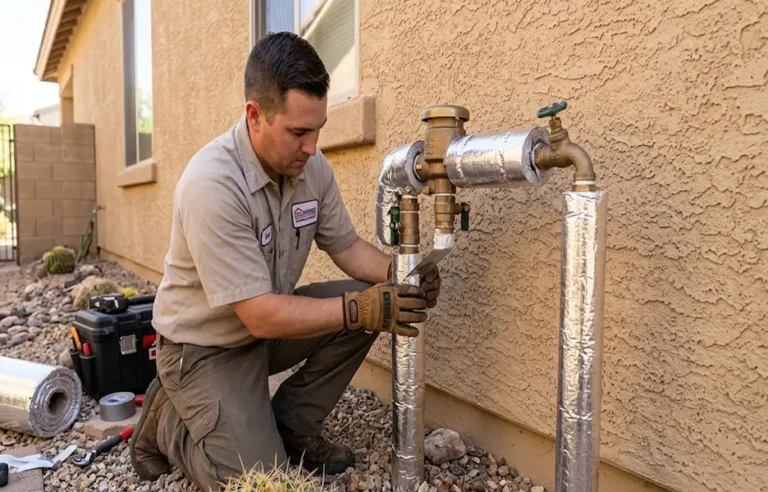
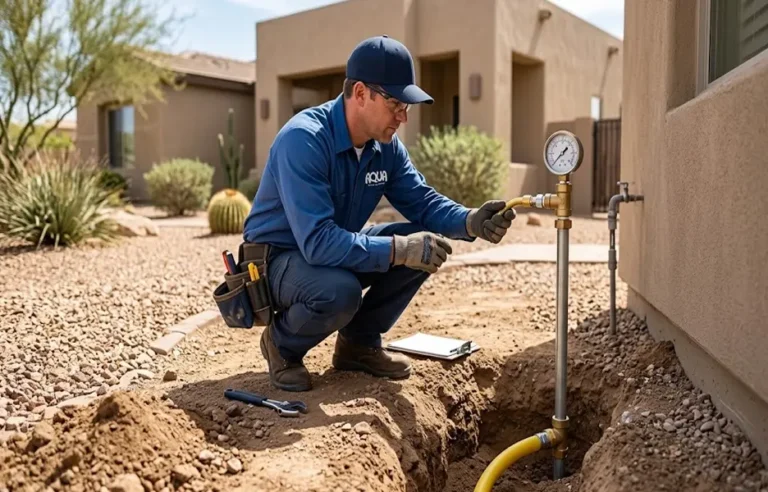
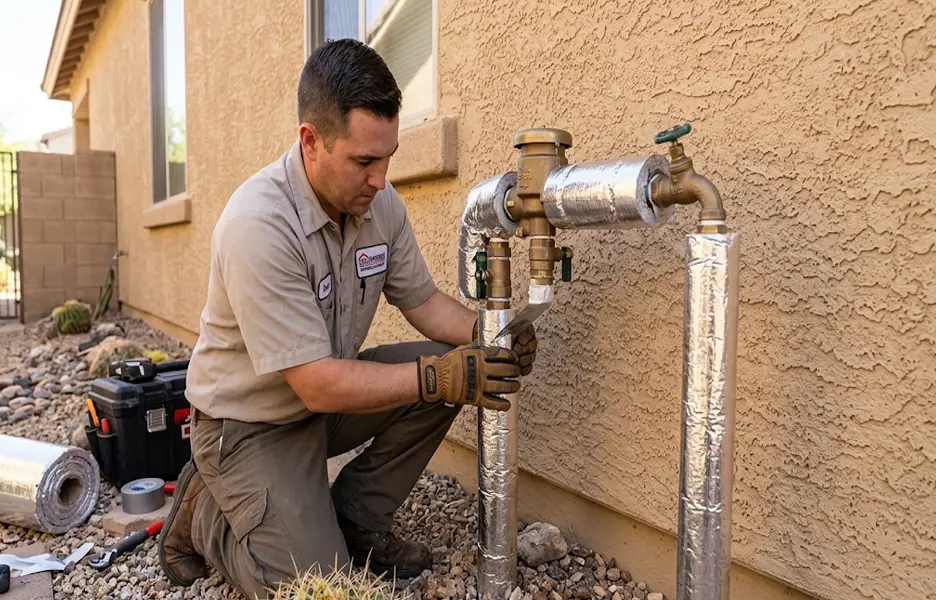
- Backflow Prevention Assemblies (RPZ & PVB): Usually located near the front yard sidewalk or side perimeter, these brass assemblies sit completely above ground. A cracked Pressure Vacuum Breaker (PVB) can cause geyser-like flooding and costly replacements.
- Exterior Hose Bibbs (Outdoor Spigots): Outdoor spigots connected directly to your home’s main water supply line can freeze and push ice into wall cavities, causing structural slab cracks and drywall damage.
- Main Water Shutoff & Pressure Reducing Valves (PRV): Typically installed outside near your front hose bibb in older Scottsdale and Phoenix homes, an uninsulated PRV can seize during sudden desert temperature drops.
- Pool Fill Lines & Irrigation Piping: Rigid PVC pipes used for landscape drip systems and pool auto-fills turn brittle in freezing conditions and rupture under internal ice pressure.
2. Step-by-Step: How to Insulate Your Outdoor Pipes
Step 1: Disconnect All Garden Hoses
Leaving a garden hose connected to an exterior spigot traps water inside the valve body. Even if the hose feels empty, water remains pressurized behind the nozzle stem. Disconnect, drain, and store all garden hoses before nighttime temperatures drop below 35°F.
Step 2: Install Insulated Faucet Covers
Purchase foam or heavy-duty fabric hose bibb covers (commonly known as “faucet socks”) from a local home improvement center. Place the cover firmly over the spigot and cinch the drawstring tightly against the exterior stucco. For maximum security, wrap the neck of the faucet with waterproof foam insulation tape first.
Step 3: Wrap Backflow Assemblies with an Insulated Thermal Pouch
Never wrap an exterior backflow valve with thin plastic garbage bags; plastic traps condensation, which accelerates ice crystallization. Instead, use an R-value rated insulated fiberglass backflow pouch with Velcro closures. If an emergency freeze is expected tonight and you do not have a specialized pouch, wrap the brass assembly with heavy bath towels and secure them with waterproof duct tape as an immediate temporary barrier.
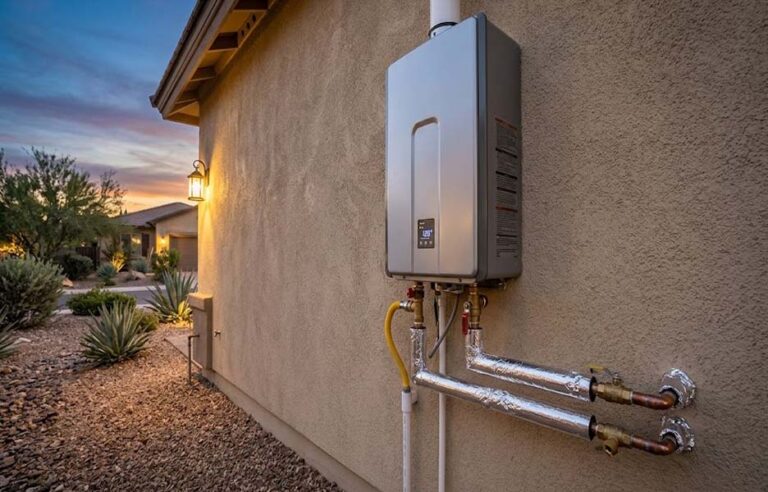
Step 4: Insulate Exposed Copper in Garages & Attics
Water heater lines running along unconditioned garage walls need closed-cell polyethylene foam tubes (foam pipe noodles). Slit the foam lengthwise, slip it over the hot and cold copper lines, and seal the seams with high-adhesion pipe tape.
3. What to Do If Your Pipes Freeze Tonight
If you open your kitchen faucet on a cold desert morning and only get a slow trickle or hiss, a section of your plumbing has likely frozen. Take these immediate containment steps:
- Keep the Faucet Open: As ice inside the line melts, flowing water relieves internal hydrostatic pressure and helps dissolve remaining blockages.
- Locate Your Main Water Shut-Off Valve: Ensure every family member knows where the master house valve is located. If the frozen section splits, you must turn the water off immediately to avoid thousands of dollars in interior water damage.
- Gently Apply Warmth: Use a handheld hairdryer, heating pad, or warm wet towels wrapped around the exposed pipe. Never use open flames, blowtorches, or heat lamps on plumbing lines.
If you discover standing water, bulging copper joints, or active ice fissures around your backflow valve, turn off the main valve and contact our licensed dispatchers for 24/7 emergency pipe repair services immediately.
Frequently Asked Questions: Arizona Winter Plumbing
Q: Do pipes really freeze in Phoenix and Scottsdale?
A: Yes. Because most desert homes have above-ground water service entrances, uninsulated garage walls, and exterior backflow preventers, freezing happens rapidly when desert nights dip into the upper 20s.
Q: What should I do if water is shooting from my backflow preventer?
A: Shut off both quarter-turn isolation handles on the backflow device immediately. This stops water loss without interrupting domestic water supply inside your home.
4. Need Professional Winterization Help? Contact APS Plumbing AZ
Don’t wait for the first hard frost to discover a split pipe. At APS Plumbing (Aqua Plumbing Services LLC), our ROC-licensed technicians provide comprehensive winter plumbing inspections, backflow testing, and heavy-duty insulation upgrades across Phoenix, Scottsdale, Mesa, Chandler, Gilbert, and Tempe.