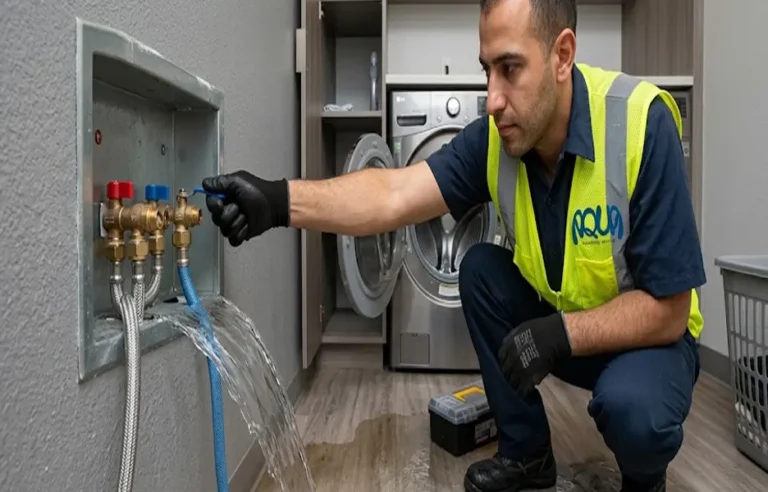

For property owners across the Greater Phoenix metropolitan area, Scottsdale, Mesa, Chandler, Gilbert, and Paradise Valley, an undetected subterranean water leak is one of the most destructive mechanical emergencies a home can experience. The vast majority of residential homes in Central Arizona are constructed directly on monolithic concrete slab foundations. Domestic copper supply lines, hot water loops, and pressurized municipal intake lines are embedded deep beneath structural concrete, aggregate gravel, and dense, expansive clay soils.
When pressurized pipes fail below a foundation, conventional exploratory plumbing often relied on speculative demolition—bringing jackhammers and sledgehammers into finished living rooms to break through custom Italian porcelain, hardwood, or travertine flooring just to search for moist dirt.
Today, modern building forensics eliminates guesswork. By combining advanced acoustic frequency amplification with high-resolution infrared radiometric thermal imaging, certified technicians can isolate underground line failures with pinpoint accuracy before making a single cut. Below is an engineering analysis of how acoustic listening systems compare with thermal imaging, why single-technology diagnostics often fail in desert environments, and how the multi-telemetry protocol utilized by APS Plumbing preserves structural integrity while minimizing repair expenses.
1. Technical Comparison: Acoustic Amplification vs. Infrared Thermography
While both diagnostic methods provide non-invasive telemetry data, their underlying physics, operational parameters, and target phenomena differ significantly:
| Diagnostic Metric | Acoustic Frequency Amplification | Infrared Thermal Thermography |
| Operational Physics | Mechanical sound waves and ground vibration analysis. | Radiometric surface radiation and conductive delta-T measurement. |
| Detection Target | Frictional sound of pressurized fluid escaping an orifice (20 Hz to 4 kHz). | Heat dissipation blooms and localized evaporative cooling anomalies. |
| Pipe System Application | Hot and cold pressurized water lines, chilled lines, and compressed conduits. | Heated domestic lines, radiant heating loops, and hot boiler returns. |
| Subfloor Flooring Penetration | Excellent through ceramic tile, natural stone, concrete, and subfloors. | High on direct conductive surfaces; diffuse through thick carpets or floating underlayments. |
| Pinpoint Spatial Precision | Identifies the physical fissure within a 6-to-12-inch surgical perimeter. | Maps the migration path and thermal expansion area of the escaping fluid. |
| Environmental Interference | Susceptible to ambient household vibrations, HVAC noise, and traffic rumble. | Susceptible to solar heating patterns, subfloor insulation, and HVAC air drafts. |
2. The Physics of Acoustic Leak Detection Under Concrete Slabs
When domestic water under typical Maricopa County municipal pressure (often fluctuating between 65 and 90+ PSI) escapes through a corroded copper pinhole or a cracked soldered fitting, it generates two distinct sound signatures:
- Pipe Orifice Shear Frequency: As pressurized water forces its way through a narrow metallic fissure, it generates high-frequency acoustic vibrations that travel along the pipe wall.
- Subfloor Cavitation and Impact Sound: As the escaping water jet strikes the surrounding subgrade—whether aggregate gravel, compacted backfill, or moist caliche clay—it produces low-frequency rumbling, thumping, and bubbling sounds.
To isolate these faint frequencies through 4 to 6 inches of steel-reinforced concrete and finish flooring, technicians deploy digital ground microphones (commonly referred to as “elephant foot” listening sensors) equipped with bandpass audio filters. By systematically tuning out ambient low-frequency structural hums (from refrigerators, pool pumps, and street traffic), the diagnostic technician sweeps the floor grid to identify the exact coordinate where the acoustic amplitude spikes.
For an in-depth breakdown of field diagnostics and non-destructive mapping standards, review our comprehensive engineering guide:
3. How Infrared Thermal Imaging Maps Subfloor Moisture Footprints
Infrared thermography does not see through solid objects; instead, it measures long-wave infrared radiation emitted from the surface of materials and translates minute temperature differentials (delta-T) into high-resolution radiometric thermograms.
In a desert slab-on-grade residence, concrete serves as a massive thermal conductor:
- Hot Water Slab Leaks: When an underground hot water line ruptures, 120°F to 140°F water floods the subgrade beneath the slab. The heat conducts upward through the concrete pad, creating a distinct thermal plume on the surface of luxury vinyl plank (LVP), hardwood, or tiled flooring. A radiometric camera instantly visualizes this temperature contrast, allowing plumbers to trace the general path of subterranean loops.
- Cold Water Slab Leaks & Evaporative Mapping: Detecting cold domestic leaks with thermal imaging requires capturing the subtle cooling effects of capillary action. As cold subterranean water wicks up through concrete and framing plates, moisture actively evaporates into the dry desert air, producing localized evaporative cooling signatures.
However, unmitigated subfloor moisture frequently wicks upward into adjacent drywall framing and baseboards within hours. If water saturation has reached wall cavities, review our technical protocol on mitigating biological contamination:
4. Why Single-Tool Diagnostics Fail: The APS Multi-Phase Telemetry Protocol
Relying exclusively on either thermal imaging or acoustic detection introduces significant risk of false positives:
- The Thermal Limitation: Water naturally follows the path of least resistance. Sub-slab hot water often travels horizontally along gravel trenches, electrical conduits, or expansion joints for 6 to 10 feet before conducting upward into the flooring. Opening concrete based purely on the hottest spot on an infrared camera often results in coring concrete in the wrong room.
- The Acoustic Limitation: Sound travels exceptionally well through rigid copper and solid concrete, but expansive, saturated desert mud acts as a sound dampener. In deeply buried lines or wet clay pockets, acoustic signals can be muffled or reflected away from the sensor.
The APS Integrated Three-Stage Workflow
To achieve definitive accuracy, APS Plumbing adheres to a multi-tiered diagnostic procedure:
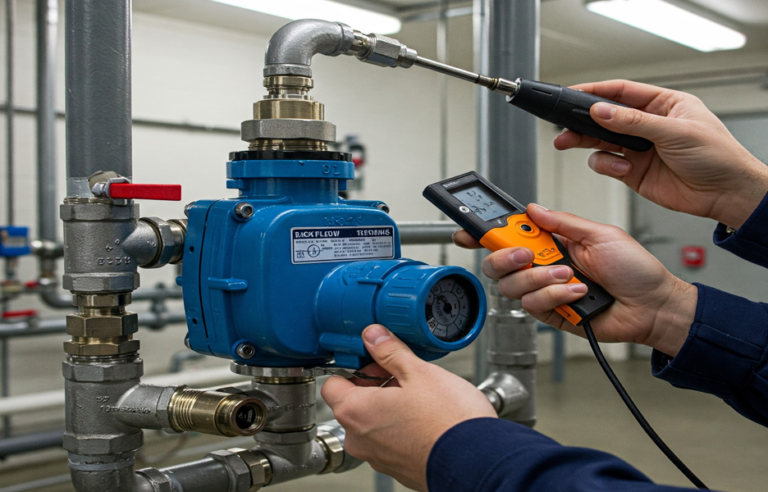
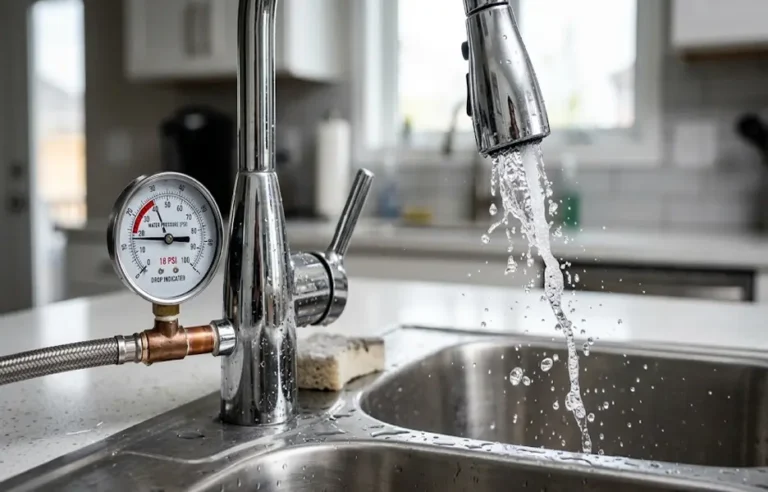
- Pneumatic Pressure Decay Isolation: We isolate the cold and hot water networks at the manifold and conduct static pressure tests using sensitive digital gauges to verify which plumbing branch is compromised and measure the precise rate of pressure loss.
- Radiometric Thermal Perimeter Mapping: Using calibrated FLIR thermal sensors, we scan the entire property to outline the thermal signature, track mechanical runs, and identify moisture migration patterns.
- Acoustic Ultrasonic Confirmation: We place acoustic frequency sensors directly over the perimeter identified by thermal imaging to zero in on the mechanical vibration of the pipe rupture, validating the exact spot within inches.
5. Municipal Pressure Volatility: The Underlying Catalyst of Slab Leaks
While chemical pitting from municipal chlorine and water hardness accelerates pipe wall thinning, high hydraulic pressure is what ultimately blows the pinhole open. Water utilities across Phoenix, Mesa, and the East Valley routinely pump potable water through supply lines at elevated pressures to reach distant subdivisions.
When incoming pressure spikes beyond the code-mandated limit of 80 PSI, it accelerates mechanical fatigue at soldered joints and elbows buried under concrete. Understanding how incoming utility pressures impact residential regulators is detailed in our technical analysis:
6. Permanent Repair Engineering: Surgical Spot Repairs vs. Overhead PEX Reroutes
Once the subfloor leak coordinate is confirmed, homeowners are faced with choosing the correct long-term mechanical solution:
Path A: Direct In-Slab Spot Repair
Because the dual-telemetry approach narrows the leak location to a tiny radius, concrete demolition is restricted strictly to a clean, surgically cut 12×12-inch window. Technicians excavate the compromised section, remove the pitted copper, braze a new copper replacement section, and encase the pipe in protective anti-corrosion polyethylene sleeving before patching the slab.
Path B: Overhead Attic PEX-A Reroute (The Preferred Long-Term Solution)
In properties older than 15 to 20 years, a single in-slab leak is rarely an isolated flaw—it typically indicates that hard water scaling and soil friction have weakened the copper infrastructure throughout the foundation. In these cases, repeatedly breaking concrete for future leaks is financially counterproductive.
Instead, technicians decommission and abandon the failing subterranean lines entirely, running continuous, flexible, freeze-resilient PEX-A piping overhead through the attic space directly to each plumbing fixture.
- To evaluate full-home conversions from aging copper to continuous polymers, explore our licensed solutions:https://apsplumbingaz.com/home-repiping-arizona/
- For active, severe subterranean leaks requiring immediate emergency water containment, access our rapid response team:https://apsplumbingaz.com/emergency-pipe-repairs-arizona/
- If you are planning to renovate bathrooms or remodel kitchen layouts while addressing foundation lines, review certified rough-in codes:https://apsplumbingaz.com/renovation-plumbing-arizona/
7. Forensic Documentation for Homeowners Insurance Claims
Most standard homeowner insurance policies in Arizona cover “tear-out and access” costs—the expense required to locate and break through the concrete slab to access the plumbing failure—along with the resulting water damage restoration, while excluding the plumbing pipe replacement itself.
However, insurance adjusters require technical proof that an active subfloor leak occurred suddenly and was verified through scientific means. APS Plumbing provides property owners with detailed forensic diagnostic reports—including acoustic decibel readouts, thermal thermograms, and pressure decay graphs—to ensure transparent claims processing.
Review the complete homeowner documentation checklist:
Frequently Asked Questions: Non-Invasive Subfloor Leak Detection
Q1: Can thermal imaging detect cold water leaks beneath a concrete slab?
Yes, but through indirect evaporative measurement rather than heat blooms. While hot water leaks display vibrant high-contrast thermal plumes, cold water leaks are identified by mapping conductive cooling drops and subtle evaporative temperature depressions as water wicks into concrete and wall framing.
Q2: Will acoustic leak detectors work through thick tile or hardwood floors?
Yes. Acoustic ground sensors and accelerometer discs are specifically engineered to capture structural vibration frequencies traveling through dense solid materials, including porcelain tile, flagstone, natural slate, concrete pavers, and solid hardwood flooring.
Q3: What are the earliest physical indicators of a subfloor slab leak?
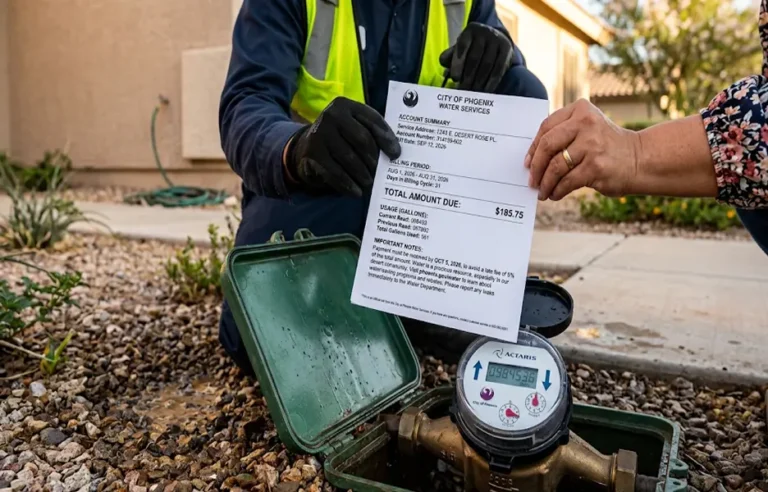
The most reliable early indicators include: warm spots on floor tiles, the persistent sound of running water when all faucets are shut off, unexpected spikes in municipal water bills, damp baseboards or cracked floor grout, and a water meter leak detection dial that rotates continuously when household fixtures are dormant.
Q4: How long does a complete non-invasive subfloor inspection take?
A full dual-telemetry diagnostic evaluation—incorporating pneumatic pressure testing, radiometric thermal scanning, and acoustic frequency isolation—typically takes between 60 to 120 minutes to complete, without disturbing or damaging your flooring.
Suspect a Hidden Slab Leak Beneath Your Floor?
Do not permit speculative jackhammering to destroy your home’s flooring. Contact the non-destructive diagnostic specialists at Aqua Plumbing Services (APS Plumbing) for precision thermal and acoustic leak location throughout Phoenix, Scottsdale, Mesa, Chandler, and Gilbert.