
Quick answer: Most homeowners policies cover sudden and accidental water damage (like a burst supply line) but often exclude gradual leaks, wear and tear, and the cost of fixing the pipe itself. Coverage varies by policy, so read yours. To protect a claim: stop the water, photograph everything, get a licensed plumber’s written report on the cause, mitigate damage fast, and notify your insurer promptly.
Water damage is one of the most common homeowners insurance claims. Whether yours is paid often depends on two things: what caused the leak, and how well it’s documented. This checklist explains the usual rules and the steps that help. This is general information, not legal or insurance advice — your policy wording decides.
What is usually covered
- Sudden, accidental discharge — a burst washer hose, a split supply line, a water heater that ruptures
- Resulting damage to drywall, flooring, cabinets and belongings
- Sometimes access costs (opening a wall or slab to reach the leak), depending on policy
What is often excluded
- Gradual or repeated seepage over weeks or months
- Wear, tear, corrosion and lack of maintenance
- Repairing or replacing the failed pipe or appliance itself
- Mold, unless the policy adds it
- Sewer backup, unless you have a sewer/water backup endorsement
- Flood from surface water (separate flood insurance)
Step-by-step claim checklist
- Stop the water. Know where your main shut-off valve is.
- Photograph and video the source, the water and all damage before cleanup.
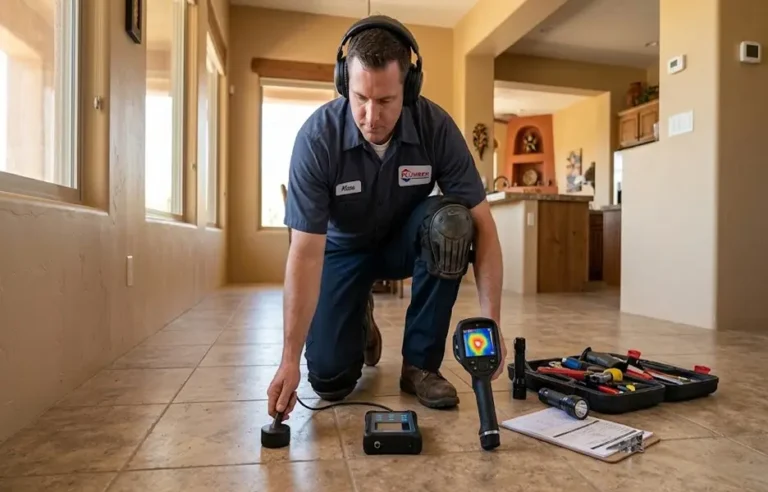
- Call a licensed plumber and request a written report stating the cause and whether it appears sudden.
- Mitigate: dry out quickly to limit mold. Keep receipts for fans, dehumidifiers and mitigation services.
- Keep damaged parts (failed hose, fitting) — the adjuster may want them.
- Notify your insurer promptly and write down the claim number and adjuster name.
- Get repair estimates in writing.
Reduce your risk
Replace rubber washer hoses with braided lines (see burst washing machine hose), keep pressure under control, and check for hidden leaks: how to detect hidden leaks. Slab leak concerns? Read slab leak detection.
Frequently Asked Questions
Does homeowners insurance cover slab leaks in Arizona?
Many policies cover resulting water damage from a sudden leak, and some cover access costs, but often not the pipe repair itself. Check your policy.
Is a slow leak covered by insurance?
Often not. Gradual leaks and wear and tear are common exclusions.
Do I need a plumber’s report for a claim?
It helps. A written report from a licensed plumber describing the cause supports your claim.
Is sewer backup covered?
Usually only if you have a sewer or water backup endorsement on your policy.
Need a plumber in Scottsdale or Phoenix?
APS Plumbing (Aqua Plumbing Services LLC) answers 24/7 across Scottsdale, Phoenix, Paradise Valley, Tempe, Mesa, Chandler, Gilbert and Glendale. 10% off for military personnel and 12 months no-interest financing available.