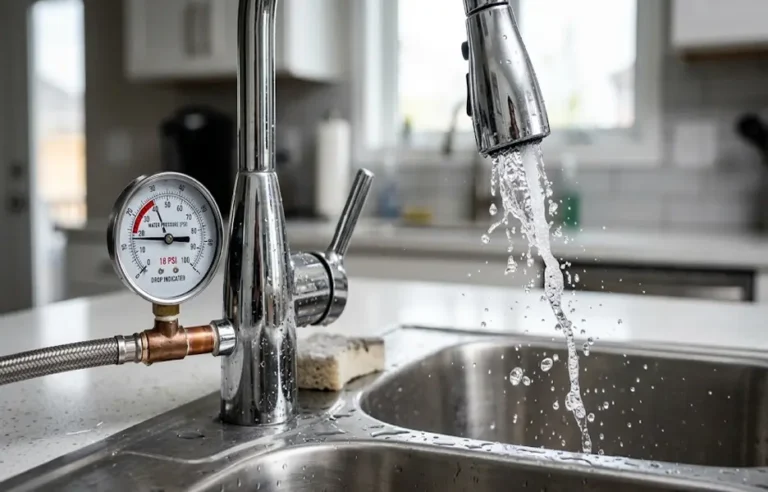
It is a common story across the Phoenix metropolitan area: July arrives, the thermometer hits 115°F, and your monthly water bill suddenly doubles. While we expect to use more water in the summer for landscaping, swimming pools, and showers, an astronomical jump in your bill often signals something far worse than heavy usage—it points to a hidden plumbing leak.
Because of Arizona’s intense heat and arid climate, small leaks can evaporate before they ever make a puddle on your desert landscaping or garage floor. At APS Plumbing, we specialize in advanced diagnostic leak tracking. Here is your proactive guide to finding the hidden water thieves in your home before they drain your bank account.
1. The 15-Minute Meter Test (Your Baseline Check)
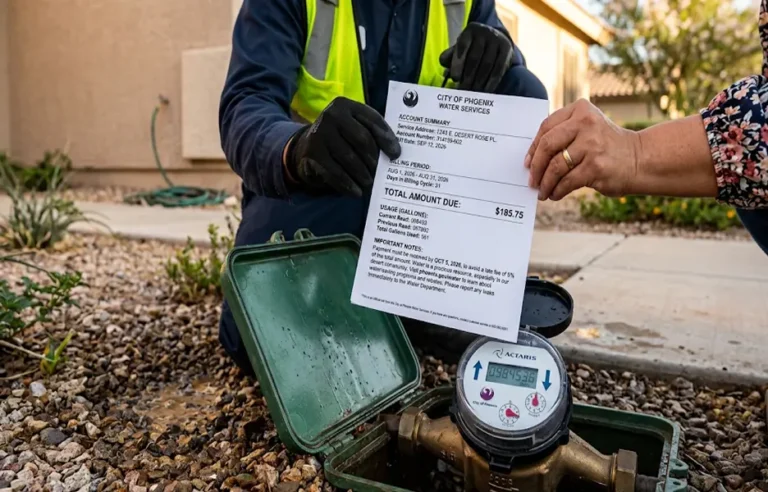
The easiest way to determine if your high bill is caused by heavy summer usage or a mechanical leak is to let your water meter do the talking.
- The Process: Turn off every single water-consuming appliance inside and outside your home. This means no washing machines, no showers, no misters, and ensuring your pool’s auto-fill valve is completely shut down.
- The Inspection: Find your water meter box (usually located near the sidewalk or front property line). Open the lid and look at the dial. Most digital meters have a small low-flow indicator symbol (like a small water droplet or spinning gear).
- The Verdict: If that indicator is moving or blinking while all water is shut off, you have an active leak. If the numbers change after 15 minutes of zero activity, water is escaping somewhere on your property.
2. The Silent Thief: Your Pool’s Auto-Fill Valve
In cities like Scottsdale, Mesa, and Gilbert, swimming pools lose massive amounts of water to natural evaporation during hot summer days. However, if your pool’s auto-fill system is compromised, you could be losing thousands of gallons extra under the surface.
- The Danger: An auto-fill valve operates like a toilet tank float, adding water as levels drop. If there is a crack in the underground line feeding the pool, the auto-fill will constantly run to compensate. Because the water dumps straight into the ground or pool structure, you will never see a wet spot.
- The Bucket Test: Fill a standard bucket with water and place it on the top step of your pool, submerging it about halfway. Mark the water level inside the bucket and the pool water level on the outside of the bucket. After 24–48 hours, compare the drops. If the pool water level has dropped significantly more than the bucket water level, your pool structure or lines are leaking.
Internal Link: Pool line leaks can shift the surrounding earth. Learn how soil changes threaten your main infrastructure:Emergency Plumbing: Why Does Water Pressure Drop in the Arizona Summer?.
3. Underground Irrigation and Drip System Cracks
Your desert landscaping relies heavily on underground drip lines during the summer. Unfortunately, extreme ground heat and shifting clay soils cause plastic irrigation lines to crack easily.
- Why It’s Hidden: In Chandler or Tempe, a broken emitter or a cracked underground drip line will pump water deep into the dry, thirsty soil during its night watering cycle. By sunrise, the top layer of dirt looks completely dry.
- How to Find It: Walk your yard while the irrigation zones are actively running. Look for areas of mud, uncharacteristically lush weed growth, or sinking soil zones near cactus bases and trees.
4. Slab Leaks and Thermal Foundation Movements
As discussed in our summer preparation guides, Arizona’s expansive clay soils dry out and shrink drastically under intense heat waves, putting immense mechanical strain on the concrete slab foundation of your home.
- The Consequence: This movement causes the soft copper pipes running beneath your concrete floors to rub against hard gravel, resulting in pinhole slab leaks.
- The Warning Signs: Walk barefoot across your tile or concrete flooring. If you feel a distinct warm spot on the floor, or if you hear a faint sound of rushing water behind your walls when the house is entirely quiet, you are likely dealing with a hot-water slab leak.
Internal Link: Filing a claim for a sudden foundation leak requires precise documentation. Download ourInsurance Checklist for Pipe Leaks in Arizonato secure your coverage.
Summary: A Proactive Summer Deficit Checklist
| Area to Check | Detection Method | Difficulty Level | Action If Positive |
| Main Water Supply | 15-Minute Water Meter Test | Easy | Shut off main line, call plumber |
| Swimming Pool | The 24-Hour Bucket Test | Medium | Isolate auto-fill line |
| Irrigation Drip | Night Zone Walking Inspection | Medium | Replace broken emitters/poly lines |
| Home Slab | Floor Hot-Spot Testing | Hard | Schedule emergency electronic detection |
When to Call APS Plumbing for Professional Leak Detection
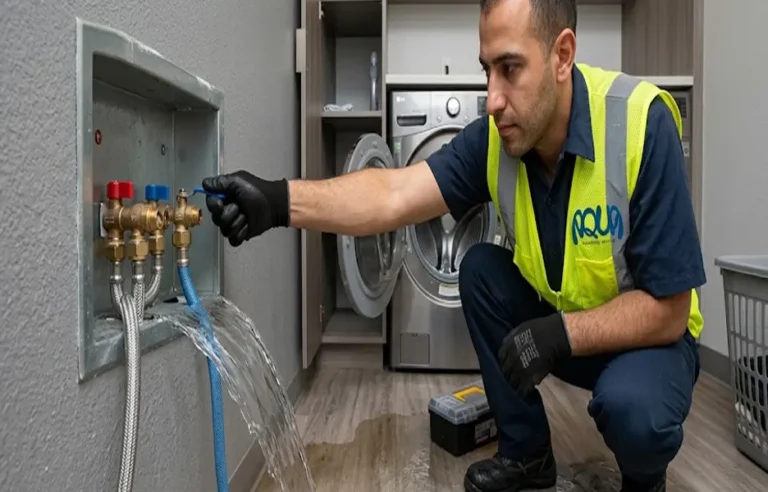
If your water meter indicates a leak but you cannot find any damp soil, running toilets, or dripping faucets, the leak is buried deep within your walls or foundation.
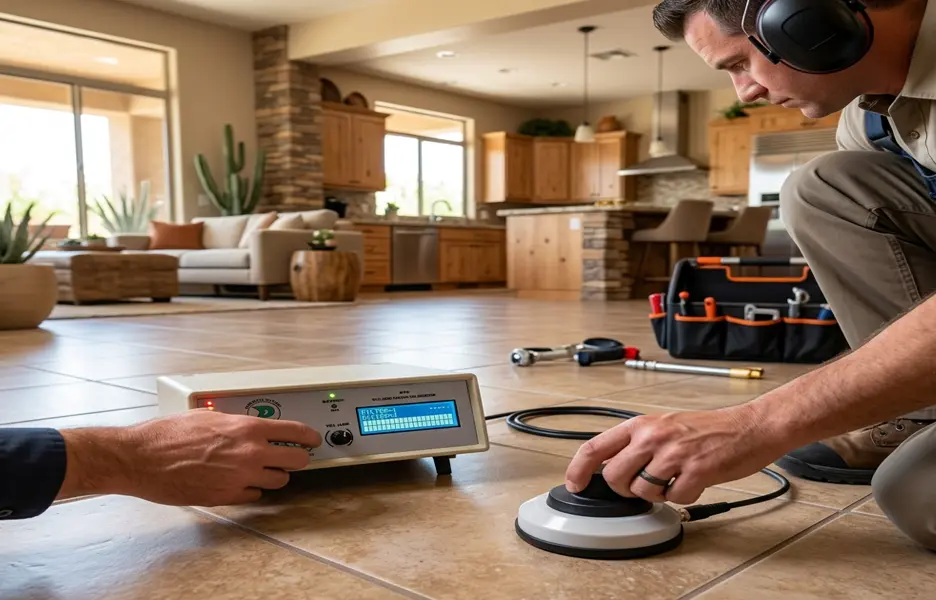
At APS Plumbing, we don’t rely on guesswork or tearing up your drywall blindly. Our teams utilize acoustic listening devices, thermal imaging sensors, and specialized sewer scope cameras to isolate the exact inch of the leak, saving you thousands of dollars in invasive repair costs.
Stop wasting money on your summer water bills.
Contact APS Plumbing today for a comprehensive, high-tech leak detection audit anywhere in Maricopa County and keep your hard-earned money in your wallet where it belongs.
Managing high summer water bills in Phoenix, Arizona requires checking for hidden leaks caused by dry soil shifting and heat-related component wear. Homeowners can isolate issues using a 15-minute water meter check or performing a pool bucket test to evaluate auto-fill line integrity. In cities like Scottsdale and Mesa, hidden leaks frequently occur in underground landscaping drip systems or manifest as hot-water slab leaks beneath concrete flooring.
FAQ
- Q: Why is my water bill so high in the summer even though I haven’t changed my usage?
- A: This is a classic sign of an underground irrigation leak or a failing pool auto-fill line. The dry Arizona soil quickly absorbs the water, keeping the leak completely hidden from the surface.
- : How can I tell if my pool auto-fill is leaking under the ground?
- A: Shut off the water supply line to the auto-fill valve for 24 hours. If your pool water drops significantly lower than a controlled bucket of water placed on the steps, the water loss is due to a structural line leak, not standard desert evaporation.