When analyzing the summer energy ROI in Phoenix, AZ, tankless gas water heaters outperform solar thermal systems in terms of structural reliability and infrastructure safety. While solar thermal units offer minimal utility draw, they hit a dangerous state of system stagnation during 110°F+ summer days when household hot water demand drops. This causes rooftop propylene glycol fluids to overheat past 250°F and turn into a corrosive sludge. Modern condensing tankless water heaters equipped with dual stainless steel heat exchangers bypass stagnation risks completely, delivering stable, on-demand hot water across Maricopa County residences.
As energy expenses rise across the Greater Phoenix Area, choosing the right water heating infrastructure is a critical decision for homeowners looking to protect both their property and their monthly budget. Heating water accounts for roughly 14% to 18% of an average single-family home’s energy footprint.
In the sun-drenched landscape of Maricopa County, two premium technologies stand out for their efficiency: Solar Thermal Water Heaters and High-Efficiency Tankless Gas Water Heaters.
While both options lower energy bills compared to old-fashioned storage tanks, they handle Arizona’s intense summer climate very differently. At Aqua Plumbing Services, we analyze the mechanical performance of both systems under real desert conditions. Below is an engineering and financial ROI analysis comparing solar thermal and tankless water heaters during a typical 115°F Phoenix summer.
1. Solar Thermal Systems: The Summer Stagnation Challenge
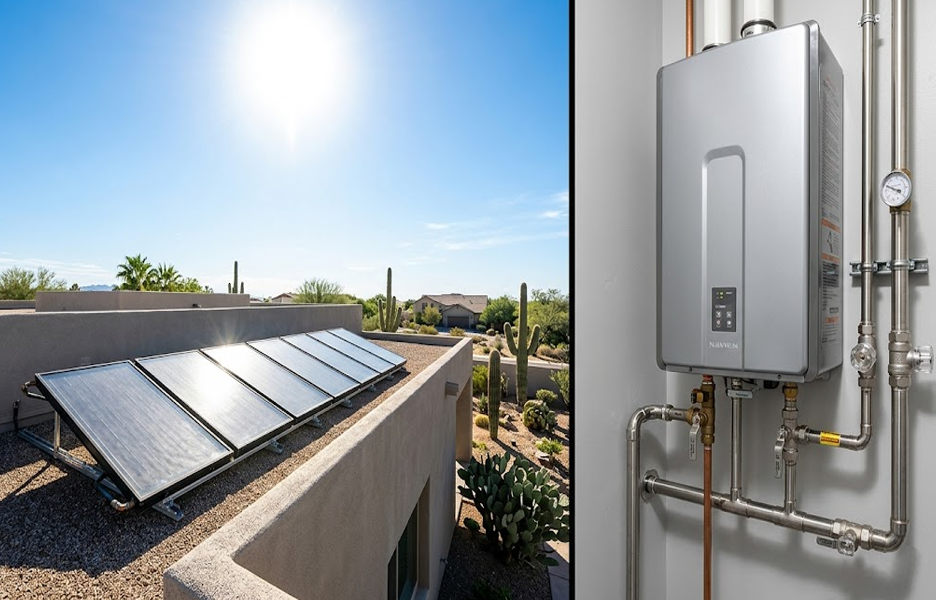
Solar thermal systems use roof-mounted collector panels to capture the desert sun, circulating a heat-transfer fluid (usually non-toxic propylene glycol) down to a heat exchanger inside a storage tank.
[115°F Desert Sun] ──> Rooftop Panels Overheat ──> Glycol Fluid Boils (>250°F) ──> [Acidic Sludge / Pump Failure]
While this process requires almost zero electricity, the extreme heat of a Phoenix summer can actually create a serious operational issue known as system stagnation.
The Mechanics of Stagnation
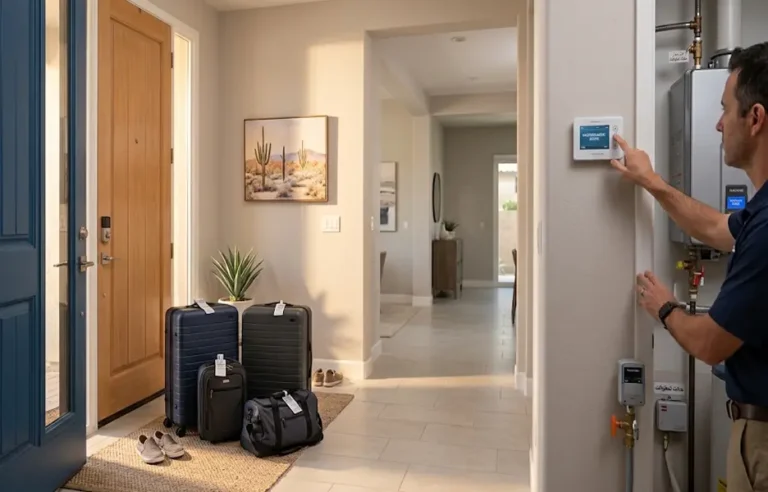
During July and August, rooftop solar panels are exposed to intense, continuous UV radiation. If your family goes on vacation, or simply uses less hot water during the hot summer months, the water inside the storage tank hits its maximum temperature capacity.
With nowhere for the excess heat to go, the fluid in the rooftop collectors stalls and quickly surpasses 250°F. At this extreme temperature, the protective glycol fluid breaks down, transforming into an acidic, tar-like sludge. This sludge clogs the small circulation pumps, corrodes the internal copper lines of your roof panels, and triggers emergency pressure blowouts.
The Maintenance Cost Drain
To keep a solar thermal system running safely in cities like Scottsdale or Mesa, homeowners must commit to regular, specialized maintenance. The degraded glycol fluid must be professionally flushed, tested for pH balance, and replaced every 2 to 4 years, which quickly offsets your summer energy savings.
2. Tankless Gas Water Heaters: Scale-Resistant, On-Demand Efficiency
Modern condensing tankless gas water heaters work on a completely different framework. Instead of storing hot water or collecting solar energy, they use ultra-efficient modulating gas burners to flash-heat water only when a tap or appliance is opened inside the home.
Overcoming the Stagnation Risk
Tankless systems do not use rooftop panels or heat-transfer fluids, completely bypassing the risks of summer stagnation and overheating. If you leave your home vacant during a summer trip, a tankless unit simply sits idle, consuming zero energy and building zero internal line pressure.
Managing Arizona’s Water Chemistry
The main challenge for tankless systems in Phoenix is water hardness, which averages 15 to 25 Grains per Gallon (GPG). However, using high-end models equipped with dual stainless steel heat exchangers (such as the Navien NPE-A2 series) prevents mineral scale from bonding to the internal pipe walls.
- Internal Link: Choosing the correct internal components is essential for system longevity. Review our full product analysis: Navien NPE-A2 Review: Why Scottsdale Luxury Homes Mandate Stainless Steel Exchangers.
3. Financial Breakdown: Sizing up the 10-Year ROI
To determine which technology delivers the best return on investment for an Arizona property, we must look beyond initial energy savings and factor in equipment lifespans, installation requirements, and ongoing maintenance expenses over a 10-year period.
| Financial / Operational Metric | Solar Thermal System Grid | Condensing Tankless Gas System |
| Average Turnkey Installation Cost | $7,000 – $11,000 (Complex roof paths) | $3,200 – $5,500 (Standard wall mount) |
| Summer Energy Footprint | Near $0 (Relies entirely on solar rays) | Minimal (Modulating gas burns on-demand) |
| 10-Year Maintenance Costs | $1,500 – $3,000 (Glycol flushes & pumps) | $400 – $600 (Annual descaling flushes) |
| Extreme Heat Vulnerability | High (System stagnation & valve blowouts) | None (Sits idle when not in active use) |
| Realistic System Lifespan | 10 to 12 Years (Panel/Fluid degradation) | 20+ Years (With stainless steel exchangers) |
| 10-Year Total Financial ROI | Lower ROI due to regular repair costs | Highest ROI (Stable, trouble-free operation) |
Internal Link: Sizing a system to match your home’s layout is critical to preventing dynamic pressure drops. See our capacity planning guide:The Ultimate Water Softener Buying Guide for Large Families in Phoenix.
4. The Engineering Verdict for Phoenix Homeowners
While solar thermal water heaters are an eco-friendly option for cooler climates, the brutal environment of the Sonoran Desert tips the scales heavily in favor of tankless gas water heaters.
[City Main Line] ──> [DIR Softener] ──> [Stainless Tankless Heater] ──> Balanced Energy Savings
By combining a scale-resistant tankless unit with a whole-home water softening system, you create a durable, low-maintenance hot water grid that handles the summer heatwaves safely and drops your monthly operational costs to an absolute minimum.
- Internal Link: Protect your entire plumbing framework from scale buildup and pressure shocks. See our 2026 pricing breakdown: The Total Cost of Water Softener Installation in Phoenix | 2026 Price Breakdown.
Upgrade Your Water Heating Infrastructure with Aqua Plumbing Services
Choosing and installing a new water heater requires expert coordination. From retrofitting gas lines to pull high BTU loads to managing roof-line safety clearances and city permitting processes, our team at Aqua Plumbing Services ensures your installation meets the highest trade standards.
- Internal Link: Make sure your project complies with all local plumbing and building codes. Review our permit guide: Plumbing Permits in Maricopa County: A Guide to Legal Requirements and Safety.
Secure an efficient hot water system today.
We serve residential and commercial properties across the entire Greater Phoenix Area. Contact our installation specialists at APS Plumbing today to schedule an on-site consultation and secure an energy-efficient water heating system tailored to your property’s needs.