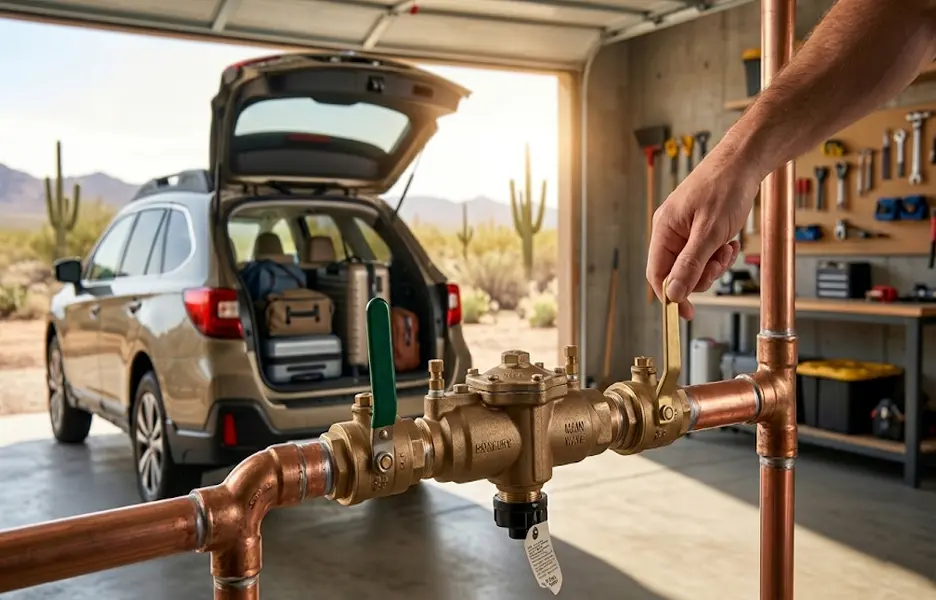
Leaving your Arizona home unoccupied during the scorching summer months—whether for a two-week family getaway or an extended seasonal departure across Phoenix, Scottsdale, Mesa, Chandler, or Gilbert—exposes your property to severe mechanical risks. Desert ambient temperatures regularly exceed 115°F, attic spaces climb past 150°F, and sudden municipal water pressure surges can easily rupture pressurized fixture lines while you are away.
Without proper mechanical preparation, a minor plumbing breach can dump thousands of gallons of water into your living space, where monsoon humidity and desert heat will cultivate toxic black mold within 48 hours. Below is the comprehensive 2026 summer vacation checklist and shutdown protocol engineered by the master plumbers at Aqua Plumbing Services to ensure your property remains safe and leak-free.
Executive Checklist: 7 Must-Do Steps Before You Leave
- Shut Off the Main Interior Water Supply: Close the main domestic gate/ball valve while keeping the dedicated exterior landscape irrigation line pressurized.
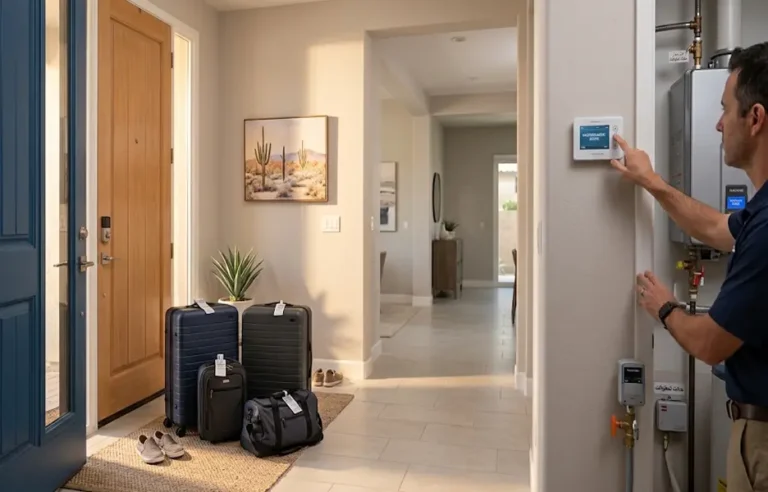
- Switch Water Heater to “Vacation” Mode: Lower the thermostat to pilot/vacation setting to prevent energy waste and eliminate internal pressure buildup.
- Seal All Fixture P-Traps & Drains: Prevent sewer gas migration caused by rapid desert water evaporation by sealing toilet bowls and drains.
- Isolate High-Risk Appliance Flex Lines: Shut off individual angle stops at washing machines, ice makers, and bathroom lavatories.
- Set Water Softener to Bypass: Prevent unintended mechanical regeneration cycles and continuous backwash line leaks.
- Inspect & Clear AC Condensate Drain Lines: Ensure primary condensate lines are clean to prevent summer attic overflow flooding.
- Verify Water Pressure Below 80 PSI: Check incoming static line pressure to prevent pressure regulator failure.
Room-by-Room Plumbing Shutdown Protocol
Follow this mechanical checklist to systematically isolate and protect every zone of your residential plumbing infrastructure:
| Home Zone | Critical Plumbing Risk | Action Required Before Departure |
|---|---|---|
| Main Water Entry Point | Municipal pressure surges over 100+ PSI | Turn main ball valve clockwise 90°; open outdoor hose bib to relieve residual house line pressure. |
| Water Heater (Gas / Electric) | Dry firing, tank overheating & scale baking | Set gas control dial to “VAC” (Vacation) or switch off the dedicated 240V double-pole circuit breaker for electric tanks. |
| Bathrooms & Guest Suites | P-trap dry-out leading to toxic sewer gas entry | Add 2–3 tablespoons of food-grade mineral oil to sink/tub drains; cover toilet bowls with plastic cling wrap to stop water evaporation. |
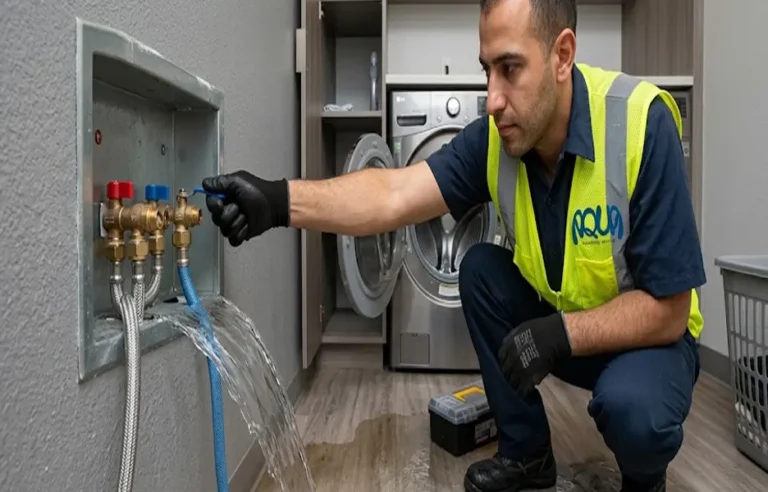
| Laundry & Kitchen Appliances | Braided rubber/mesh hose burst under pressure | Close manual shut-off valves for washing machine hot/cold supplies and refrigerator ice-maker line. |
| Water Softener System | Valve cycling and salt bridging in high heat | Engage the physical bypass lever on the control valve to isolate the resin vessel from incoming water. |
In-Depth Engineering Steps for Long-Term Protection
1. Preventing P-Trap Evaporation and Sewer Gas Intrusion
Every sink, shower, floor drain, and toilet features a “P-trap”—a U-shaped pipe designed to hold a standing water seal that blocks methane, hydrogen sulfide, and airborne bacteria from venting into your home. In Central Arizona’s arid summer environment, indoor humidity levels frequently drop below 15%, causing P-trap water seals to evaporate completely within 7 to 10 days.
The Solution: Pour 1 cup of water followed by 2 tablespoons of food-grade mineral oil into every sink and shower drain. The oil floats on top of the water barrier, forming a protective seal that prevents evaporation for months. For toilets, lower the lid and seal the bowl opening tightly with plastic food wrap.
2. Calibrating Gas & Electric Water Heaters
Never leave a water heater running at standard temperatures (120°F–140°F) in an unoccupied home. In uninsulated Arizona garages, ambient temperatures exceed 130°F, creating immense thermal stress inside the tank. Furthermore, if you shut off your home’s main water supply without turning down the water heater, an unexpected pressure loss can cause heating elements in electric units to “dry fire” and melt instantly.
Turn gas dials to the “VAC” (Vacation) setting to maintain only the pilot flame, or turn off the electrical breaker. To understand how desert hard water impacts tank longevity, review our comprehensive technical guide comparing traditional vs. tankless water heaters in Arizona.
3. Mitigating Municipal Pressure Surges & PRV Failures
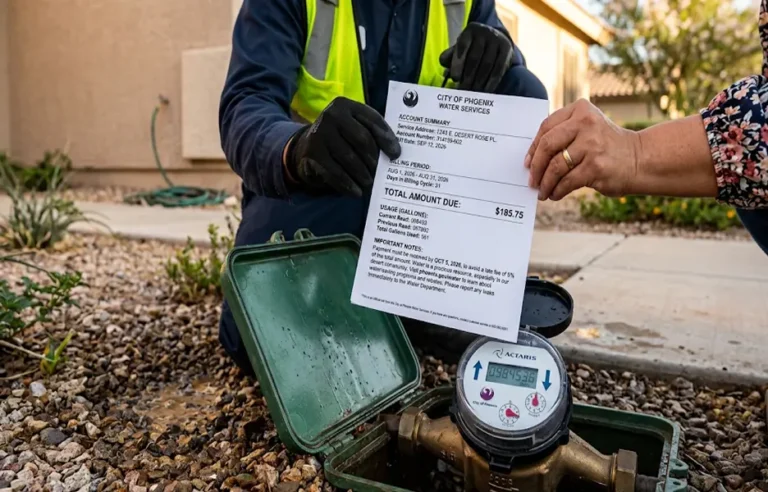
During summer heat waves, municipal water districts frequently alter supply line pumping pressures to accommodate agricultural and urban demand spikes. If your Pressure Reducing Valve (PRV) is over 5 to 7 years old or failing, incoming line pressure can surge over 100+ PSI, easily rupturing flexible toilet supply tubes or refrigerator water lines.
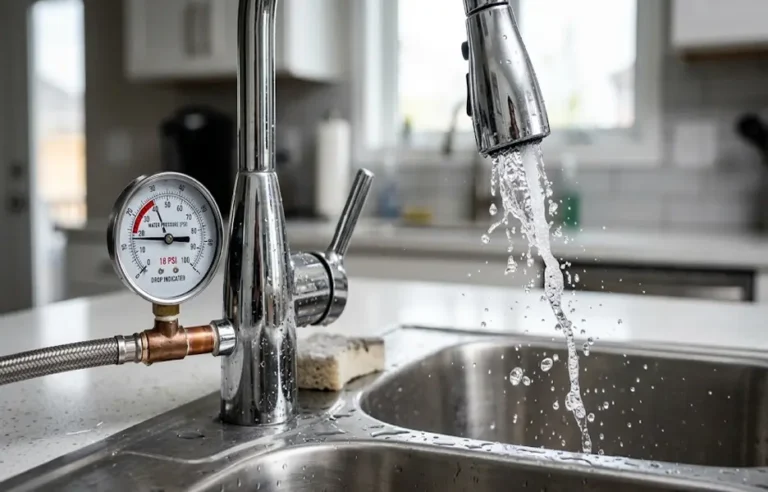
Before leaving, test your home’s static water pressure with a threaded pressure gauge at an outdoor hose bib. If pressure exceeds 75–80 PSI, review our engineering diagnostic on why Arizona homes struggle with water pressure issues to replace or calibrate your PRV.
4. Safeguarding Against Monsoon Pipe Leaks & Mold
Arizona monsoons bring intense downpours and high-humidity air between July and September. If a slow pinhole leak or sweating attic line is present while your air conditioning runs continuously, moisture trapped inside closed wall cavities will cultivate mold colonies in as little as 24 hours. Learn how to identify and prevent moisture damage in our guide on preventing mold growth from leaking Arizona pipes.
Water Softener and Drain System Vacation Settings
Before heading out, place your water softener’s manifold valve into the “Bypass” position. This stops unmonitored backwash cycles from running while the main water supply is shut off. Explore our updated guide on water softener installation and replacement in Arizona for proper system maintenance.
Additionally, pour 1/2 cup of bio-enzymatic drain cleaner down your kitchen sink and garbage disposal before leaving to eliminate lingering food residue that attracts desert drain pests. If drains are already sluggish, utilize our professional drain cleaning and clog removal services prior to departure.
If you suspect an active subterranean foundation leak before your trip, schedule a non-destructive scan using our slab leak detection and thermal imaging services to prevent major foundation shifts while you are away.
Safe Return Protocol: How to Restore Water to Your Home
When returning from vacation, restoring water service incorrectly can cause hydraulic shock (“water hammer”) that cracks pipe joints:
- Open an Exterior Hose Bib: Ensure at least one outdoor faucet is fully open to vent air out of the piping grid.
- Slowly Turn On the Main Valve: Open your main domestic water shut-off valve very slowly over 30 to 45 seconds to let water fill lines gradually without pressure spikes.
- Flush Indoor Taps: Run all cold and hot faucets for 2 to 3 minutes to flush stagnant water and clear residual air pockets.
- Restore Water Heater Settings: Switch the water heater dial back to normal temperature (120°F) or flip the electric breaker back on.
- Disengage Water Softener Bypass: Return the softener bypass valve to the normal service position.
Frequently Asked Questions: Arizona Vacation Plumbing
Q: Should I completely shut off my main water valve before leaving for summer vacation?
A: Yes. Shutting off the main house water supply is the single most effective way to prevent catastrophic interior flooding while away. Ensure your dedicated outdoor irrigation line remains connected if you have landscaping on automated timers.
Q: Why does my house smell like sewage after returning from vacation?
A: In dry desert air, the standing water inside sink, tub, and floor P-traps evaporates quickly. Once the water barrier disappears, sewer gases rise through dry drain pipes into your home. Adding mineral oil before leaving stops evaporation.
Q: What should I set my water heater to when away in the summer?
A: Set gas water heaters to the “Vacation” (VAC) setting. For electric water heaters, shut off the dedicated double-pole breaker in your electrical panel to prevent the elements from dry-firing if line pressure drops.
Q: Will insurance cover water damage if I don’t turn off my water while on vacation?
A: While most policies cover sudden pipe bursts, carriers may dispute or deny claims if damage occurred over an extended unoccupied period without proper mitigation. Review our detailed Arizona pipe leak insurance claim guide to understand policy requirements.
Ensure Total Plumbing Peace of Mind Before You Travel
Don’t leave your property vulnerable to high-pressure line bursts or sewer gas leaks. Contact Arizona’s licensed plumbing specialists at Aqua Plumbing Services for pre-vacation safety inspections, PRV testing, and smart auto-shutoff valve installations across Phoenix, Scottsdale, Mesa, Chandler, and Gilbert.
BOOK A PRE-VACATION PLUMBING INSPECTION