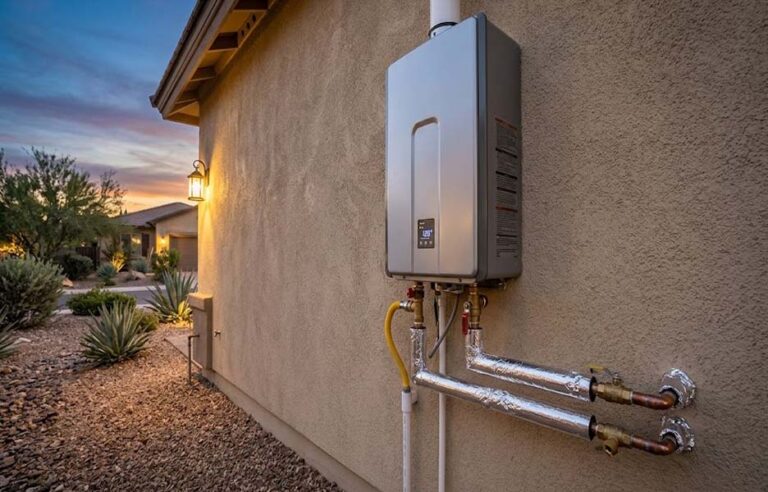
Quick answer: For Phoenix-area hard water, choose a condensing tankless heater with a stainless steel heat exchanger, such as the Navien NPE-A2, Rinnai SENSEI or Rheem IKONIC lines, and always pair it with scale protection: an inline scale inhibitor or a whole-home water softener, plus isolation valves so the unit can be descaled about once a year. Without that protection, scale is the most common reason tankless units fail early in Arizona.
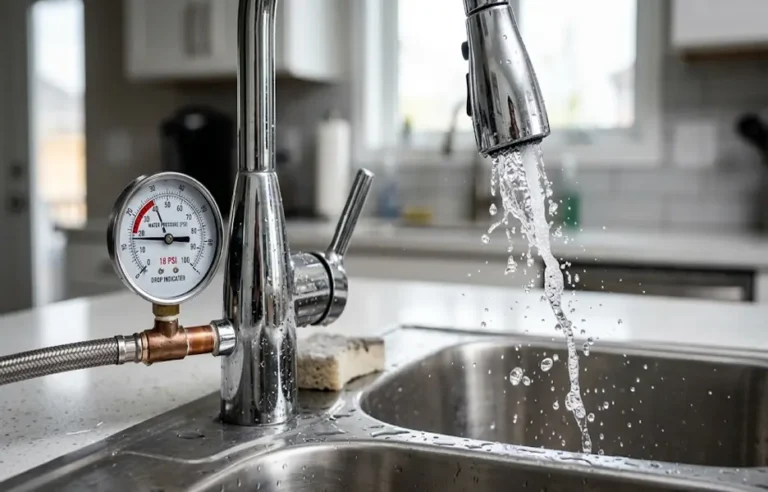
A tankless water heater gives you continuous hot water and usually uses less energy than a tank, because it only heats water when you need it. In the Valley, though, the biggest threat to a tankless unit is not heavy use. It is hard water. Heating water quickly inside a narrow heat exchanger makes calcium and magnesium drop out as scale, which restricts flow and overheats the exchanger.
This guide explains what to look for in a tankless heater for Phoenix, Scottsdale, Mesa and Chandler, compares three popular lines our technicians install, and covers the protection that makes the biggest difference to lifespan.
What matters most for a tankless heater in Arizona
- Stainless steel heat exchanger. Stainless resists corrosion and is easier to descale than many copper designs.
- Condensing design. Condensing units capture heat from exhaust gases for higher efficiency.
- Correct sizing. Flow rate (gallons per minute) must cover the fixtures you run at the same time. Arizona’s warm incoming water helps, so a unit can often deliver more GPM here than in colder states.
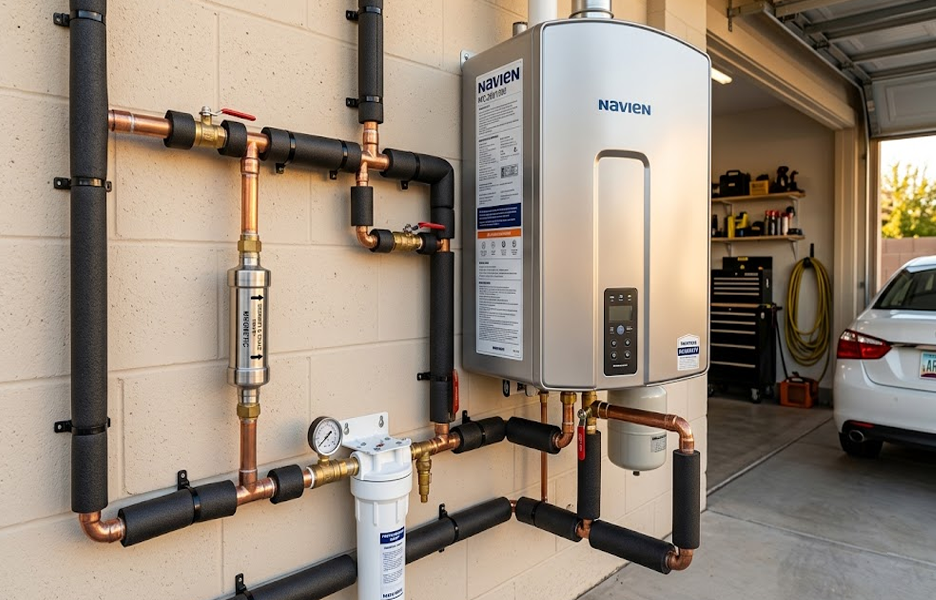
- Service valves. Isolation valves let a technician flush descaling solution through the unit without removing it.
- Diagnostics. Wi-Fi apps and error codes help catch scale before it causes damage.
Three tankless lines that work well in hard water
Navien NPE-A2
Our most common recommendation for larger homes. The NPE-A2 uses stainless steel heat exchangers and includes a small buffer tank and built-in recirculation pump, which reduces the “cold water sandwich” and frequent on/off cycling. Read our in-depth Navien NPE-A2 review and Navien sizing guide for Phoenix homes.
Rinnai SENSEI series
A strong choice for homeowners who want app-based monitoring. Rinnai’s connected models report operating data and maintenance needs to your phone, which makes it easier to schedule descaling before performance drops.
Rheem IKONIC
A versatile condensing option with indoor or outdoor mounting and Rheem’s EcoNet app for diagnostics and maintenance reminders. Useful where garage or closet space is tight.
| Feature | Navien NPE-A2 | Rinnai SENSEI | Rheem IKONIC |
|---|---|---|---|
| Heat exchanger | Stainless steel | Stainless steel | Stainless steel |
| Built-in recirculation | Yes, with buffer tank | On select models | Optional |
| App monitoring | Optional add-on | Yes | Yes (EcoNet) |
| Best fit | Large homes, recirculation needs | Smart-home monitoring | Flexible mounting, tight spaces |
Exact flow rates, efficiency ratings and warranty terms change by model and year, so we confirm current specifications for your home before quoting.
Scale protection: the part that decides lifespan
Inline scale inhibitor
A compact cartridge on the cold-water line into the heater (for example, Navien’s PeakFlow or similar products) changes how minerals form so less scale sticks to the heat exchanger. It is a low-cost add-on for any install.
Whole-home water softener
A softener removes the hardness minerals before they reach any appliance. It gives the best protection for the heater and the rest of your plumbing. See how hard water damages appliances and our softener guide for large families.
Annual descaling
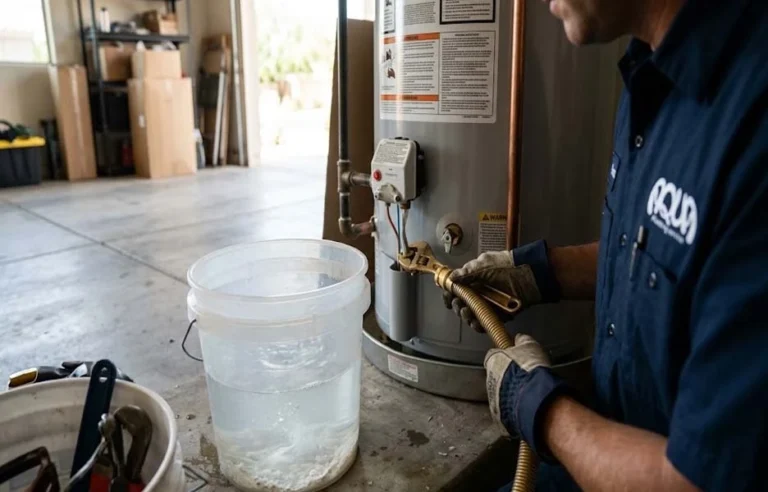
In most Valley homes we recommend flushing a tankless heater with a descaling solution about once a year, more often without a softener. Many manufacturers require regular maintenance in hard-water areas to keep the warranty valid, so check your warranty terms.
Installation: permits, gas and venting
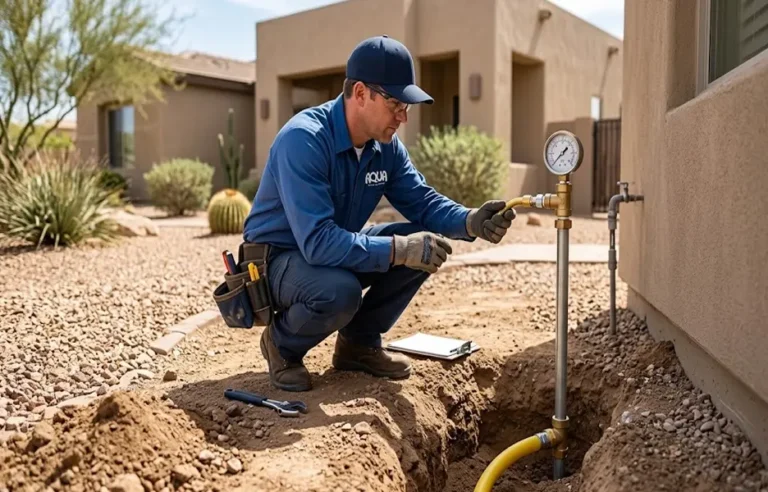
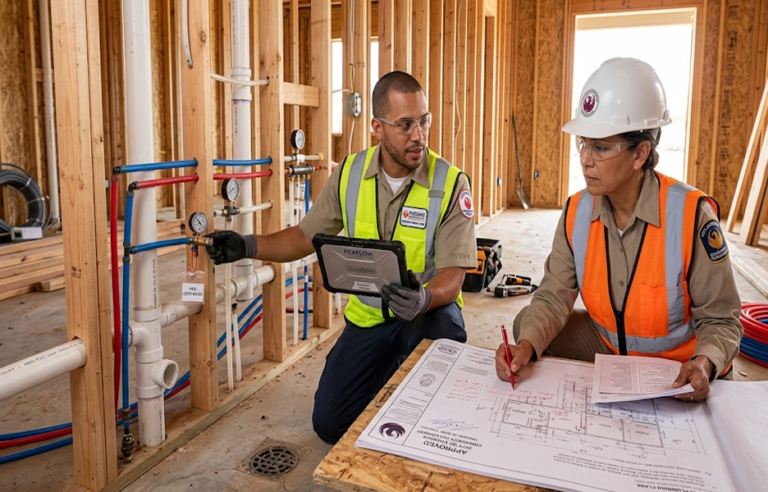
Gas tankless heaters often need a larger gas line than the old tank, plus new venting and a permit. Our Maricopa County plumbing permit guide explains the process. APS Plumbing handles sizing, gas line upgrades, venting and permits for water heater installation across the Valley.
Frequently Asked Questions
What is the best tankless water heater for hard water in Arizona?
Look for a condensing unit with a stainless steel heat exchanger, such as the Navien NPE-A2, Rinnai SENSEI or Rheem IKONIC, and pair it with an inline scale inhibitor or a water softener.
How often should a tankless water heater be descaled in Phoenix?
About once a year in most Valley homes, and more often if the home has no water softener.
Do I need a water softener for a tankless water heater?
It is not always required, but a softener or at least an inline scale inhibitor greatly reduces scale and is strongly recommended in Phoenix-area hard water.
Is tankless worth it in Arizona?
For many homes, yes. Warm incoming water lets units deliver good flow, and you only heat water when needed. The key is proper sizing and scale protection.
Need a plumber in Scottsdale or Phoenix?
APS Plumbing (Aqua Plumbing Services LLC) answers 24/7 across Scottsdale, Phoenix, Paradise Valley, Tempe, Mesa, Chandler, Gilbert and Glendale. 10% off for military personnel and 12 months no-interest financing available.