Quick answer: Water across the Phoenix area is typically in the “very hard” range, often well above 10.5 grains per gallon. When that water is heated or sits in appliances, calcium and magnesium form scale that insulates heating elements, clogs narrow passages and wears seals. Water heaters (especially tankless), dishwashers and washing machines fail sooner and use more energy. A sediment pre-filter plus a correctly sized, demand-regenerating water softener is the most effective protection.
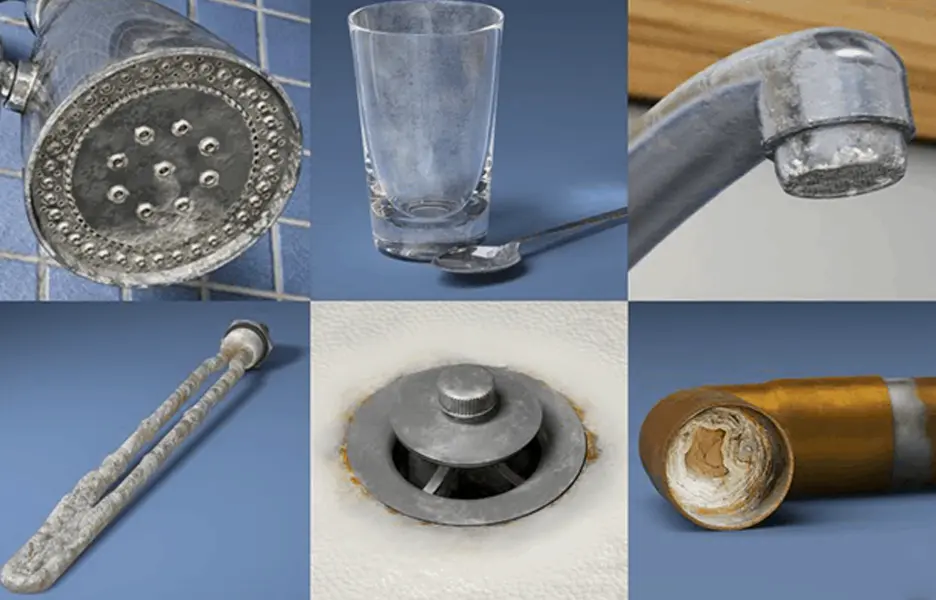
If you own a home in Phoenix, Scottsdale, Mesa or Gilbert, you have probably seen the white crust on faucets and shower glass. That same mineral layer forms inside your appliances, where you cannot see it, and it is one of the main reasons water heaters and dishwashers in the Valley wear out early.
How hard is Phoenix-area water?
Hardness is measured in grains per gallon (GPG). The U.S. Geological Survey classifies water above about 10.5 GPG as very hard, and most Valley cities deliver water in that range or higher. Hardness varies by city and season because supplies blend Colorado River (CAP), Salt and Verde River and groundwater sources. Your city’s annual water quality report lists the current figure for your area.
What scale does to each appliance
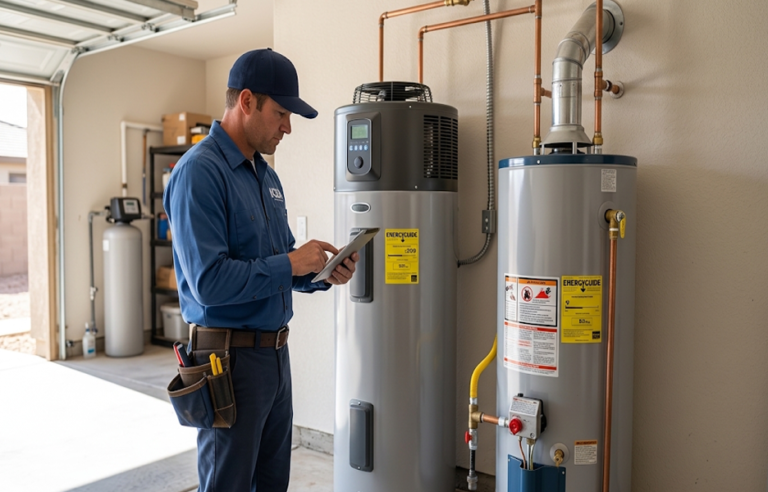
Tank water heaters
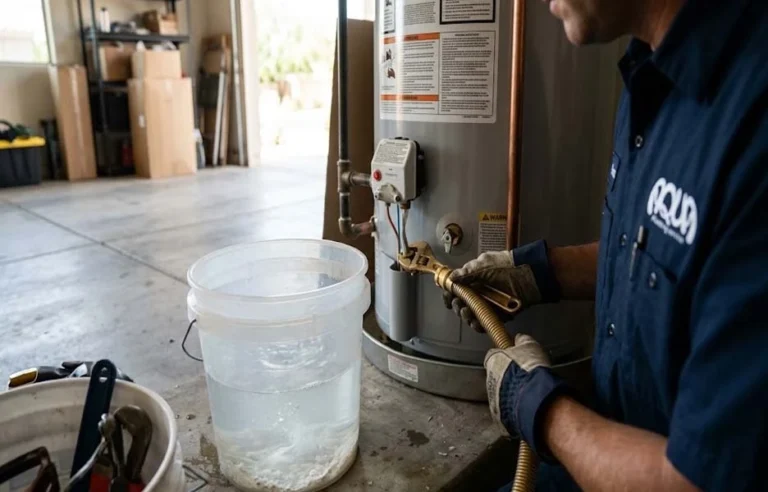
Heat makes minerals fall out of the water. In a tank heater they settle on the bottom as sediment or coat electric elements. Because scale insulates, the burner or element has to run longer to heat the same water, which raises energy use and causes popping or rumbling noises. Annual flushing helps; see why Arizona water heaters need a sediment flush.
Tankless water heaters
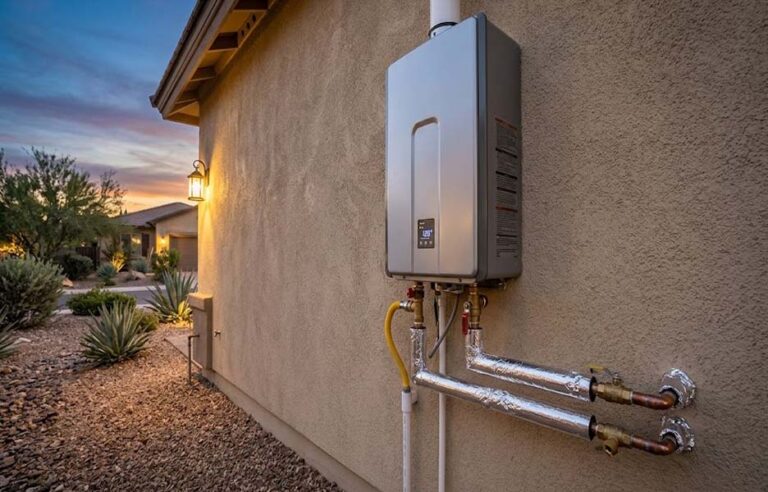
Tankless units heat water as it passes through narrow heat-exchanger channels. Scale narrows those channels, which reduces flow, triggers error codes and short-cycling, and can eventually damage the exchanger. Most manufacturers recommend periodic descaling in hard-water areas, and some require water treatment to keep the warranty valid. Compare models in our guide to tankless heaters for Arizona hard water.
Dishwashers
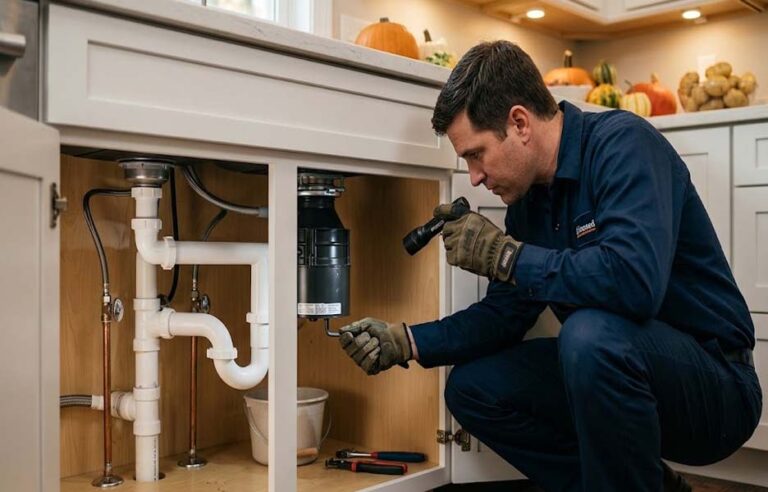
Minerals build up in the spray-arm holes, lowering spray pressure and leaving a cloudy film on glasses. Scale can also stop the water inlet valve from sealing fully, which leads to slow leaks under the cabinet.
Washing machines
High-efficiency washers with internal heaters collect scale on the element, and hard water makes detergent less effective, so many households use more soap than needed.
Faucets, valves and pipes
Cartridges stiffen, aerators clog and toilet fill valves stick. Over many years scale also reduces flow in older galvanized pipes.
How to protect your appliances
1. Add a sediment pre-filter
A whole-house sediment filter at the main line catches sand and silt before it reaches the softener or fixtures, which protects the softener resin and extends filter life. Tips here: how to double your water filter life in Scottsdale.
2. Size the softener for your household
Softener capacity should match hardness × daily water use. A family of four using about 300 gallons a day at 20 GPG removes around 6,000 grains per day, so a unit in the roughly 48,000–64,000 grain range regenerates about once a week instead of every day. Larger families need more; see our water softener guide for large Phoenix families.
3. Choose demand-initiated regeneration
Metered (demand-initiated) softeners regenerate based on the water you actually use rather than on a timer, which saves salt and water.
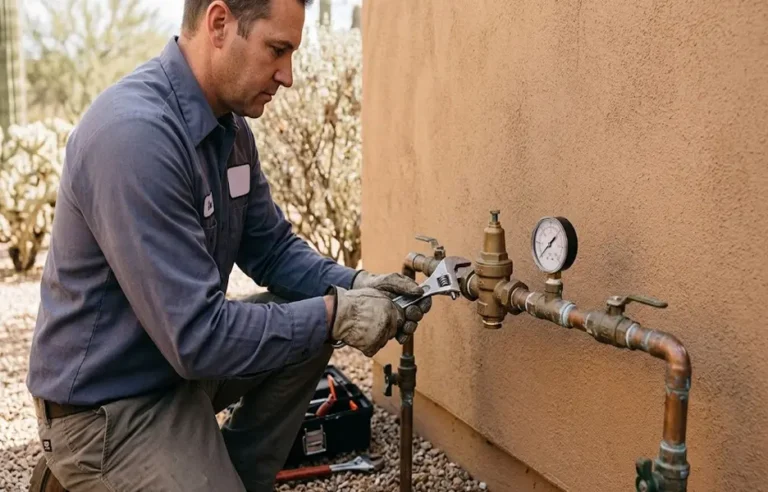
4. Keep water pressure up with the right valve size
Homes with several bathrooms and irrigation often benefit from a 1-inch valve and plumbing connection instead of 3/4-inch, so pressure does not drop when several fixtures run at once.
Is a softener worth it in Arizona?
| Area | Untreated hard water | With softener + pre-filter |
|---|---|---|
| Water heater | Sediment, noise, higher energy use, shorter life | Much less scale; easier maintenance |
| Tankless heater | Frequent descaling, error codes | Descaling needed far less often |
| Dishwasher & washer | Film on dishes, more detergent, valve problems | Cleaner results with normal detergent |
| Fixtures & glass | White crust, stiff cartridges | Little to no visible scale |
For pricing, read our water softener installation cost guide for Phoenix, or learn about our water softener installation service.
Frequently Asked Questions
Why is Arizona water so hard?
Valley water comes from rivers and aquifers that flow through mineral-rich rock, so it carries high levels of dissolved calcium and magnesium. Most Phoenix-area cities deliver water in the very hard range.
Does hard water really damage appliances?
Yes. Scale insulates heating elements, narrows passages in tankless heaters and dishwashers, and wears valve seals, which raises energy use and shortens appliance life.
What size water softener do I need in Phoenix?
Multiply your water hardness in grains per gallon by your daily water use. A typical family of four is often well served by a 48,000 to 64,000 grain metered softener.
Do I need a pre-filter with a water softener?
A sediment pre-filter is recommended in Arizona because it stops sand and silt from fouling the softener resin and clogging fixtures.
Need a plumber in Scottsdale or Phoenix?
APS Plumbing (Aqua Plumbing Services LLC) answers 24/7 across Scottsdale, Phoenix, Paradise Valley, Tempe, Mesa, Chandler, Gilbert and Glendale. 10% off for military personnel and 12 months no-interest financing available.