When designing or renovating a culinary space in the Greater Phoenix Area, selecting kitchen fixtures requires careful consideration of local environmental conditions: severe mineral water hardness. Municipal water supplies throughout Phoenix, Scottsdale, Mesa, and Tempe carry exceptionally high Total Dissolved Solids (TDS), consistently averaging 15 to 25+ Grains per Gallon (GPG).
Every time tap water evaporates on a kitchen sink basin, dissolved calcium, magnesium, and silica precipitate out of solution, leaving behind chalky white rings, stubborn water spots, and etched surface coatings. Choosing an incompatible material turns daily kitchen maintenance into an uphill battle.
Below is the ranked guide from the fixture and water treatment specialists at Aqua Plumbing Services detailing the best kitchen sink materials engineered to resist desert limescale buildup.
[20+ GPG Mineral Water Exposure] ──> Evaporation Cycle ──> Non-Porous Crystalline Surface ──> Effortless Wipe-DownExecutive Summary: Material Ranking for Arizona Hard Water
- #1 Best Overall: Granite Composite — 80% natural quartz/granite combined with high-grade acrylic resins creates an ultra-dense, non-porous barrier that hides mineral residue and resists scratches.
- #2 Premium Runner-Up: Fireclay (Glazed Ceramic) — Ultra-smooth ceramic glaze baked at extreme temperatures prevents calcium bonding, making it ideal for luxury farmhouse installations.
- #3 The Budget Standard: 16-Gauge Stainless Steel — Highly durable and heatproof, but requires frequent wipe-downs to manage visible white hard water spotting.
- Material to Avoid: Enamel-Coated Cast Iron — Abrasive cleaning products used to remove thick desert scale will wear down the enamel layer, exposing the iron core to rust.
Top 4 Sink Materials Ranked for Desert Durability
1. Granite Composite (The Desert Durability Benchmark)
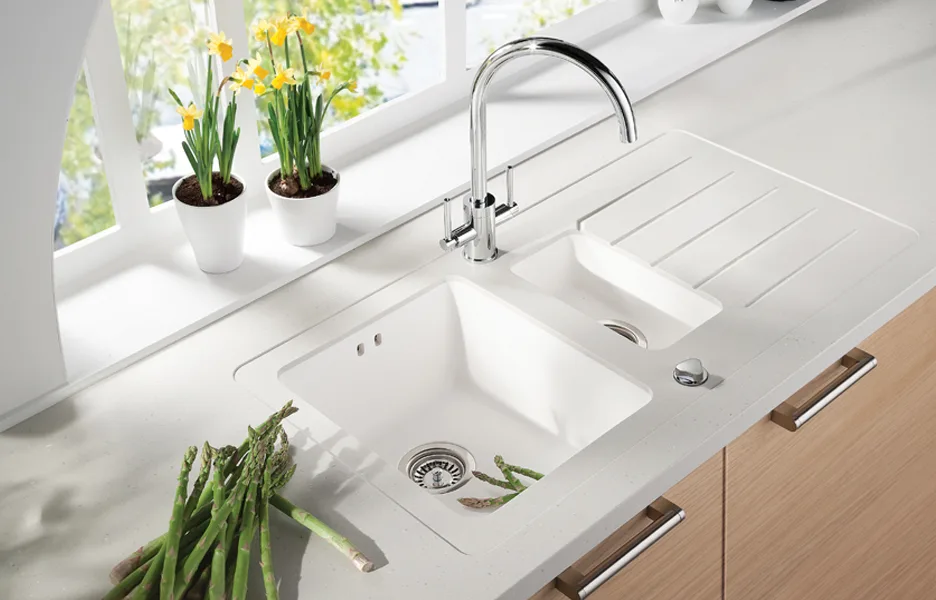
Granite composite represents the premier sink material for Southwest homes. Composed of approximately 80% crushed stone bound by 20% acrylic matrix, it offers unmatched physical and chemical resilience.
- Hard Water Resistance: Because the material is completely non-porous, calcium and magnesium cannot penetrate beneath the surface. Selecting matte neutral tones (charcoal, slate, or mocha) helps conceal daily mineral spotting between cleanings.
- Mechanical Strength: Highly resistant to chipping, heavy impact from cast-iron cookware, and thermal shock up to 535°F.
- Best For: High-traffic family kitchens across Phoenix, Scottsdale, and Mesa.
2. Fireclay (Glazed Crystalline Shield)
Crafted from specialized ceramic clay fired at temperatures exceeding 2,000°F, fireclay fuses glaze and clay into an impermeable, glass-like finish.
- Hard Water Resistance: The ultra-slick glazed surface prevents mineral crystallization from adhering strongly, allowing light limescale to be wiped away effortlessly with a damp microfiber cloth.
- Aesthetic Appeal: The gold standard for classic apron-front farmhouse aesthetics.
- Installation Consideration: Fireclay sinks are heavy and require reinforced cabinetry supports and professional mounting to prevent stress fractures.
3. Stainless Steel (The Practical Classic)
Stainless steel remains the most widely installed sink material due to affordability, hygiene, and timeless styling.
- Hard Water Vulnerability: While stainless steel will not rust under normal conditions, evaporating hard water leaves noticeable cloudy mineral spots. To maintain a clean finish, basins must be wiped dry after heavy use.
- Specification Tip: Always specify commercial-grade 16-gauge 304 stainless steel (or 18-gauge minimum). Thin 20- or 22-gauge sinks flex under load, breaking drain seals and amplifying garbage disposal vibrations.
4. Enamel-Coated Cast Iron (High Maintenance Warning)
While cast iron with porcelain enamel delivers a classic high-gloss look, it is poorly suited for unconditioned Arizona groundwater.
- The Chemical Hazard: Removing stubborn limescale often tempts homeowners to use acidic or abrasive scouring agents. These chemicals micro-etch the porcelain finish, creating a rough texture where hard water binds even faster.
- Rust Liability: Once the enamel chips or wears thin from scale scrubbing, the underlying raw iron oxidizes rapidly, leaving unsightly orange rust stains.
Material Performance Matrix for Hard Water
| Material Asset | Limescale Resistance | Scratch/Impact Rating | Maintenance Demand |
|---|---|---|---|
| Granite Composite | ⭐⭐⭐⭐⭐ (Superior) | ⭐⭐⭐⭐⭐ (Extreme) | Low (Occasional rinse/wipe) |
| Fireclay Ceramic | ⭐⭐⭐⭐ (Very Good) | ⭐⭐⭐⭐ (Resistant) | Low to Moderate |
| 16-Gauge Stainless | ⭐⭐⭐ (Spotting Prone) | ⭐⭐⭐⭐ (Durable) | High (Requires drying) |
| Enamel Cast Iron | ⭐⭐ (Poor Long-term) | ⭐⭐⭐ (Chip Hazard) | High (Delicate cleaning) |
Sizing, Garbage Disposals, and Plumbing Integration
Upgrading your kitchen basin involves several critical plumbing alignment steps:
- Garbage Disposal Torque: Heavy composite or cast-iron basins require rigid, professional collar mounting to absorb the high torque and vibration generated by modern 3/4 HP and 1 HP disposal units.
- Supply Line & Angle Stop Modernization: Replacing a sink provides the ideal opportunity to replace aging, mineral-corroded quarter-turn supply valves and flexible braided lines beneath the counter.
- Undermount Sealing Integrity: Undermount sinks require waterproof silicone bonding and specialized mechanical clip anchoring to prevent sub-counter moisture leaks and cabinet mold.
Complete the Defense: Whole-Home Water Treatment
While selecting a granite composite or fireclay sink drastically reduces daily maintenance, the root cause remains Arizona’s aggressive groundwater mineralization. Protecting all kitchen and bathroom fixtures requires whole-home treatment.
Homeowners planning a fixture upgrade can review our updated water softener buying guide for Arizona families to evaluate grain sizing formulas and ion-exchange systems.
Additionally, to ensure your overall domestic flow remains balanced across newly installed kitchen fixtures, explore our diagnostic analysis on why Arizona homes struggle with water pressure issues.
If you are planning a kitchen renovation, need professional undermount sink installation, or want to integrate advanced filtration at your sink, contact the certified plumbing team at Aqua Plumbing Services today.