Introduction
Most homeowners in Phoenix assume that a sewer line only needs attention every decade — but that rule no longer applies to Arizona’s fast-changing soil and infrastructure conditions. Aging clay or cast-iron pipes, hard water, and extreme heat are putting enormous stress on underground plumbing systems.
At APS Plumbing AZ, we’ve seen hundreds of sewer failures that could have been prevented with timely inspection. If you live in Glendale, Scottsdale, or Phoenix, it’s critical to understand why sewer lines now need more frequent checks — not just every 10 years.
1. The Myth of the “10-Year Sewer Replacement Rule”
Years ago, 10 years was considered a reasonable timeline for sewer line replacement in Phoenix. But the environment has changed.
Arizona’s dry soil expands and contracts more dramatically now due to temperature extremes and inconsistent rainfall. This movement puts additional pressure on older pipes, especially those made from clay or concrete.
In neighborhoods built before 2000, some sewer lines are already showing cracks, sagging, or intrusion from tree roots well before the 10-year mark. That’s why routine sewer inspections in Phoenix—at least every 3–5 years—are now strongly recommended.
For more on preventive care, explore our Camera Inspection Service, which detects hidden damage before it becomes a major problem.
2. Signs Your Sewer Line Needs Replacement Sooner
Sewer problems rarely appear suddenly — they develop quietly over time. Here are the most common warning signs we see across Phoenix and Glendale:
- Slow-draining sinks or tubs: Often the first sign of partial blockage.
- Gurgling noises: Air trapped in cracked or misaligned pipes.
- Sewage smells: Indicate leaks or backup issues underground.
- Frequent backups: Suggest deeper issues than a simple clog.
- Unusual green patches in your yard: A hidden leak is fertilizing your lawn.
If any of these symptoms sound familiar, it’s time to schedule a professional inspection through our Drain Cleaning & Clog Removal Services before it turns into a full replacement emergency.
3. Why Phoenix Homes Face Unique Sewer Problems
Phoenix and the surrounding cities have unique geological and environmental conditions that accelerate sewer line damage:
- Hard, mineral-rich water: Causes scaling inside pipes.
- Soil movement: Expanding clay soils create pressure points.
- Tree root intrusion: Roots search for moisture and invade older joints.
- Construction stress: Ongoing development in Phoenix often disturbs underground lines.
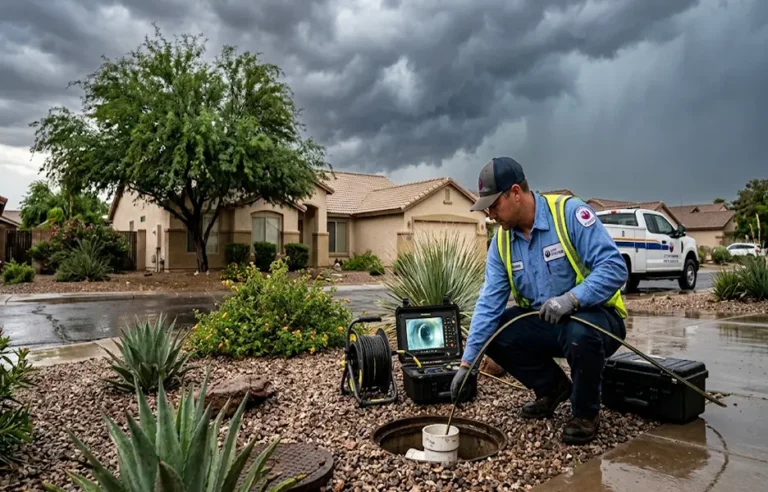
If your home is in older neighborhoods of Phoenix or Glendale, the risk of these issues increases significantly. A video camera inspection by our team can help assess internal damage without digging.
4. The Cost of Delaying Sewer Line Replacement
Many homeowners avoid sewer inspections due to cost concerns — but waiting too long often multiplies expenses.
Here’s how the hidden costs stack up:
- Property damage: Sewage backup can ruin flooring, walls, and foundations.
- Health risks: Exposure to wastewater increases mold and bacteria contamination.
- Emergency repairs: Urgent replacements often cost significantly more.
- Re-landscaping fees: Excavation damages lawns and driveways if issues aren’t caught early.
In contrast, preventive maintenance and early inspection are far less costly. Learn more about our Emergency Pipe Repair Services in Arizona that can stop leaks before they escalate.
5. The APS Plumbing AZ Sewer Replacement Process
Our team follows a detailed, modern approach to sewer line replacement that minimizes disruption:
- Camera Inspection: Using advanced video scopes, we locate the exact source of the issue.
- Diagnosis: Identify whether the problem is a clog, collapse, or misalignment.
- Repair vs. Replace Decision: If the damage is localized, trenchless repair may be possible.
- Trenchless Options: We offer non-invasive methods to replace lines without digging up your yard.
- Full System Testing: After installation, we test for leaks, flow, and durability to ensure long-term performance.
We proudly provide these services across Phoenix, Glendale, Scottsdale, and Mesa, ensuring fast, reliable repairs that last.
6. Why Every 3–5 Years Makes More Sense
While some contractors still recommend a 10-year checkup, data from the City of Phoenix Water Department shows that early detection reduces sewer replacement costs by up to 40%.
A camera inspection every 3–5 years:
- Identifies early pipe corrosion.
- Prevents root intrusion.
- Monitors shifting or sagging sections.
- Extends the total lifespan of your system.
That’s why we encourage homeowners to schedule annual inspections if their property is older than 15 years — especially in high-temperature zones like Glendale.
7. Why Choose APS Plumbing AZ
APS Plumbing AZ is more than a repair service — we’re your local plumbing partners for life. With decades of experience in sewer line replacement and inspection, we’ve helped thousands of Arizona homeowners avoid costly emergencies.
What sets us apart:
- Licensed and insured technicians
- Trenchless technology to minimize digging
- 24/7 availability for emergency repairs
- Transparent pricing (with no hidden costs)
- Local expertise in Arizona soil and climate conditions
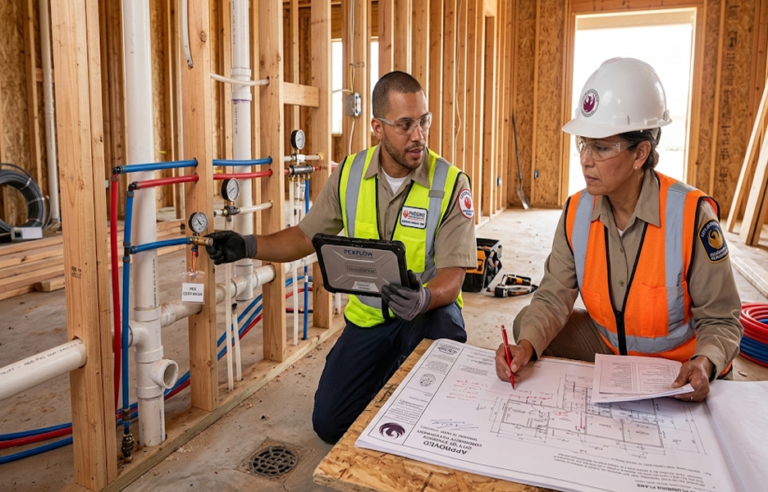
If you’re unsure whether your system needs repair or replacement, our General Plumbing Inspection Service can help identify potential sewer risks.
Conclusion
Sewer line replacement isn’t just a once-a-decade task anymore. In Phoenix, Glendale, and nearby areas, soil movement and mineral-rich water are taking a toll on underground pipes faster than ever.
Regular camera inspections and preventive maintenance can help you avoid costly emergencies and protect your property from damage.
At APS Plumbing AZ, we specialize in sewer inspection and replacement using state-of-the-art technology designed for Arizona’s unique environment. Whether you’re in Phoenix, Glendale, or Scottsdale, our team is just a call away — ready to restore your system efficiently and affordably.