In the high-stakes commercial hospitality and service sectors across the Greater Phoenix Area, operational reliability directly dictates your net operating income. While business owners allocate substantial capital to high-end culinary gear and industrial laundry configurations, a silent mechanical hazard threatens these investments daily: extreme desert hard water.
Municipal water tables throughout Maricopa County carry heavy mineral profiles, frequently averaging 15 to 25 Grains per Gallon (GPG) of hardness. When untreated groundwater passes through commercial machinery, dissolved calcium and magnesium rapidly crystallize under heat and pressure, leaving behind rock-hard limescale.
For local food service establishments and commercial laundromats, implementing a high-capacity water conditioning matrix is not an option—it is a foundational operational requirement to secure your hardware and ensure consistent output quality.
[Raw 25 GPG Municipal Influx] ──> Commercial Hardness Matrix ──> Ion-Exchange Loop ──> [0 GPG Soft Output]
1. Restaurant Infrastructure Requirements
In a fast-paced food service environment, water quality impacts everything from equipment useful life to the taste profile of your culinary offerings.
Combi-Ovens and Steams Grids
Modern commercial combination ovens and steamers use precise water-injection systems to maintain internal moisture profiles. When hard water hits the heating elements, scale forms instantly. This creates a thermal barrier, forcing the oven to consume up to 30% more energy, causing uneven heat distribution, and eventually burning out the heating elements.
Commercial Dishwashers (Warewashers)
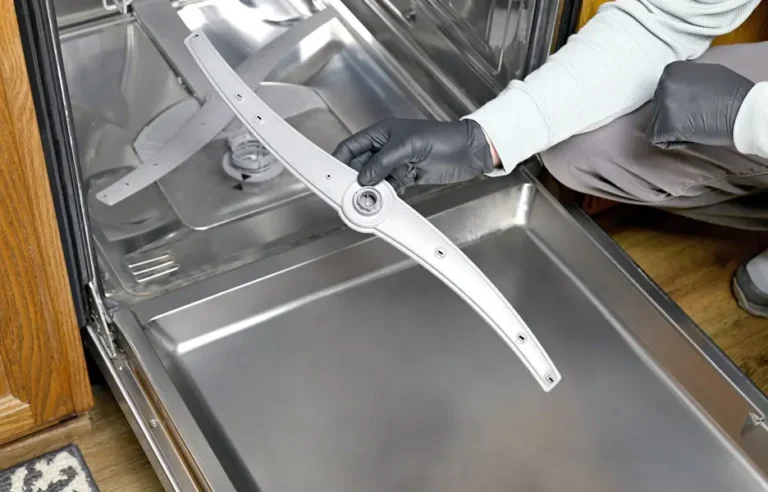
High-temperature commercial dishwashers require soft water to activate detergents efficiently. Hard water binds with cleaning agents, leaving a cloudy, micro-crystalline film on glassware and cutlery. Furthermore, scale deposits build up inside internal spray jets and rinse arms, dropping line pressure and leading to costly health code compliance failures.
Ice Machinery and Beverage Stations
Ice machines are highly sensitive to mineral accumulation. Hard water causes freezing cycles to take longer, produces cloudy, fast-melting ice cubes, and clogs the microscopic water distribution channels. This leads to early compressor failures and shifts the flavor profile of your fountain beverages.
2. Laundromat and Commercial Laundry Requirements
For laundromats and industrial textile care facilities, water functions as the primary vehicle for your entire production loop. Mineral-heavy water undermines your operational efficiency in two major ways:
[Hard Water Minerals] + [Commercial Detergents] ──> Insoluble Soap Curd ──> Fabric Graying & Valve Leaks
Detergent Waste and Chemical Overhead
Hard water ions react negatively with industrial surfactants, neutralizing their cleaning power. Laundromats using raw Phoenix water are forced to increase detergent dosages by up to 40% to 50% just to achieve proper sudsing. This drastically hikes monthly chemical expenses and leaves behind an insoluble soap curd that gets trapped within textile fibers, causing fabrics to feel scratchy and look gray.
Industrial Boiler and Washer Protection
Commercial washing machines feature complex internal water inlet solenoids, heating coils, and dynamic drain valves. Scale build-up scores internal rubber seals, resulting in hidden subfloor leaks and costly emergency downtime. In facilities using large industrial boilers for hot water loops, a mere 1/16-inch of limescale build-up plummets thermal efficiency, triggering massive spikes in monthly natural gas overheads.
3. Sizing and Technical Specifications
Commercial applications cannot rely on standard, residential-grade single-tank configurations. To ensure a continuous supply of treated water without drop-offs in line pressure, commercial builds require specialized engineering:
| Technical Parameter | Food Service / Restaurants | Laundromats & Commercial Laundry |
| System Architecture | Alternating Twin-Tank Matrix | Multi-Tank Progressive Flow Grid |
| Resin Type | High-Capacity Cross-Linked Cation | Premium Uniform Particle Size Cation |
| Control Matrix | Meter-Initiated Demand Regeneration | Electronic Smart Telemetry Controller |
| Flow Capacity Target | 15 to 35 Gallons Per Minute (GPM) | 50 to 150+ Gallons Per Minute (GPM) |
Engineering a Resilient Commercial Water Grid
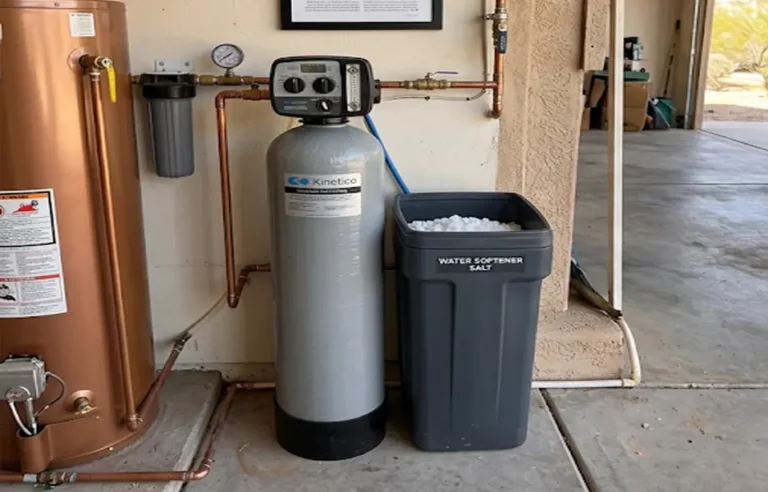
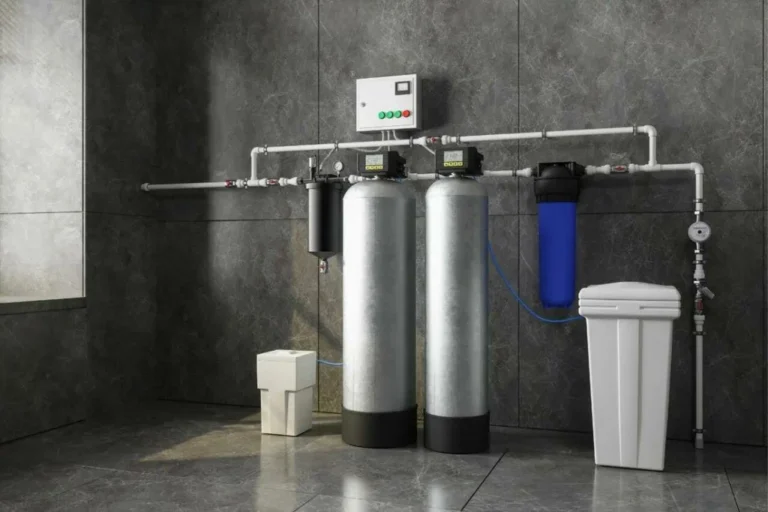
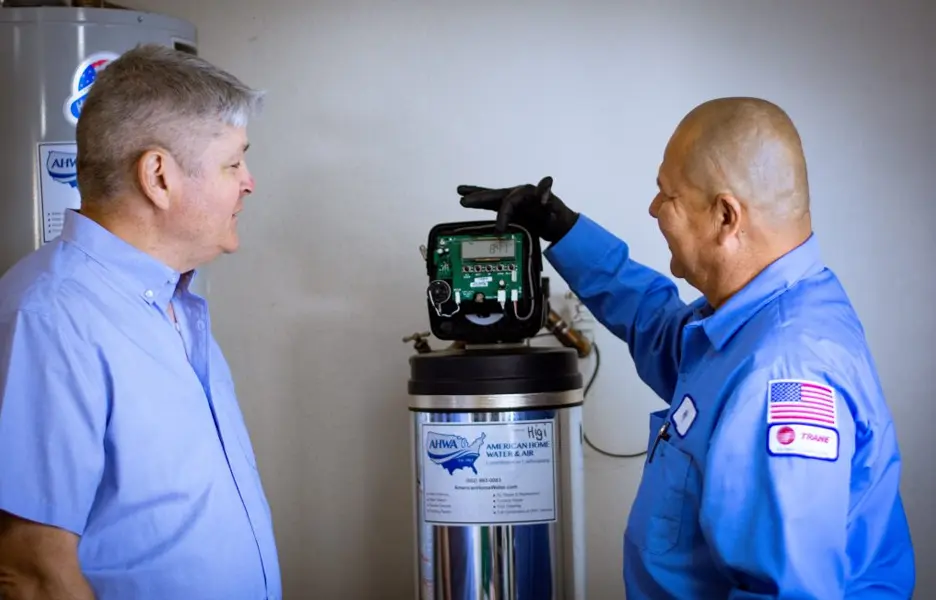
To fully insulate your commercial property from these hidden liabilities, your treatment matrix must adapt to high-volume operational cycles. Installing a custom, twin-alternating system guarantees your facility never runs out of conditioned water. While one tank undergoes its regeneration cycle, the second tank instantly picks up the load, maintaining stable line pressure across all commercial fixtures.
[Main Entry Influx] ──> Heavy Sediment Pre-Filter ──> Twin-Alternating Softener Grid ──> Commercial Loops
Before configuring an expensive equipment overhaul or signing a new commercial lease, building a clear operational checklist is essential. Business owners planning a system deployment can access a complete compliance review by examining the framework required for securing plumbing permits in Maricopa County legal requirements to ensure their utility setups align perfectly with local engineering codes.
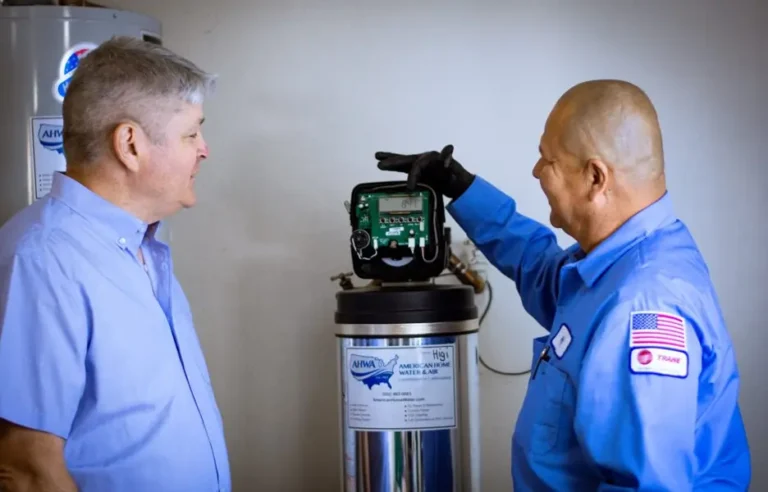
By partnering with certified commercial installation groups like Aqua Plumbing Services, business managers can deploy automated brine management loops and heavy-duty filtration configurations tailored specifically to the Valley’s unique water profile. Investing in programmatic commercial water conditioning protects your equipment investments, slashes monthly utility bills, and ensures your business delivers top-tier results to every client.