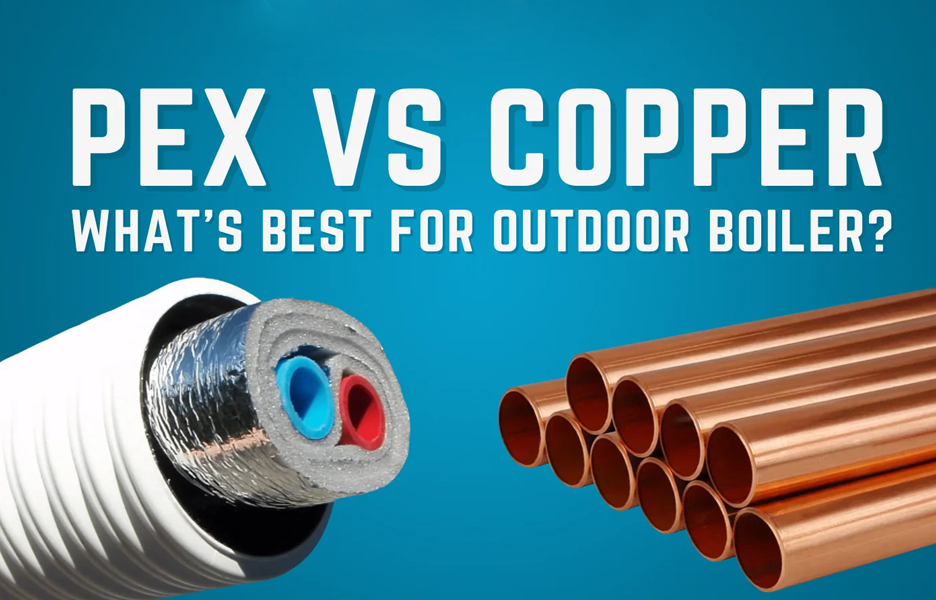
The Best Plumbing Pipe Material for Phoenix Heat: PEX vs. Copper
Residential plumbing systems across the Greater Phoenix metropolitan area—including Scottsdale, Mesa, Chandler, Gilbert, and Tempe—operate under some of the most punishing climate stresses in North America. While most regional building codes simply address freeze prevention, Southwestern homeowners face the polar opposite: summer ambient temperatures consistently exceeding 115°F, unconditioned attic spaces that routinely reach 140°F to 160°F, extreme groundwater mineral density, and abrasive caliche clay soils.
When upgrading an aging home or remediating subterranean failures, selecting the right piping material is the single most critical structural decision a property owner can make. Historically, rigid copper was hailed as the undisputed gold standard. Today, advanced cross-linked polyethylene (PEX-A) has fundamentally reshaped southwestern plumbing design.
Below is an engineering analysis of how PEX and copper perform in extreme desert heat, how Arizona water chemistry accelerates degradation, and which material provides the highest return on investment for Central Arizona homes.
1. Material Physics: PEX vs. Copper in 140°F+ Desert Attics
Because most Phoenix homes sit on monolithic concrete slabs, whole-home repipes and modern water line routing bypass concrete floors and run through the attic cavity. Desert attics present intense thermal environments:
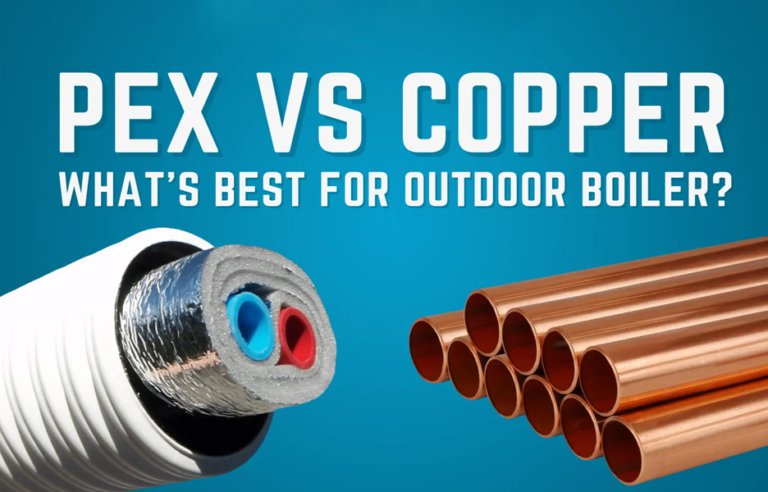
| Performance Metric | Cross-Linked Polyethylene (PEX-A) | Type-L Rigid Copper |
| Maximum Operating Temperature | Rated up to 180°F to 200°F under standard pressure (100–80 PSI). | Rated well beyond 400°F; unaffected by ambient air heat. |
| Thermal Expansion & Contraction | High thermal movement; expands ~1 inch per 100 ft per 10°F change. | Moderate thermal movement; expands ~0.11 inches per 100 ft per 10°F change. |
| Acoustic / Water Hammer Resilience | High; elastomeric polymer expands slightly to absorb hydraulic shock. | Low; transmits metallic noise and water hammer vibrations into wall studs. |
| Joint Fatigue in Heat Cycles | Joint-free continuous loops eliminate hidden mechanical weak spots. | Rigid soldered joints experience shear stress during thermal cycling. |
| Direct Sunlight / UV Resistance | Zero UV tolerance; degrades rapidly if exposed to direct sunlight. | Total UV immunity; suitable for exterior, unshaded risers. |
Attic Thermal Dynamics
While copper effortlessly handles high temperatures, its rigidity is a disadvantage during extreme thermal swings. When copper pipes expand in a 150°F attic during the day and cool at night, rigid soldered elbows rub against wood joists, causing metallic clicking noises and mechanical stress at soldered joints.
PEX-A handles high ambient attic temperatures comfortably, provided it is properly supported. Because PEX expands and contracts dynamically, professional plumbers engineer expansion loops and oversized suspension clips that let the tubing slide freely without bowing or fatiguing fittings.
2. Water Chemistry & Corrosion: The Arizona Mineral Factor
Extreme atmospheric heat is only half the equation; the chemical composition of Central Arizona tap water actively attacks domestic pipe walls from the inside out:
Severe Hard Water (15 to 25+ GPG)
Municipal water in Phoenix, Scottsdale, and Mesa carries high concentrations of dissolved calcium and magnesium carbonates. In rigid copper systems, this mineral density precipitates into hard limescale along pipe walls. Over decades, scale constricts internal pipe diameters, reducing domestic water pressure and creating uneven fluid turbulence.
Pinhole Corrosion in Copper Lines
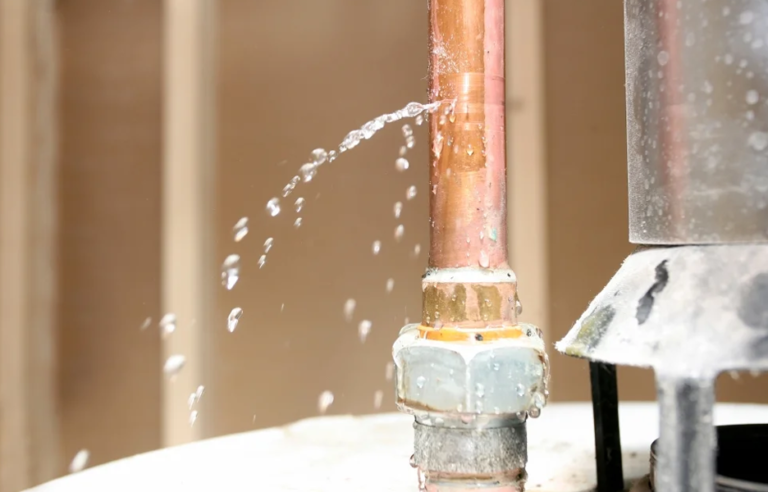
Arizona utilities treat municipal supplies with chlorine and chloramines for biological disinfection. When chloramines interact with high-TDS (Total Dissolved Solids) groundwater and localized electrical grounding currents, they trigger pitting corrosion in copper tubing. This chemical reaction creates microscopic pinholes, resulting in slow, catastrophic leaks hidden beneath concrete foundations or behind drywall.
PEX Polymer Immunity
PEX is completely inert to chlorine, chloramines, and acidic groundwater. Its ultra-smooth interior surface resists scale accumulation, maintaining original flow velocities and water volume over decades of heavy mineral exposure.
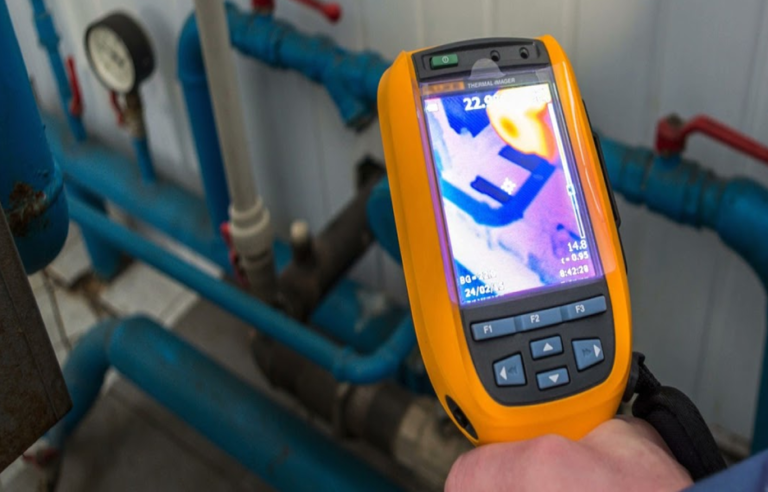
To understand how subterranean copper failures are detected before structural pipe replacement, read our comparative technical analysis on acoustic leak detection vs thermal imaging:
https://apsplumbingaz.com/acoustic-leak-detection-vs-thermal-imaging/
For full diagnostic specifications on in-slab foundation testing, review our engineering guide on slab leak detection of concrete slabs:
https://apsplumbingaz.com/leak-detection-of-concrete-slabs/
3. Foundation & Soil Interactions: Desert Caliche Stress
For homes where water lines run beneath or through concrete foundations, the ground environment plays a decisive role:
Copper Subterranean Vulnerability: Phoenix soils feature heavy concentrations of caliche (concrete-like sedimentary rock) and expansive clays. When monsoon downpours saturate the ground after months of extreme drought, the soil expands and contracts vigorously. Rigid subterranean copper lines embedded in aggregate gravel suffer severe abrasion and stress cracking at foundation transitions.
PEX Flexibility: PEX-A is flexible enough to withstand shifting soil loads without fracturing. However, under local plumbing codes, PEX installed beneath concrete slabs must be run as a continuous, joint-free line encased inside a protective sleeve conduit to prevent stone puncture during concrete pours.
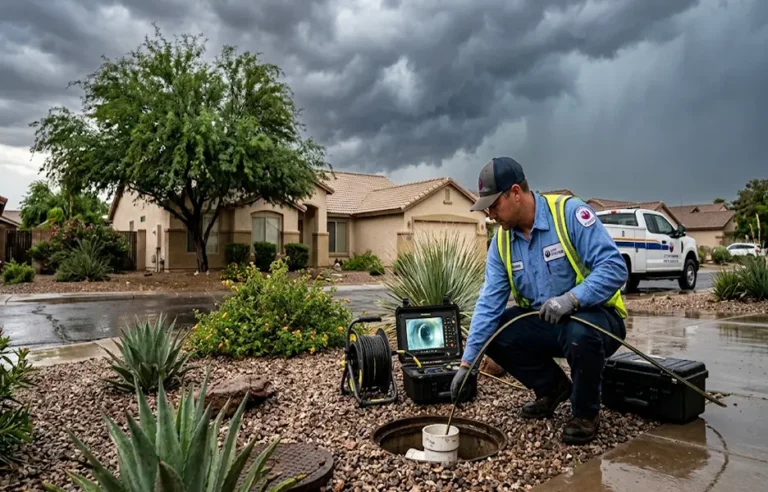
If you suspect an active subterranean yard break between your utility meter and your foundation, consult our field diagnostic on how to identify an underground yard leak and irrigation breaks:
https://apsplumbingaz.com/how-to-identify-yard-leak-underground-irrigation/
4. Municipal Pressure Spikes & Hydraulic Shock
Central Arizona municipalities frequently pump municipal drinking water at elevated pressures exceeding 80 to 100+ PSI to serve distant subdivisions.
When high-velocity water stops abruptly (such as when a washing machine solenoid snaps shut), the resulting shockwave—known as water hammer—stresses pipe joints:
In copper systems, continuous water hammer shockwaves can crack soldered joints and rupture thin-walled fittings.
In PEX systems, the elastic properties of the polymer tubing naturally cushion dynamic pressure waves, reducing hydraulic stress on plumbing connections.
Understanding how incoming municipal pressure spikes compromise residential plumbing systems is detailed in our diagnostic on residential pressure surges:
https://apsplumbingaz.com/why-arizona-homes-struggle-with-water-pressure-issues/
5. Summary: Where Copper and PEX Excel in Phoenix Homes
Neither material is universally superior for every single foot of a home’s plumbing network; the best engineered solution uses each material where its physical properties excel:
Where PEX-A is the Clear Winner:
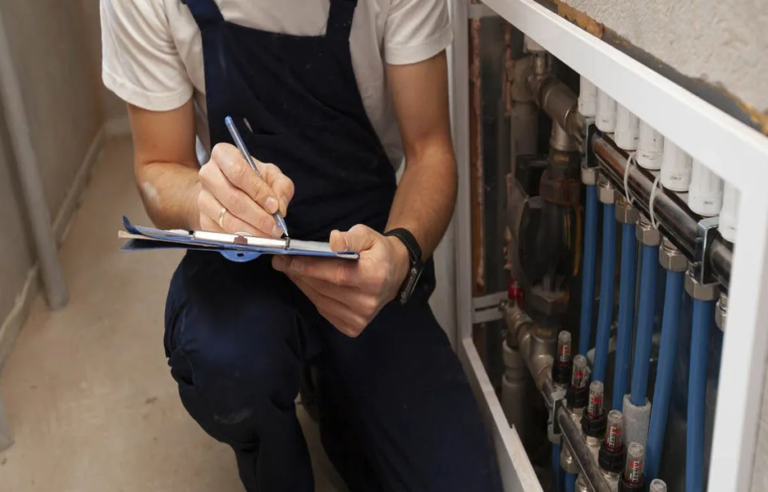
Whole-Home Overhead Repiping: Routing continuous, joint-free PEX lines through attics avoids breaking through finished tile and concrete slabs. Explore our certified home repiping services in Arizona:
Aggressive Hard Water Areas: Eliminates pinhole corrosion and scaling in high-TDS regions like Mesa, Chandler, and Scottsdale.
Concealed Wall Cavities: Flexible tubing snakes through wall framing with fewer fittings, drastically reducing the risk of hidden joint failures.
Where Rigid Copper Remains Essential:
Outdoor Above-Ground Risers: Because PEX quickly degrades under direct sunlight and UV radiation, the pipe emerging from the ground up to your home’s shut-off valve must be Type-L copper or UV-shielded metallic pipe.
Water Heater Connections: Plumbing codes mandate that the first 18 inches of supply piping connected directly to a gas water heater draft hood must be metallic (copper or brass) to handle radiant flue heat.
Tub Spout Drops: Copper should always be used for the short drop between a shower diverter valve and a tub spout to ensure proper flow diameter and prevent water from backing up into the showerhead.
Review emergency valve location protocols for exterior copper risers in our guide on how to locate your main water shut-off valve in Phoenix:
https://apsplumbingaz.com/how-to-locate-main-water-shut-off-valve-phoenix/
6. Code Compliance & Permitting in Maricopa County
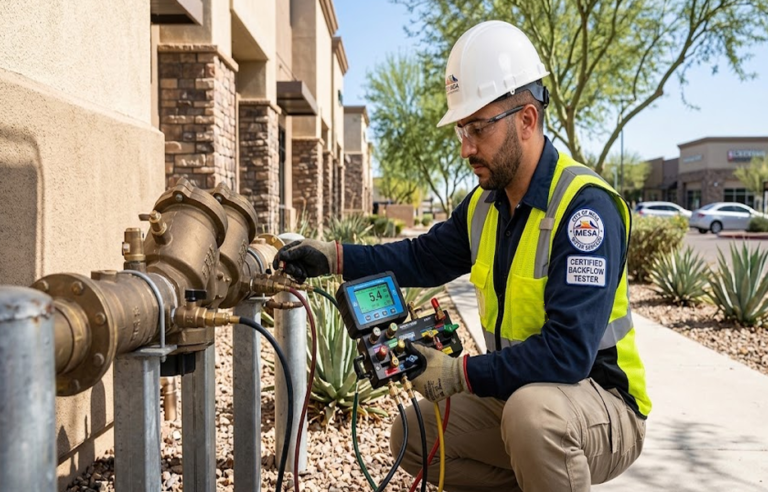
Whether installing copper or PEX-A, major plumbing line replacements in Maricopa County require municipal plan filings and rough-in inspections. Inspectors verify pipe support spacing, expansion loop placement, dielectric unions, and static pressure test compliance before walls can be closed.
Learn more about municipal requirements in our guide to plumbing permits in Maricopa County:
https://apsplumbingaz.com/plumbing-permits-maricopa-county-legal-safety-guide/
For active pipe emergencies requiring immediate water containment, contact our rapid dispatch team for emergency pipe repairs in Arizona:
If you are modernizing bathroom fixtures or remodeling kitchen layouts, review certified rough-in codes at renovation plumbing in Arizona:
To prepare documentation for insurance adjusters following an unexpected pipe leak, review our Arizona pipe leak insurance claim guide:
https://apsplumbingaz.com/arizona-pipe-leak-insurance-claim-guide/
Frequently Asked Questions: PEX vs. Copper in Phoenix
Q: Will Phoenix summer attic heat melt or degrade PEX pipes?
A: No. High-quality PEX-A is engineered to withstand continuous operating temperatures of 180°F to 200°F under pressure. Because properly ventilated Arizona attics peak between 140°F and 160°F during summer, PEX operates safely within its engineered thermal limits.
Q: Can PEX pipe freeze during Arizona winter cold snaps?
A: While PEX is much more flexible than rigid copper and can expand slightly without bursting if trapped water freezes, it is not freeze-proof. Exterior risers and attic sections exposed to unconditioned drafts must be insulated with closed-cell elastomeric foam.
Q: Why do plumbers prefer PEX-A over PEX-B or PEX-C?
A: PEX-A is produced using the peroxide (Engel) cross-linking method, giving it superior flexibility, shape memory, and crack resistance. Connections are made using expansion rings rather than mechanical crimp rings, which preserves the pipe’s full internal diameter and maximizes water volume.
Q: Does PEX alter the taste or safety of drinking water in hot weather?
A: Certified PEX pipe (NSF/ANSI Standard 61 and 14) is non-toxic, lead-free, and approved for potable drinking water. It does not impart chemical tastes or leach heavy metals, even under elevated temperatures.
Upgrade Your Home’s Piping Infrastructure with APS Plumbing
Don’t let hidden pinhole leaks, failing copper joints, or hard water scale disrupt your home. Contact the repiping and leak diagnostic specialists at Aqua Plumbing Services (APS Plumbing) for comprehensive pipe assessments, non-invasive telemetry, and turnkey PEX-A conversions across Phoenix, Scottsdale, Mesa, Chandler, and Gilbert.
Schedule your residential plumbing consultation today: