How to Identify a Yard Leak: Tracking Underground Irrigation Main Line Breaks
In the arid environment of Central Arizona—including Phoenix, Scottsdale, Mesa, Chandler, and Gilbert—residential landscaping relies heavily on automated drip irrigation and subterranean sprinkler systems. Because natural rainfall is sparse and summer heat frequently exceeds 110°F, an underground irrigation break does not merely inflate your municipal utility bills; it can undermine concrete driveways, erode soil foundations, and cause root rot in expensive desert vegetation.
Unlike interior plumbing breaches that produce visible ceiling stains or wet baseboards, subterranean yard leaks occur out of sight, deep within caliche-heavy desert soil or beneath gravel landscaping. Identifying whether an active leak resides on the municipal domestic supply line, the irrigation main line, or within a specific downstream zone is essential for rapid containment. Below is the definitive diagnostic guide to isolating, verifying, and tracking underground irrigation leaks across Southwestern properties.
1. Primary Indicators of an Underground Yard Leak
Before conducting diagnostic pressure tests, watch for these common physical signatures of subterranean water loss:
Sponge-Like Turf or Unexplained Mud Pockets: Walking across your lawn or desert rock beds reveals spongy soil, standing puddles, or sunken depressions long after the automated watering timer has concluded.
Unusual Vegetation Growth or Weed Clusters: Subterranean piping breaches continuously irrigate localized patches of ground, resulting in hyper-dense weed outbreaks or a single zone of grass growing significantly faster than surrounding areas.
Persistent Low Sprinkler Head Pressure: When individual pop-up sprinkler heads fail to fully ascend, bubble weakly, or lack radius spray distance, pressurized water is escaping before reaching the emission heads.
Continuous Hissing Near Irrigation Boxes: Placing your ear near buried green valve boxes reveals the subtle acoustic sound of rushing fluid when all automated timers are inactive.
Unexplained Municipal Water Bill Surges: A sudden spike in monthly water consumption without a change in household usage often points directly to subterranean exterior lines.
If unmitigated high pressure from municipal water mains is straining your exterior irrigation manifolds, review our technical diagnostic on residential pressure regulators:
https://apsplumbingaz.com/why-arizona-homes-struggle-with-water-pressure-issues/
2. The Water Meter Isolation Test: House vs. Yard
To confirm whether a subterranean leak is on your main supply line or your exterior irrigation system, perform this systematic isolation procedure using your municipal water meter:
Step 1: Secure All Interior Water Fixtures
Ensure all indoor taps, washing machines, dishwashers, and ice makers are completely off. Do not flush toilets during this testing window.
Step 2: Inspect the Water Meter Leak Indicator
Locate the utility meter box set into the curb or front yard sidewalk. Clean off any debris and observe the meter dial:
Analog Meters: Look for a small red or silver triangular dial (the low-flow leak indicator). If this triangle is rotating—even slowly—water is flowing through the system.
Digital Smart Meters: Observe the digital flow rate. If the display shows an active GPM (Gallons Per Minute) reading or a flashing water faucet symbol, an active draw is occurring.
Step 3: Isolate the House Shut-Off Valve
Turn off the primary domestic isolation valve on your home’s exterior wall (or inside the garage). This shuts off water to the entire interior living space while leaving the buried yard line and irrigation feed pressurized.
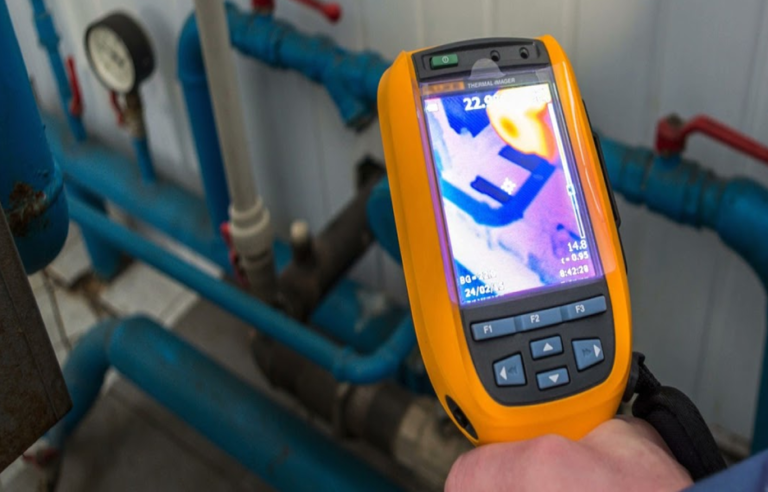
Outcome A (Meter Stops Spinning): The leak is located inside the house structure or under the foundation slab. If you suspect an in-slab copper line breach, review our non-destructive diagnostic breakdown comparing acoustic leak detection vs thermal imaging:
https://apsplumbingaz.com/acoustic-leak-detection-vs-thermal-imaging/
Outcome B (Meter Continues Spinning): Water is actively escaping between the municipal curb stop and your house wall. The leak exists either along the underground main service lateral or within the pressurized irrigation network.
For immediate emergency assistance finding your isolation controls, consult our guide on how to locate your main water shut-off valve in Phoenix:
https://apsplumbingaz.com/how-to-locate-main-water-shut-off-valve-phoenix/
3. Isolating Irrigation Main Lines vs. Lateral Zones
An automated irrigation network consists of two distinct hydraulic segments: the constant-pressure main line and the intermittent lateral lines:
| System Component | Hydraulic State | Diagnostic Leak Sign |
| Irrigation Main Line | Pressurized continuously 24/7 up to the valve manifold. | Water meter spins non-stop, even when the irrigation controller is powered off. |
| Lateral Zone Lines | Pressurized only when an individual solenoid valve opens. | Water meter spins only when a specific landscape zone is running. |
| Backflow Assembly (PVB) | Pressurized continuously under full municipal head pressure. | Continuous water pooling or spraying from the brass air relief canopy. |
Testing the Pressure Vacuum Breaker (PVB)
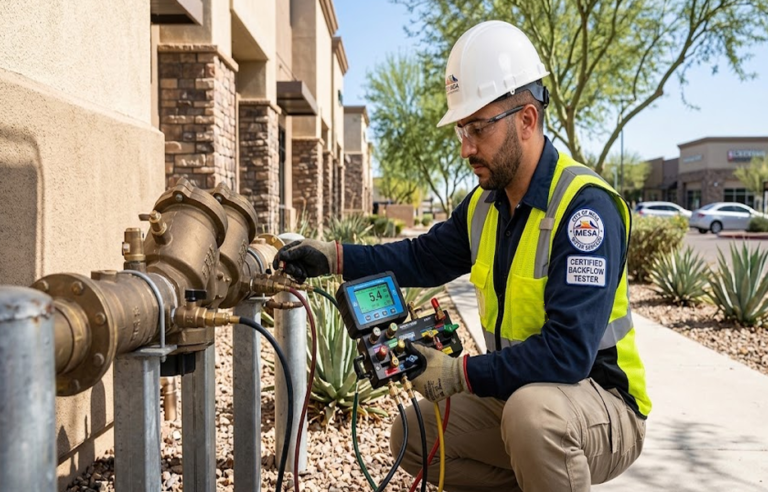
Most Arizona residences feature an above-ground Pressure Vacuum Breaker (PVB) or Reduced Pressure Zone (RPZ) backflow assembly on the exterior wall. Follow these steps to isolate the assembly:
Locate the two quarter-turn shut-off handles on the backflow device.
Turn the downstream handle (the valve closest to the ground pipe leading into the yard) 90 degrees perpendicular to the pipe.
Recheck the municipal water meter:
If the meter stops spinning immediately, the underground leak is located downstream in the yard irrigation piping or valve manifold.
If the meter continues spinning, the break is buried along the main water supply pipe before the backflow assembly.
During sudden desert winter cold snaps, exposed backflow preventers are highly vulnerable to thermal fractures. Discover how to protect these backflow assemblies from winter freeze damage:
https://apsplumbingaz.com/best-pipe-insulation-methods-for-arizona-winters/
4. Common Causes of Underground Yard Line Fractures
Several environmental forces unique to the Southwest accelerate subterranean pipe failures:
Expansive Caliche & Clay Soil: Desert subsoils expand dramatically when wet and contract violently during prolonged summer droughts. This cyclical shifting exerts severe shear loads on rigid PVC joints.
Root Intrusion from Desert Trees: Invasive root systems from species like Mesquite, Palo Verde, and Ficus wrap around buried Schedule 40 PVC piping, compressing and eventually shearing pipe walls.
Thermal Degradation of Shallow PVC: In many older Arizona developments, lateral drip lines and irrigation pipes were trenched only 4 to 8 inches below the surface. Blistering desert soil temperatures soften thin-walled Class 200 PVC, making it brittle over time.
Hydraulic Water Hammer: Rapidly closing 24-volt solenoid valves generate intense backpressure waves that crack subterranean elbows and fittings over repeated cycles.
If an underground pipe failure threatens property structures or causes severe water loss, contact our emergency line containment team for rapid dispatch:
https://apsplumbingaz.com/emergency-pipe-repairs-arizona/
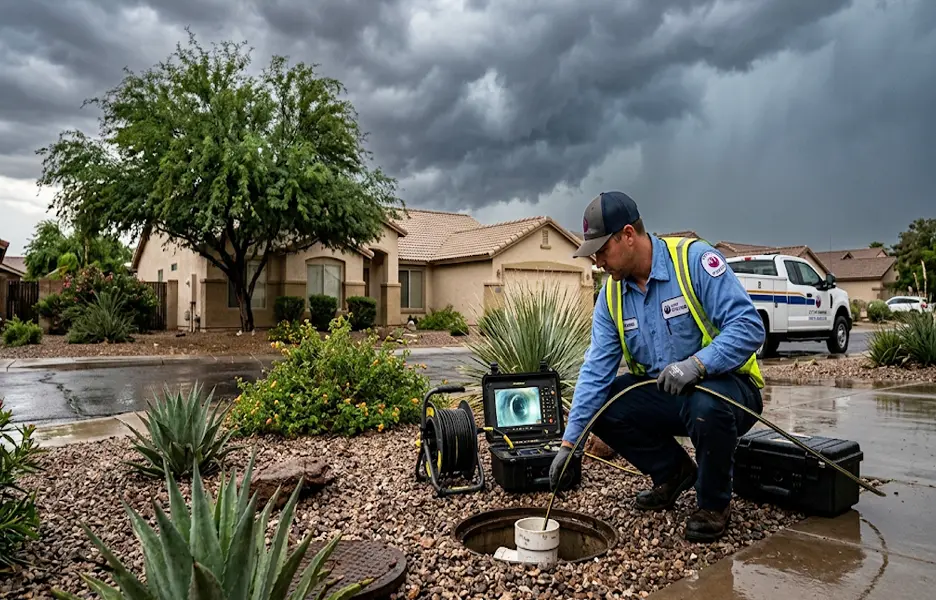
5. Locating and Repairing Underground Line Breaks
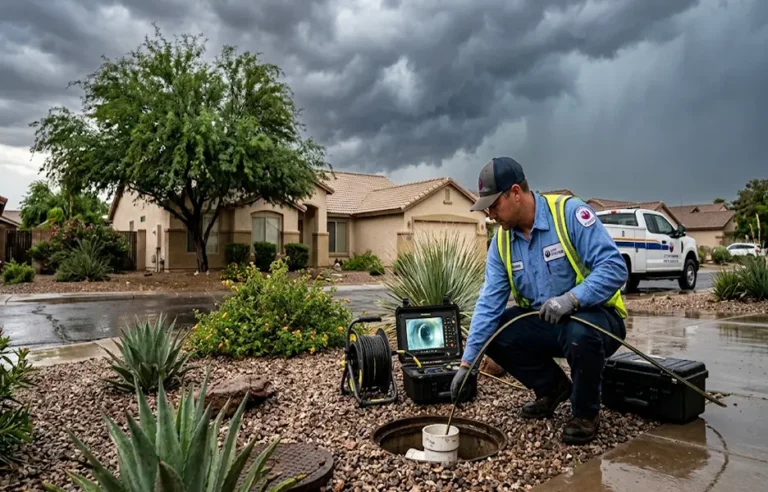
Once you determine that water is escaping downstream of the backflow assembly, use these non-destructive steps to locate the exact break coordinate:
Step 1: Open and Inspect All Valve Boxes
Pry open the subterranean plastic valve boxes situated around the yard. Submerged solenoids, mud-filled boxes, or cracked valve bodies indicate a fractured manifold, failed internal diaphragm, or split threaded adapter.
Step 2: Run a Manual Zone-by-Zone Diagnostic
At your irrigation timer, manually activate each zone for two minutes while observing the heads and ground surface:
Look for bubbling geysers where lateral PVC has split beneath grass or rock landscaping.
Note any zone where pressure drops dramatically across all emitters compared to other zones.
Step 3: Upgrading from Brittle PVC to Flexible Materials
When repairing ruptured subterranean landscape lines, modern plumbing protocols prioritize replacing damaged rigid PVC with flexible polyethylene piping or commercial-grade Schedule 40 fittings with deep slip joints.
If your property requires comprehensive piping upgrades or whole-site mechanical line modernizations, explore our certified home repiping services in Arizona:
https://apsplumbingaz.com/home-repiping-arizona/
For outdoor plumbing reconfigurations associated with home additions, patio expansions, or outdoor kitchens, review our certified renovation plumbing standards:
https://apsplumbingaz.com/renovation-plumbing-arizona/
Frequently Asked Questions: Underground Yard Leaks
Q: Does the municipal water company fix an underground leak in my yard?
A: No. Municipal utility providers in Phoenix, Mesa, and Scottsdale are responsible only for the water main up to the physical meter. All piping extending from the meter into the yard, irrigation system, and residential structure is the legal maintenance responsibility of the property owner.
Q: How deep are underground irrigation lines buried in Arizona?
A: Under standard residential building codes, main water service lines are typically trenched 12 to 18 inches below grade. However, secondary drip lines and lateral sprinkler runs are frequently found only 6 to 12 inches below ground level, making them susceptible to damage during routine aeration or shovel planting.
Q: Can a leaking irrigation line damage my home’s foundation?
A: Yes. When pressurized water escapes continuously into desert soils near a foundation perimeter, expansive clay absorbs the fluid and swells significantly. This hydraulic soil movement can exert lateral pressure against footings, leading to foundation cracks and sub-slab moisture intrusion.
Q: What should I do if water is shooting from my backflow preventer?
A: If water is spraying steadily from the bonnet or poppet bell of your backflow assembly, shut off both quarter-turn valves on the unit immediately. This isolates the assembly without cutting off domestic water to your indoor sinks and showers.
Resolve Hidden Yard Leaks with APS Plumbing
Don’t allow an invisible underground irrigation break to damage your landscaping or drive up your monthly utility bills. Contact the diagnostic and repair specialists at Aqua Plumbing Services (APS Plumbing) for precision line location, backflow testing, and underground pipe repairs throughout Phoenix, Scottsdale, Mesa, Chandler, and Gilbert.
Schedule your underground diagnostic inspection today: