Quick answer: Summer bills in the Valley rise mostly because of irrigation, pools and evaporative cooling, but a sudden jump with no change in habits often means a leak. Turn off all water indoors and out, note the meter, wait 30 minutes and check again: if it moved, you have a leak. The usual culprits are running toilets, irrigation line or valve leaks, pool auto-fill problems and slab leaks. Fixing leaks, tuning the irrigation schedule and replacing worn toilet flappers are the fastest savings.
Higher water bills in July and August are normal in Phoenix, Scottsdale and Mesa. Landscapes need more water, pools evaporate quickly and some homes use evaporative coolers. But when a bill jumps far beyond last summer’s, a leak is often hiding somewhere.
Normal summer increase or a leak?
- Compare with the same month last year, not with winter.
- Look for a sudden jump between two consecutive bills.
- Check whether anything changed: new plants, guests, pool refills, irrigation schedule.
The 30-minute meter test
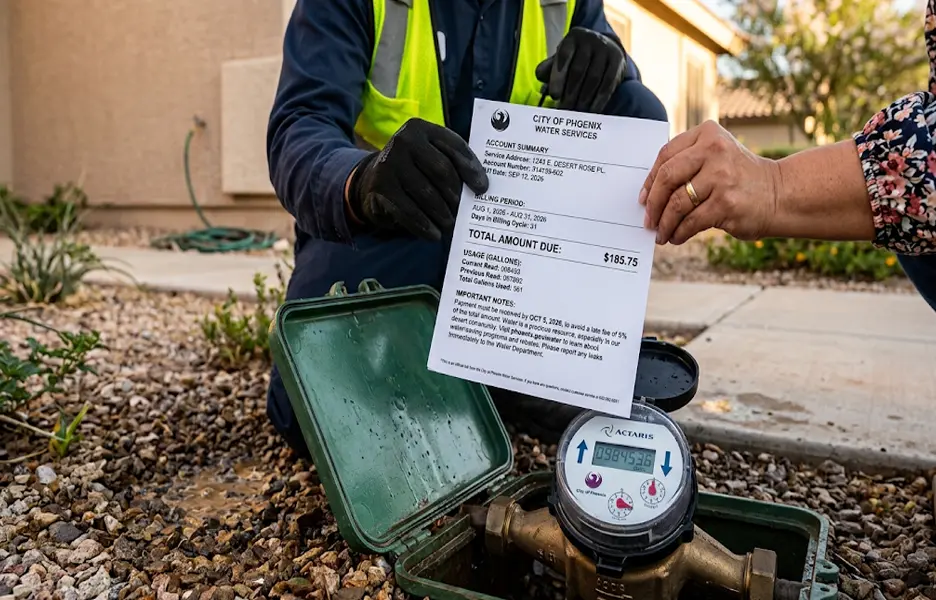
- Turn off all faucets, appliances, the irrigation controller and the pool auto-fill.
- Write down the meter reading or watch the small leak indicator dial.
- Wait 30 minutes without using water.
- If the meter moved, water is leaking. Close the house main shut-off and check again: if it still moves, the leak is between the meter and the house or in irrigation; if it stops, the leak is inside.
Most common hidden leaks
| Leak | How to spot it |
|---|---|
| Running toilet | Add food coloring to the tank; color in the bowl after 15 minutes means a leaking flapper |
| Irrigation leak | Soggy spots, unusually green patches, broken drip emitters or heads |
| Pool auto-fill | Fill valve running constantly or pool losing more than normal evaporation |
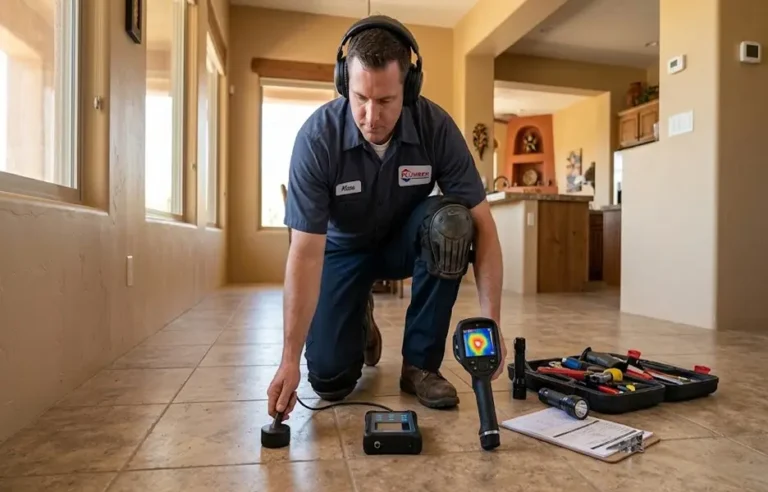
| Slab leak | Warm floor spots, running-water sounds, cracks; see slab leak signs |
| Yard service line | Wet area between meter and house; meter moving with house main closed |
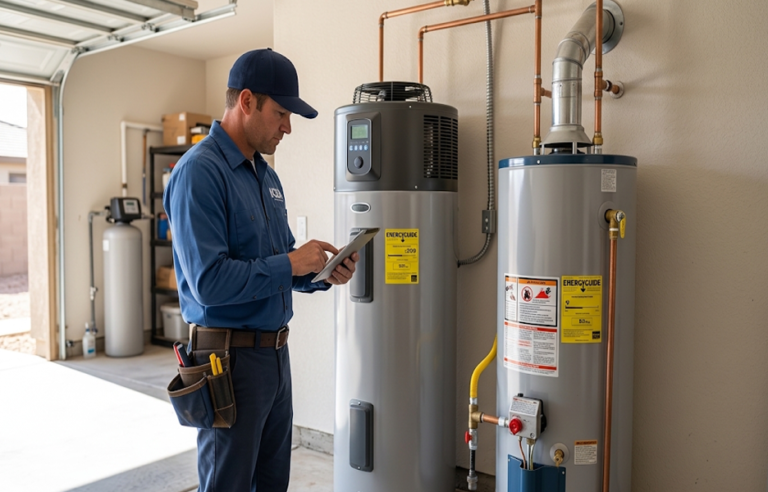
| Dripping faucet or water heater relief valve | Visible drips, water at the relief valve drain pipe |
What leaks really cost
A small drip seems harmless, but a running toilet or a leaking irrigation valve can waste a large amount of water every day, and hidden leaks also cause mold, damaged flooring and foundation problems that cost far more than the water itself. Fixing leaks quickly protects both your bill and your home.
Ways to lower your summer water bill
- Water landscaping early in the morning and adjust run times seasonally; consider a smart controller.
- Convert sprays to drip for shrubs and trees, and check emitters each season.
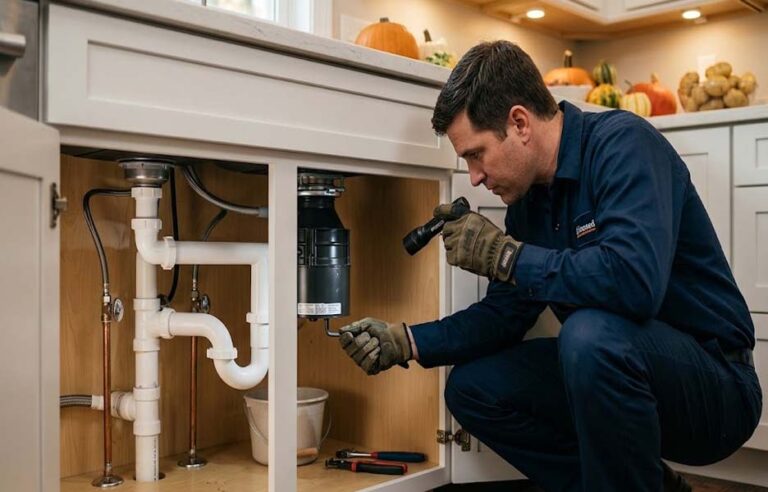
- Replace worn toilet flappers and older high-flow toilets.
- Cover the pool when not in use to reduce evaporation.
- Install aerators and efficient showerheads.
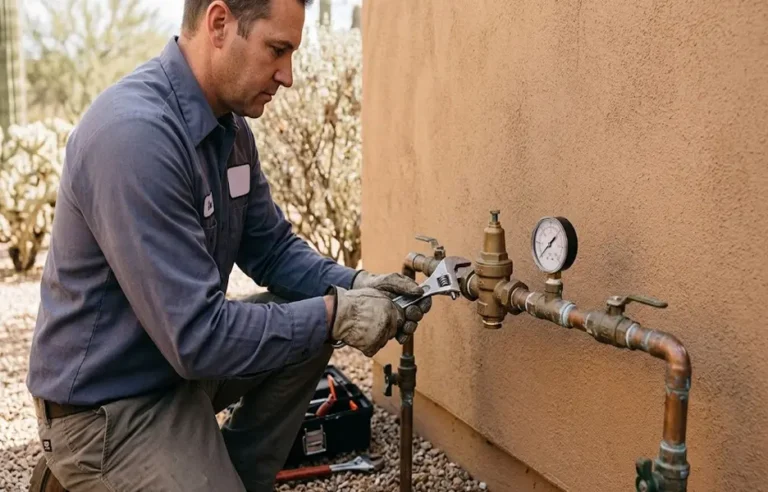
- Keep pressure at or below 80 PSI; high pressure increases flow and leaks. See PRV problems.
If the meter test shows a leak you cannot find, APS Plumbing offers leak detection and leak repair across Phoenix and Scottsdale.
Frequently Asked Questions
Why is my water bill so high in the summer in Arizona?
Irrigation, pools and evaporative cooling raise summer use. A sudden jump compared with the same month last year may mean a leak.
How can I tell if I have a water leak?
Turn off all water, note the meter, wait 30 minutes and check again. Any movement means water is leaking somewhere.
What is the most common hidden leak?
Running toilets and irrigation leaks are the most common. Slab leaks and yard service line leaks are less common but more serious.
How can I lower my water bill in Phoenix?
Fix leaks, water early in the morning, use drip irrigation, replace worn toilet flappers, cover the pool and keep water pressure in the normal range.
Need a plumber in Scottsdale or Phoenix?
APS Plumbing (Aqua Plumbing Services LLC) answers 24/7 across Scottsdale, Phoenix, Paradise Valley, Tempe, Mesa, Chandler, Gilbert and Glendale. 10% off for military personnel and 12 months no-interest financing available.